






Still Doing Everything Yourself? Here’s Why Founders Need Financial Experts
When most businesses are just getting started, founders wear every hat imaginable.
You’re the CEO, salesperson, marketer, customer support representative, operations manager, recruiter—and somewhere between all of that, you’re also trying to manage the finances.
At first, this makes perfect sense.
There may not be enough revenue to hire specialists, and understanding every part of the business helps you make better decisions during the early stages.
But success changes everything.
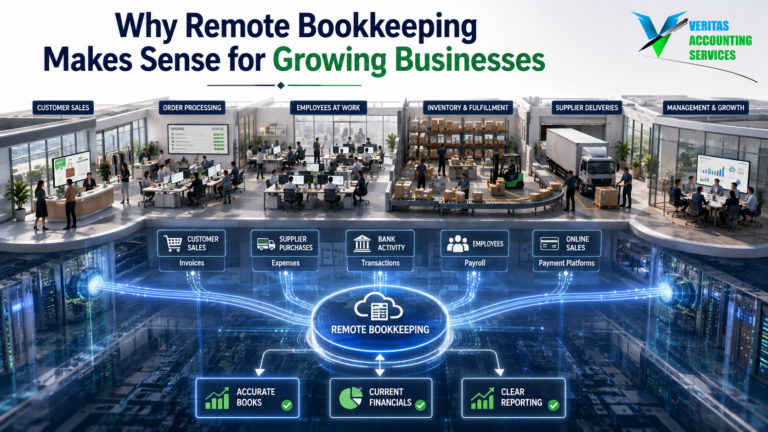
More customers bring more invoices.
More employees mean payroll.
More suppliers create more bills.
More sales generate more bank transactions.
New products, software subscriptions, taxes, compliance requirements, and reporting obligations all begin demanding your attention.
The financial side of the business becomes significantly more complicated.
Yet many founders continue trying to manage everything themselves.
Not because they enjoy bookkeeping or financial reporting—but because they believe hiring financial experts is something they can postpone until the business becomes “much bigger.”
Unfortunately, delaying financial expertise often costs far more than hiring it.
Financial mistakes rarely happen because business owners don’t work hard.
They happen because growing businesses eventually become too complex for one person to manage effectively.
The earlier founders recognize this, the easier it becomes to build a business that can grow without financial confusion.
Why Founders Delay Hiring Financial Experts
Almost every founder has said one of these things:
“I’ll hire someone after we grow a little more.”
“I’ll organize the books next month.”
“I know roughly where the money is.”
“We’re too small to need financial experts.”
“I’ll deal with taxes when filing season comes.”
These thoughts are understandable.
In the early stages, every dollar matters.
Hiring financial experts can feel like an expense rather than an investment.
But here’s the reality.
The longer a growing business operates without reliable financial systems, the more expensive the cleanup usually becomes.
Late bookkeeping.
Incorrect tax treatment.
Cash flow surprises.
Missed deductions.
Poor pricing decisions.
Unreconciled bank accounts.
Delayed financial reports.
These problems rarely appear overnight.
They develop gradually while the founder is focused on serving customers and growing revenue.
By the time the problems become visible, they are often affecting profitability, cash flow, and business decisions.
Veritas Expert Insight
Successful founders don’t wait until financial problems appear before involving financial experts. They build reliable financial systems early so they can make confident decisions as the business grows.
1. You No Longer Know Your Real Cash Position
Many founders check the bank balance before making a decision.
While this works in the earliest stages, the bank balance alone rarely tells the complete story.
Money sitting in the account may already be committed to:
- Payroll
- Supplier payments
- Loan repayments
- Tax liabilities
- Rent
- Software subscriptions
- Upcoming inventory purchases
Without accurate bookkeeping and cash flow reporting, it’s easy to believe the business has more available cash than it actually does.
Financial experts help business owners understand not only how much cash is available today, but also how much cash the business will need next week, next month, and next quarter.
That level of visibility supports better business decisions and reduces financial surprises.
2. Your Bookkeeping Is Always Behind
Many growing businesses experience the same pattern.
Receipts accumulate.
Bank reconciliations are delayed.
Transactions remain uncategorized.
Questions about expenses are postponed.
Financial statements become several months out of date.
When bookkeeping falls behind, management gradually loses visibility over the business.
Business owners begin making decisions based on estimates rather than reliable numbers.
Financial experts help establish consistent bookkeeping processes so financial information stays current throughout the year instead of being reconstructed at tax time.
Accurate bookkeeping also makes tax preparation, budgeting, forecasting, and financing significantly easier.
3. Tax Planning Happens Only Once a Year
Many founders think about taxes only when filing deadlines approach.
By then, many opportunities may already have passed.
Good tax planning happens throughout the year.
Business purchases.
Entity structure.
Timing of income.
Investment decisions.
Owner compensation.
Capital expenditure.
Expansion plans.
These decisions often have tax consequences long before returns are prepared.
Financial experts don’t simply prepare tax information.
They help businesses understand how today’s decisions may affect future tax obligations.
That proactive approach often provides far greater value than trying to reduce taxes after the financial year has already ended.
4. You’re Making Important Decisions Without Reliable Numbers
Growing businesses make important decisions constantly.
Should we hire another employee?
Can we afford a larger office?
Is this product profitable?
Should we increase prices?
Can we expand internationally?
Can we purchase new equipment?
Should we invest in marketing?
Without reliable financial information, these decisions often become educated guesses.
Financial experts help convert accounting records into meaningful business information.
Instead of relying on instinct alone, founders gain access to reports that explain:
- Profitability
- Cash flow
- Gross margins
- Customer performance
- Operating costs
- Financial trends
- Working capital
Better information generally leads to better business decisions.
5. You’re Spending Too Much Time Managing the Numbers
Founders should understand their numbers.
That doesn’t necessarily mean they should personally maintain every accounting record.
Imagine spending several hours every week:
- Downloading bank statements
- Categorizing transactions
- Reconciling accounts
- Following up for invoices
- Searching for receipts
- Correcting bookkeeping errors
- Preparing spreadsheets
Now multiply that across an entire year.
That is time no longer available for:
- Building customer relationships
- Improving products
- Developing strategy
- Hiring employees
- Increasing sales
- Growing the business
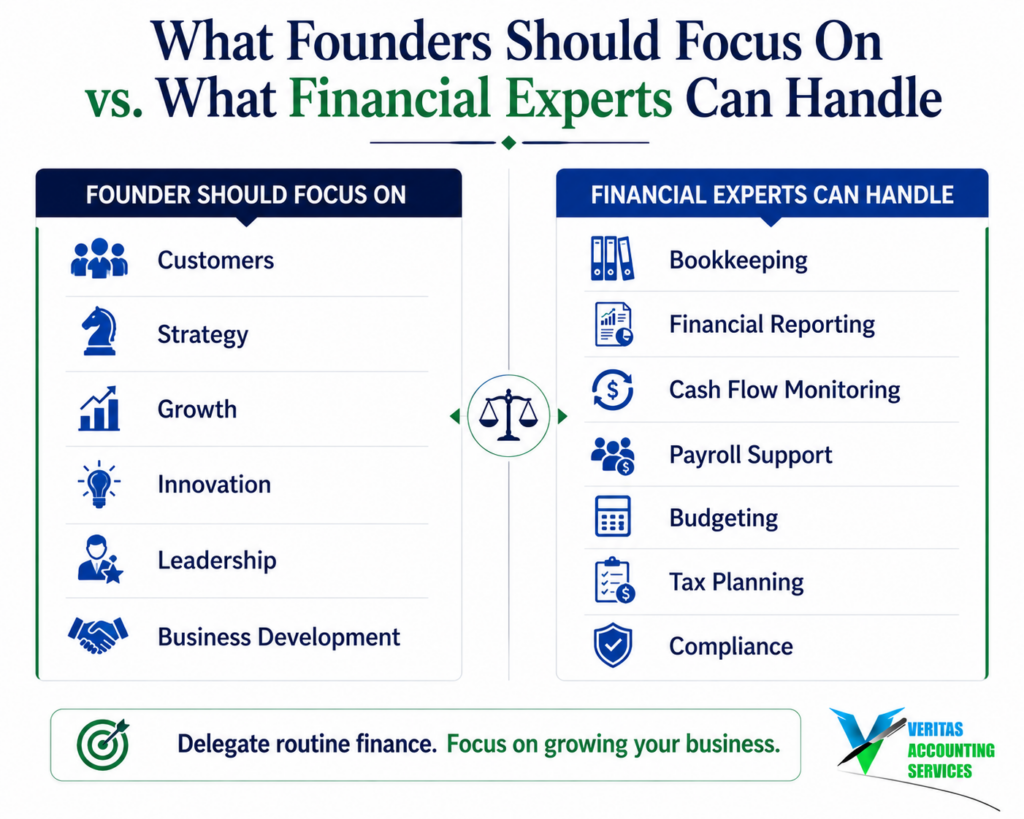
Financial experts allow founders to remain informed about the financial health of the business without becoming responsible for every bookkeeping task themselves.
The goal is not to remove the founder from the numbers.
The goal is to remove the founder from routine administrative work while providing better financial information than they could realistically produce alone.
The Cost of Waiting Is Often Invisible
One of the biggest challenges is that delaying financial experts rarely creates an immediate crisis.
Instead, the cost appears gradually.
Perhaps invoices are sent a little later than they should be.
Bank reconciliations remain unfinished.
Tax planning opportunities are missed.
Expenses are categorized incorrectly.
Cash flow becomes harder to predict.
Management reports arrive weeks late.
None of these issues seem catastrophic on their own.
Together, however, they create uncertainty.
And uncertainty makes it harder for founders to make confident decisions.
The irony is that many businesses hire financial experts only after problems become visible.
In reality, their greatest value comes from preventing those problems from developing in the first place.
Financial Experts Do More Than Keep the Books
Many founders assume financial experts simply record transactions.
Modern financial support goes much further.
Depending on the stage of the business, financial experts may assist with:
- Bookkeeping
- Financial reporting
- Cash flow management
- Budgeting
- Forecasting
- Payroll support
- Business performance analysis
- Tax planning
- Internal controls
- Virtual CFO services
- Financial strategy
The role evolves as the business grows.
Early on, accurate bookkeeping may be enough.
Later, management reporting, forecasting, KPI analysis, and strategic financial advice become increasingly valuable.
The objective isn’t simply maintaining accounting records.
It’s helping founders make better business decisions with reliable financial information.
6. Growth Has Increased Your Financial Complexity
Growth is a positive sign.
But every stage of growth introduces additional financial responsibilities.
What once involved one bank account and a few monthly transactions may now include:
- Multiple bank accounts
- Business credit cards
- Payroll
- Loans
- Inventory
- Fixed assets
- Online payment platforms
- Multiple revenue streams
- Sales tax or VAT obligations
- Foreign currency transactions
- More suppliers and customers
Each of these adds another layer of complexity.
Many founders continue using the same financial processes that worked when the business was much smaller.
Unfortunately, the business has outgrown those systems.
Financial experts help growing companies adapt their financial processes before complexity turns into confusion.
Rather than reacting to problems later, they build systems that continue supporting the business as it expands.
7. You’re Always Reacting Instead of Planning
One question separates growing businesses from mature businesses:
Are you making financial decisions before problems happen—or after?
Many founders spend most of their time reacting.
A supplier payment is overdue.
Cash is unexpectedly tight.
Tax deadlines arrive suddenly.
Payroll becomes stressful.
Profit margins start shrinking.
These situations often develop because management lacks forward-looking financial information.
Financial experts help shift businesses from reactive management to proactive planning.
Instead of asking:
“Can we afford this today?”
Founders begin asking:
“How will this decision affect cash flow over the next six months?”
That change in thinking often leads to stronger, more sustainable growth.
Planning becomes easier when management has reliable numbers instead of assumptions.
8. Investors and Lenders Expect Better Financial Information
If you plan to raise investment, apply for financing, or expand into larger markets, your financial records become increasingly important.
Banks, investors, and lenders rarely make decisions based on estimates.
They want reliable financial information.
This often includes:
- Current financial statements
- Cash flow reports
- Balance sheets
- Profit and loss statements
- Business forecasts
- Supporting schedules
- Tax records
If your bookkeeping is several months behind or financial reports are inconsistent, obtaining funding can become much more difficult.
Financial experts help ensure the information required by lenders, investors, and other stakeholders is available when needed—not created in a rush after a request arrives.
Good financial reporting builds credibility.
9. You Need Better Advice, Not Just Better Accounting
Bookkeeping records what has already happened.
Growing businesses also need help deciding what should happen next.
Questions like these become more common:
- Can we afford another employee?
- Should we increase prices?
- Is this product profitable?
- Which customers generate the highest margins?
- Can we expand internationally?
- Should we lease or purchase equipment?
- How much working capital do we need?
These questions require more than bookkeeping.
They require financial analysis.
Financial experts help transform accounting data into useful business insights.
Instead of simply reporting the past, they help management understand the future implications of today’s decisions.
That is where financial expertise creates real business value.

When Should You Hire Financial Experts?
Many founders ask this question too late.
A better question is:
What financial challenges am I already facing today?
You should seriously consider hiring financial experts when:
- Bookkeeping regularly falls behind.
- Financial reports are delayed.
- You don’t know your true cash position.
- Payroll and tax obligations are becoming more complex.
- You’re spending several hours each week managing accounting tasks.
- The business is growing faster than your financial systems.
- You’re making important decisions without reliable financial information.
- You need budgeting, forecasting, or cash flow planning.
- You’re preparing for expansion, investment, or financing.
Waiting until problems become serious often makes the transition more difficult.
Building financial systems before they are urgently needed usually produces better long-term results.
Do You Need a Full-Time Finance Team?
Not necessarily.
Many founders assume the only alternative to doing everything themselves is hiring full-time accounting employees.
Today, there are more flexible options.
Many businesses successfully work with outsourced financial experts who provide support based on the company’s actual needs.
Depending on the stage of growth, this may include:
- Monthly bookkeeping
- Accounts payable
- Accounts receivable
- Payroll support
- Financial reporting
- Budget preparation
- Cash flow forecasting
- Management reporting
- Virtual CFO services
This approach allows businesses to access professional financial expertise without immediately building a larger internal finance department.
As the business grows, the level of support can grow alongside it.
Why Outsourced Financial Experts Make Sense
For many growing businesses, outsourced financial experts provide an effective balance between cost, flexibility, and experience.
Instead of hiring multiple specialists immediately, businesses gain access to experienced professionals who already understand accounting systems, reporting processes, and financial controls.
Some of the advantages include:
- Flexible support as the business grows
- Access to experienced professionals
- Better financial reporting
- Improved bookkeeping accuracy
- Stronger internal processes
- Reduced administrative workload
- More time for founders to focus on customers and growth
Most importantly, founders gain reliable financial information that supports better decision-making.
The objective is not simply outsourcing accounting work.
It is building a stronger financial foundation for future growth.
Common Mistakes Founders Make Before Hiring Financial Experts
Many businesses delay financial support because they believe they can manage “just a little longer.”
Some common mistakes include:
- Waiting until tax season to organize the books.
- Making hiring decisions without reviewing cash flow.
- Assuming the bank balance equals available cash.
- Ignoring small bookkeeping errors until they become major cleanup projects.
- Delaying financial reporting because “nothing has changed.”
These habits can gradually reduce visibility into the business.
Financial experts help create consistent financial processes that reduce these risks before they become expensive problems.
Why Financial Systems Matter More as You Grow
Growth is exciting.
But growth without financial systems can become stressful.
The more customers, employees, suppliers, and transactions your business has, the more important reliable financial information becomes.
Accurate bookkeeping supports:
- Better cash flow management
- Stronger budgeting
- More reliable forecasting
- Better tax planning
- Faster decision-making
- Greater confidence during expansion
Financial experts don’t slow growth.
They help businesses grow with better financial control.
Final Thoughts
Every founder starts by doing more than one job.
That determination often helps build the business in the early days.
But there comes a point where continuing to manage every financial task personally begins limiting growth rather than supporting it.
Hiring financial experts isn’t about giving up control.
It’s about gaining better information, stronger financial systems, and more time to focus on leading the business.
The earlier reliable financial processes are established, the easier it becomes to manage growth, improve profitability, and make confident business decisions.
At Veritas Accounting Services, we help businesses build that financial foundation through bookkeeping, accounting, tax support, management reporting, and Virtual CFO services tailored to each stage of growth.
The goal isn’t simply to keep your books updated.
It’s to help you make smarter business decisions with financial information you can trust.
Frequently Asked Questions
When should a founder hire financial experts?
A founder should consider hiring financial experts when bookkeeping starts falling behind, financial reports are delayed, cash flow becomes difficult to manage, or business growth creates more financial complexity than one person can comfortably handle.
What do financial experts do?
Financial experts may provide bookkeeping, accounting, financial reporting, budgeting, forecasting, cash flow management, tax planning support, business analysis, and Virtual CFO services depending on the needs of the business.
Are financial experts only for large businesses?
No. Small and growing businesses often benefit the most because they gain access to professional financial support before financial problems become larger and more expensive to resolve.
Can outsourced financial experts replace an in-house finance team?
For many small and medium-sized businesses, outsourced financial experts can provide the level of support needed without immediately hiring a full internal finance department. As the business grows, the support can be expanded accordingly.
Why do founders delay hiring financial experts?
Many founders believe they can manage the finances themselves for a little longer, want to reduce costs, or feel the business is still too small. However, delaying financial expertise often leads to missed opportunities, outdated financial records, and decisions based on incomplete information.
Focus on Growing Your Business—Not Every Financial Task
You don’t have to do everything yourself forever.
The right financial support gives you accurate books, meaningful reports, stronger cash flow visibility, and more confidence when making important business decisions.
At Veritas Accounting Services, we help growing businesses with bookkeeping, accounting, tax support, and Virtual CFO services so founders can spend less time managing spreadsheets—and more time building their business.
Schedule a FREE Call
GET IN TOUCH