


📩 Get A Quote : hello@veritasaccountingservices.com
US business compliance checklist

The Ultimate U.S. Business Compliance Checklist: 7 Areas Founders Can’t Ignore

Compliance isn’t admin work—it’s risk management.

Most founders don’t fail because of bad ideas. They fail because they ignore compliance until it’s too late.

In the U.S., running a business comes with layered responsibilities—federal, state, and local. Add tax rules, hiring regulations, and data protection requirements, and compliance quickly becomes complex.

That’s why every founder needs a structured US business compliance checklist—not as a formality, but as a system to protect growth, avoid penalties, and maintain credibility.

Below are the 7 critical compliance areas every founder must understand and actively manage.


1. Federal Compliance: Establishing Your Business Identity

Every U.S. business starts with federal compliance. This is where your company gains official recognition for tax and regulatory purposes.

Your checklist should include:

  • Obtaining an Employer Identification Number (EIN)
  • Filing federal income tax returns
  • Understanding federal labor laws (FLSA)
  • Maintaining financial records and documentation
  • Without federal compliance, your business cannot legally function in key areas like banking, hiring, or taxation.

Many founders underestimate this step, especially early-stage businesses that are not yet generating revenue. However, ignoring federal obligations can create complications later when scaling or seeking funding.


2. State Compliance: Where Your Business Is Registered

While federal compliance gives your business identity, state compliance defines where your business legally exists.

Each state has its own requirements, including:

  • Business registration (LLC, Corporation)
  • Annual or biennial reports
  • State-level taxes (including franchise tax)
  • Licensing requirements

For example, a Delaware-registered company may still need to register in another state if it operates there.

A strong US business compliance checklist ensures you are compliant not only where you formed your business but also where you operate.

Missing state filings can lead to:

  • Late penalties
  • Administrative dissolution
  • Loss of limited liability protection

3. Local Compliance: The Overlooked Layer

Local compliance is often ignored—but it can stop your business operations instantly if not handled properly.

Depending on your city or county, requirements may include:

  • Business licenses
  • Zoning approvals
  • Health and safety inspections
  • Operational permits

Even digital or remote businesses may need local registrations if they operate from a physical address.

This layer is critical because local authorities can enforce compliance more directly and quickly than federal agencies.

Including local requirements in your US business compliance checklist ensures you don’t face unexpected shutdowns or penalties.


4. Tax Compliance: The Highest Risk Area

Tax compliance is the most sensitive and high-risk area for any business.

Your checklist should include:

Federal Tax Obligations

  • Income tax filing
  • Payroll tax deposits
  • Estimated tax payments

State Tax Obligations

  • State income tax
  • Franchise taxes

Sales Tax (Nexus Rules)

Sales tax is where many founders make costly mistakes.

If your business has nexus (a presence in a state), you must:

  • Register for sales tax
  • Collect tax from customers
  • File periodic returns

Nexus can be triggered by:

  • Physical presence
  • Employees
  • Economic thresholds (sales volume)

Ignoring this can result in:

  • Backdated tax liabilities
  • Penalties and interest
  • Audit exposure

A well-maintained US business compliance checklist always prioritizes tax compliance because errors here are expensive.


5. Hiring & Payroll Compliance: Getting People Matters Right

Once you hire employees or contractors, compliance becomes more complex.

You must manage:

  • Payroll tax withholding and filings
  • Worker classification (employee vs contractor)
  • Wage laws and overtime rules
  • Workplace safety standards (OSHA)

Misclassification is one of the most common and costly mistakes.

For example, treating an employee as an independent contractor may result in:

  • IRS penalties
  • Back taxes
  • Legal disputes

Your US business compliance checklist should clearly define hiring processes and documentation to avoid these risks.


6. Data & Privacy Compliance: A Growing Priority

As businesses become more digital, data compliance is no longer optional—it is expected.

You should have:

  • A clear privacy policy
  • Secure data storage practices
  • Access control systems
  • A breach response plan

Depending on your business, you may need to comply with:

  • State-level privacy laws
  • Industry-specific data standards

Failing to protect customer data can result in:

  • Legal penalties
  • Loss of customer trust
  • Reputational damage

Adding data protection to your US business compliance checklist ensures long-term credibility.


7. Industry-Specific Compliance: Tailored to Your Business

Every industry has unique regulatory requirements.

Examples include:

  • SaaS → data security and subscription regulations
  • Healthcare → patient data protection
  • Financial services → reporting and compliance standards
  • E-commerce → consumer protection laws

Generic compliance is not enough.

Your US business compliance checklist must include industry-specific obligations relevant to your operations.

Ignoring this layer can lead to serious regulatory issues even if general compliance is in place.


Where Most Founders Go Wrong

Even with a checklist, mistakes happen—often due to lack of awareness or systems.

Common issues include:

  • Missing filing deadlines
  • Mixing personal and business finances
  • Misclassifying employees
  • Ignoring sales tax obligations
  • Failing to implement data privacy measures

These problems usually don’t appear immediately—but they accumulate over time and become costly.


Why Early Compliance Is Always Cheaper

Fixing compliance later is always more expensive than doing it correctly from the start.

Late-stage corrections often involve:

  • Penalties and interest
  • Legal costs
  • Operational disruptions
  • Time-consuming audits

On the other hand, early compliance provides:

  • Financial clarity
  • Risk reduction
  • Investor confidence
  • Smooth scalability

A proactive US business compliance checklist saves both time and money.


How to Build a Practical Compliance System

Compliance should not depend on memory or last-minute action.

Instead, founders should:

  • Create a compliance calendar
  • Set automated reminders
  • Maintain organized financial records
  • Use accounting and compliance tools
  • Work with professionals when needed

Turning compliance into a system ensures consistency and reduces risk.


The Bottom Line

Compliance does not slow your business—it protects it.

A structured US business compliance checklist ensures your business:

  • Operates legally
  • Avoids penalties
  • Builds credibility
  • Scales confidently

Founders who treat compliance seriously don’t just survive—they build resilient businesses.


Final Thought

Ask yourself:

Are you managing compliance proactively—or reacting to problems later?

Because in business, prevention is always cheaper than correction.


GET IN TOUCH

Schedule a FREE Call

Missed Something on Your Tax Return? 6 Smart Ways to Fix It Legally

An amended tax return is the correct way to fix mistakes after filing your taxes. If you realize…

The Ultimate 9-Step Guide for Non-US Founders to Start & Run a US Company Legally

Starting a U.S. business as a foreign founder is no longer complex—but it is structured. With the…

3 Costly Tax Residency Mistakes That Can Destroy a Client’s Return

Before a tax professional chooses the correct tax form, determines taxable income, or identifies…

Big Change for 2026: When Catch-Up Contributions Must Go Roth

A major retirement planning shift is coming. Beginning in 2026, Roth catch-up contributions 2026…

Big Donation, Bigger Mistake: Why the Tax Court Rejected a $188,563 Charitable Deduction

A large charitable donation may reflect generosity, goodwill, and community spirit. But as one…

Waiting for Your EITC or ACTC Refund? 3 Critical IRS Dates to Know in 2026

Each tax season, questions about refund timing surge—especially from taxpayers who rely on…

Surprised by a Lump-Sum Social Security Check? Here’s How the Tax Rules Really Work

Receiving a lump-sum Social Security payment often brings relief, especially after months or years…

Connect on our Socials!

amended tax return

Missed Something on Your Tax Return? 6 Smart Ways to Fix It Legally

An amended tax return is the correct way to fix mistakes after filing your taxes.

If you realize after filing that something was missed—whether income, deductions, or credits—you are not alone. The IRS allows taxpayers to correct errors through an amended tax return, helping ensure compliance and accuracy.

Knowing when and how to file an amended return can prevent penalties, recover refunds, and keep your financial records clean.

Here are 6 smart and practical ways to fix your tax return legally.


1. Correct Missing or Incorrect Income

One of the most common reasons to file an amended tax return is unreported or incorrect income.

This can happen when:

  • A Form W-2 or 1099 is received late
  • Freelance or side income is overlooked
  • Investment or foreign income is missed

Updating your return ensures your income matches IRS records and helps avoid notices or penalties.


2. Fix Filing Status Errors

Filing under the wrong status can significantly impact your tax outcome.

For example:

  • Filing as single instead of head of household
  • Missing eligibility for married filing jointly

If your filing status was incorrect, you can revise it by submitting an amended return. This correction may reduce your tax liability or increase your refund.


3. Claim Missed Deductions and Credits

Many taxpayers miss out on valuable tax benefits simply due to oversight.

Common missed items include:

  • Education credits
  • Child tax credit
  • Business expenses
  • Medical deductions

Filing an amended tax return gives you another opportunity to claim these and potentially increase your refund.


4. Update Dependent Information

Errors related to dependents are more common than expected.

You may need to amend your return if:

  • A dependent was not claimed
  • A dependent was claimed incorrectly
  • Eligibility rules were misunderstood

Correcting dependent details ensures compliance and prevents disputes with the IRS.


5. Adjust for Corrected Tax Documents

Sometimes, taxpayers receive updated or corrected forms after filing.

Examples include:

  • Revised W-2
  • Updated 1099
  • Corrected brokerage statements

When this happens, it’s important to update your return so it aligns with official records. This helps avoid mismatches and IRS notices.


6. Use Amendments for Better Tax Planning

An amended return is not only for fixing mistakes—it can also improve your tax outcome.

Tax professionals often use amendments to:

  • Recalculate tax liability
  • Optimize deductions
  • Correct overlooked planning opportunities

When used correctly, it can strengthen your overall financial position.


When Should You File an Amended Tax Return?

You should consider filing an amended tax return when there are material errors such as:

  • Incorrect income reporting
  • Wrong filing status
  • Missed deductions or credits
  • Changes in dependent information

However, minor math errors usually do not require amendment, as the IRS often corrects them automatically.


Time Limits for Filing an Amended Return

Timing matters.

Generally, you must file within:

  • 3 years from the original filing date, or
  • 2 years from the date tax was paid,

whichever is later.

If your correction results in a refund, filing within this period is essential to claim it.


How to File an Amended Tax Return

Filing is a structured process and should be handled carefully.

Step 1: Review the Original Return

Identify what needs correction.

Step 2: Gather Supporting Documents

Collect updated or missing forms.

Step 3: Complete Form 1040-X

This is the official form used to correct previously filed returns.

Step 4: Submit the Return

Depending on the year, you can file electronically or by mail.

Step 5: Track the Status

The IRS provides tools to monitor progress, though processing may take several weeks.


What Happens After You File?

After submission, the IRS reviews the changes.

Possible outcomes include:

  • Refund issuance
  • Adjustment in tax liability
  • Request for additional information

Amended returns typically take longer to process than original filings, so patience is important.


Common Mistakes to Avoid

When correcting a return, avoid these common issues:

  • Filing multiple amendments unnecessarily
  • Leaving out supporting documents
  • Providing unclear explanations
  • Correcting only partial information

A complete and accurate amendment helps avoid delays.


Does Filing an Amended Return Increase Audit Risk?

This is a common concern.

In most cases, filing an amended tax return does not increase audit risk. In fact, correcting errors proactively demonstrates compliance.

However, significant changes should always be well-documented.


Final Takeaway

Mistakes on tax returns are more common than people think—and they can be fixed.

An amended tax return provides a structured and legal way to correct errors, claim missed benefits, and ensure accurate reporting.

Handled correctly, it protects you from penalties, improves compliance, and may even increase your refund.


GET IN TOUCH

Schedule a FREE Call

Missed Something on Your Tax Return? 6 Smart Ways to Fix It Legally

An amended tax return is the correct way to fix mistakes after filing your taxes. If you realize…

The Ultimate 9-Step Guide for Non-US Founders to Start & Run a US Company Legally

Starting a U.S. business as a foreign founder is no longer complex—but it is structured. With the…

3 Costly Tax Residency Mistakes That Can Destroy a Client’s Return

Before a tax professional chooses the correct tax form, determines taxable income, or identifies…

Big Change for 2026: When Catch-Up Contributions Must Go Roth

A major retirement planning shift is coming. Beginning in 2026, Roth catch-up contributions 2026…

Big Donation, Bigger Mistake: Why the Tax Court Rejected a $188,563 Charitable Deduction

A large charitable donation may reflect generosity, goodwill, and community spirit. But as one…

Waiting for Your EITC or ACTC Refund? 3 Critical IRS Dates to Know in 2026

Each tax season, questions about refund timing surge—especially from taxpayers who rely on…

Surprised by a Lump-Sum Social Security Check? Here’s How the Tax Rules Really Work

Receiving a lump-sum Social Security payment often brings relief, especially after months or years…

Connect on our Socials!

non US founders US company

The Ultimate 9-Step Guide for Non-US Founders to Start & Run a US Company Legally

Starting a U.S. business as a foreign founder is no longer complex—but it is structured. With the right steps, non-US founders can legally form, operate, and scale a U.S. company while staying compliant with IRS and state regulations.

This guide breaks down the complete 9-step process for non US founders US company setup, covering formation, compliance, taxation, and ongoing management.


Step 1: Choose the Right Business Structure

The first and most critical decision for any non US founders US company setup is choosing the right entity.

Most foreign founders choose between:

  • LLC (Limited Liability Company)
  • C Corporation (C-Corp)

LLC (Most Common for Beginners)

  • Simple structure
  • Pass-through taxation
  • Lower compliance requirements

C-Corp (Best for Fundraising)

  • Preferred by investors
  • Suitable for startups seeking VC funding
  • Double taxation applies

Choosing the wrong structure can impact taxation, ownership flexibility, and future funding for non US founders US company setup.


non US founders US company

Step 2: Select the Right State

Non-US founders are not required to live in the U.S. to register a company, but they must choose a state.

Popular options include:

  • Delaware – Best for startups and investors
  • Wyoming – Low cost and privacy
  • Florida / Texas – Operational presence

Each state has different:

  • Filing fees
  • Annual compliance requirements
  • Tax structures

Step 3: Appoint a Registered Agent

Every U.S. company must have a registered agent with a physical address in the state of formation.

The agent:

  • Receives legal documents
  • Handles government notices
  • Ensures compliance

This is mandatory for all non US founders US company setups.


Step 4: Obtain an EIN (Without SSN)

The Employer Identification Number (EIN) is essential for:

  • Opening a bank account
  • Filing taxes
  • Hiring employees

Non-US founders without an SSN can still obtain an EIN by:

  • Filing Form SS-4
  • Applying via fax or mail

This step is often misunderstood but critical for compliance.


Step 5: Open a US Business Bank Account

A U.S. bank account is required to operate legally and manage finances.

Options include:

  • Traditional banks (may require travel)
  • Online fintech platforms (remote-friendly)

You will typically need:

  • EIN
  • Formation documents
  • ID verification

Banking is a key step in running a compliant non US founders US company.


Step 6: Understand US Tax Obligations

This is where many for non US founders US company setup make mistakes.

For LLCs:

  • May be treated as disregarded entity
  • Requires Form 5472 + pro forma 1120
  • Possible withholding tax obligations

For C-Corps:

  • Corporate tax at federal level
  • State taxes (if applicable)

Foreign owners must also evaluate:

  • Effectively Connected Income (ECI)
  • Withholding requirements
  • Tax treaties

Ignoring taxation rules can lead to penalties.


Step 7: Maintain Proper Bookkeeping

Accurate bookkeeping is not optional—it is required.

You must track:

  • Revenue
  • Expenses
  • Bank transactions
  • Owner contributions

Good bookkeeping helps:

  • File taxes correctly
  • Avoid IRS scrutiny
  • Understand financial performance

Many non US founders US company setups fail due to poor financial records.


Step 8: Stay Compliant with Annual Filings

Every U.S. company must comply with ongoing requirements.

These include:

  • Annual state reports
  • Franchise taxes
  • Federal tax filings
  • BOI reporting (new requirement under FinCEN)

Missing deadlines can result in:

  • Penalties
  • Loss of good standing
  • Legal complications

Compliance is not a one-time step—it is continuous.


Step 9: Plan for Growth & Structure Early

Once the company is set up, planning becomes critical.

Consider:

  • Bringing in investors
  • Hiring employees
  • Expanding operations
  • Tax-efficient profit extraction

Structuring decisions made early impact long-term scalability.


Common Mistakes Non-US Founders Make

Even with the right intent, mistakes happen.

Top errors include:

  • Choosing the wrong entity
  • Ignoring U.S. tax filing requirements
  • Not maintaining proper bookkeeping
  • Missing compliance deadlines
  • Not understanding treaty benefits

Avoiding these mistakes ensures your non US founders US company remains compliant and scalable.


Why the US Remains Attractive for Foreign Founders

Despite compliance requirements, the U.S. remains one of the best places to start a business due to:

  • Access to global markets
  • Strong legal framework
  • Investor ecosystem
  • Business-friendly environment

With proper planning, non-US founders can fully leverage these advantages.


Final Takeaway

Starting a non US founders US company is not just about registration—it is about compliance, structure, and long-term planning.

Follow the 9-step framework:

  1. Choose the right entity
  2. Select the right state
  3. Appoint a registered agent
  4. Obtain EIN
  5. Open a bank account
  6. Understand taxation
  7. Maintain bookkeeping
  8. Stay compliant
  9. Plan for growth

Getting these steps right ensures your business operates legally and scales successfully.

GET IN TOUCH

Schedule a FREE Call

Missed Something on Your Tax Return? 6 Smart Ways to Fix It Legally

An amended tax return is the correct way to fix mistakes after filing your taxes. If you realize…

The Ultimate 9-Step Guide for Non-US Founders to Start & Run a US Company Legally

Starting a U.S. business as a foreign founder is no longer complex—but it is structured. With the…

3 Costly Tax Residency Mistakes That Can Destroy a Client’s Return

Before a tax professional chooses the correct tax form, determines taxable income, or identifies…

Big Change for 2026: When Catch-Up Contributions Must Go Roth

A major retirement planning shift is coming. Beginning in 2026, Roth catch-up contributions 2026…

Big Donation, Bigger Mistake: Why the Tax Court Rejected a $188,563 Charitable Deduction

A large charitable donation may reflect generosity, goodwill, and community spirit. But as one…

Waiting for Your EITC or ACTC Refund? 3 Critical IRS Dates to Know in 2026

Each tax season, questions about refund timing surge—especially from taxpayers who rely on…

Surprised by a Lump-Sum Social Security Check? Here’s How the Tax Rules Really Work

Receiving a lump-sum Social Security payment often brings relief, especially after months or years…

Connect on our Socials!

Tax Residency Mistakes

3 Costly Tax Residency Mistakes That Can Destroy a Client’s Return

Before a tax professional chooses the correct tax form, determines taxable income, or identifies eligible credits, one critical question must be answered first: what is the taxpayer’s residency status for U.S. tax purposes?

Residency determines nearly everything in an international tax return. It affects which income must be reported, what deductions are available, which credits apply, and whether a taxpayer files Form 1040 or Form 1040-NR.

Getting residency wrong is one of the most common and costly tax residency mistakes practitioners make. When the determination is incorrect, the entire return may need to be corrected or amended.

Understanding how IRS residency rules work—and where mistakes typically occur—helps tax professionals protect their clients and prepare accurate returns.

Below are three costly tax residency mistakes that can derail an otherwise correct tax filing.


Mistake #1: Misapplying the Green Card Test

The first step in determining residency is applying the green card test. This test is generally straightforward but still frequently misunderstood.

Under IRS rules, a taxpayer is considered a resident alien for tax purposes if they held lawful permanent resident status at any time during the tax year. This status is typically granted through Form I-551, commonly known as the green card.

Once a taxpayer receives lawful permanent resident status, they are treated as a resident for tax purposes unless that status is formally abandoned or rescinded.

The problem arises when immigration timelines do not align perfectly with tax residency periods. For example, a taxpayer may receive green card approval late in the year, which still qualifies them as a resident alien for tax purposes.

Tax professionals must confirm:

  • The exact date permanent residency began
  • Whether the status was active during the tax year
  • Whether any abandonment of residency occurred

Failing to verify these details can result in one of the most damaging tax residency mistakes, because residency status determines the entire reporting framework.


tax residency mistakes

Mistake #2: Miscalculating the Substantial Presence Test

If the taxpayer does not meet the green card test, the next step is applying the substantial presence test.

This is where many practitioners make calculation errors.

To qualify as a resident alien under the substantial presence test, the taxpayer must:

  1. Be physically present in the United States for at least 31 days during the current year, and
  2. Be present 183 days over a three-year period using the following formula:
  • 31 days present in the current year
  • One-third of the days present in the first preceding year
  • One-sixth of the days present in the second preceding year

If the total equals or exceeds 183 days, the taxpayer generally meets the residency threshold.

However, simply performing the math is not enough.

Certain individuals are treated as exempt individuals when counting days in the United States. This may include:

  • Students on certain visa types
  • Teachers and trainees
  • Diplomats and foreign government employees

These exemptions mean some days are excluded from the calculation.

Another important consideration is the closer connection exception. If the taxpayer spends fewer than 183 days in the United States during the current year and maintains stronger ties to another country, they may still qualify as a nonresident alien.

However, the closer connection exception is not available if:

  • The taxpayer is present in the U.S. 183 days or more during the current year, or
  • The taxpayer has applied for permanent residency.

Failing to evaluate these factors is another common tax residency mistake that can dramatically alter how a return should be filed.


Mistake #3: Ignoring Treaty and Dual-Status Rules

Even when the green card test or substantial presence test indicates residency, the analysis is not always finished.

Income tax treaties can override default residency classifications.

When a taxpayer has ties to more than one country, treaty tiebreaker rules may assign residency to another jurisdiction. These rules typically evaluate:

  • Permanent home location
  • Center of vital interests
  • Habitual place of residence
  • Nationality

If the treaty assigns residency to another country, the taxpayer may take a treaty-based position to be treated as a nonresident for certain U.S. tax purposes.

However, this requires careful analysis and proper disclosure on the return.

Another area where tax residency mistakes occur is during dual-status years.

A dual-status year occurs when a taxpayer:

  • Arrives in the United States midyear, or
  • Leaves the United States during the year

In these cases, the taxpayer is treated as:

  • A resident alien for part of the year, and
  • A nonresident alien for the remaining period

During the resident portion of the year, the taxpayer is taxed on worldwide income. During the nonresident period, they are taxed only on U.S.-source income or effectively connected income.

Dual-status returns involve special rules that limit certain deductions and credits. Properly allocating income between the two periods requires careful documentation.

Ignoring treaty provisions or dual-status rules is one of the most expensive tax residency mistakes a practitioner can make.


tax residency mistakes

Why Residency Determines the Entire Return

Residency status dictates the correct tax filing path.

Resident Aliens

Resident aliens typically file Form 1040 or Form 1040-SR. They must report:

  • Worldwide income
  • Foreign accounts
  • Foreign assets (when applicable)

They may also qualify for a wider range of deductions and credits.

Nonresident Aliens

Nonresident aliens file Form 1040-NR and generally report only:

  • U.S.-source income
  • Income effectively connected with a U.S. trade or business

Many deductions, credits, and filing statuses available to residents are restricted.

One strategic election sometimes available is the option to treat a nonresident alien spouse as a resident for tax filing purposes. This allows married couples to file jointly but requires reporting worldwide income for both spouses.

These elections require careful evaluation because they affect future tax years as well and also tax residency mistakes.


Building Confidence in Residency Determinations

For tax professionals working with international clients, determining residency is not a simple label. It is a structured process that requires precision.

Avoiding tax residency mistakes requires careful evaluation of below so that tax residency mistakes can be avoided

  • Green card status
  • Physical presence calculations
  • Visa classifications
  • Treaty provisions
  • Dual-status rules

Proper documentation and a step-by-step approach ensure that residency is determined correctly before preparing the rest of the return.

When residency is established accurately, the rest of the tax return becomes significantly easier to complete and there is no room for tax residency mistakes.


Final Thoughts

Residency is where the return truly begins.

Misidentifying whether a taxpayer is a resident alien or nonresident alien can unravel an otherwise well-prepared return which leads to tax residency mistakes. Income reporting, deduction eligibility, filing status, and tax treaty benefits all depend on getting this foundational step right.

By understanding the three costly tax residency mistakes outlined above, tax professionals can approach international filings with greater confidence and avoid errors that may expose clients to unnecessary risk.

Precision at the residency stage protects both the taxpayer and the practitioner—and ensures the return starts on the correct footing.

Need Help Navigating Complex Tax Residency Issues?

Determining tax residency correctly is critical when working with international clients, foreign income, or cross-border tax situations.

If you need expert guidance on U.S. tax filings, international tax compliance, residency determinations, or how to resolve tax residency mistakes, our team is here to help.

GET IN TOUCH

Schedule a FREE Call

Missed Something on Your Tax Return? 6 Smart Ways to Fix It Legally

An amended tax return is the correct way to fix mistakes after filing your taxes. If you realize…

The Ultimate 9-Step Guide for Non-US Founders to Start & Run a US Company Legally

Starting a U.S. business as a foreign founder is no longer complex—but it is structured. With the…

3 Costly Tax Residency Mistakes That Can Destroy a Client’s Return

Before a tax professional chooses the correct tax form, determines taxable income, or identifies…

Big Change for 2026: When Catch-Up Contributions Must Go Roth

A major retirement planning shift is coming. Beginning in 2026, Roth catch-up contributions 2026…

Big Donation, Bigger Mistake: Why the Tax Court Rejected a $188,563 Charitable Deduction

A large charitable donation may reflect generosity, goodwill, and community spirit. But as one…

Waiting for Your EITC or ACTC Refund? 3 Critical IRS Dates to Know in 2026

Each tax season, questions about refund timing surge—especially from taxpayers who rely on…

Surprised by a Lump-Sum Social Security Check? Here’s How the Tax Rules Really Work

Receiving a lump-sum Social Security payment often brings relief, especially after months or years…

Connect on our Socials!

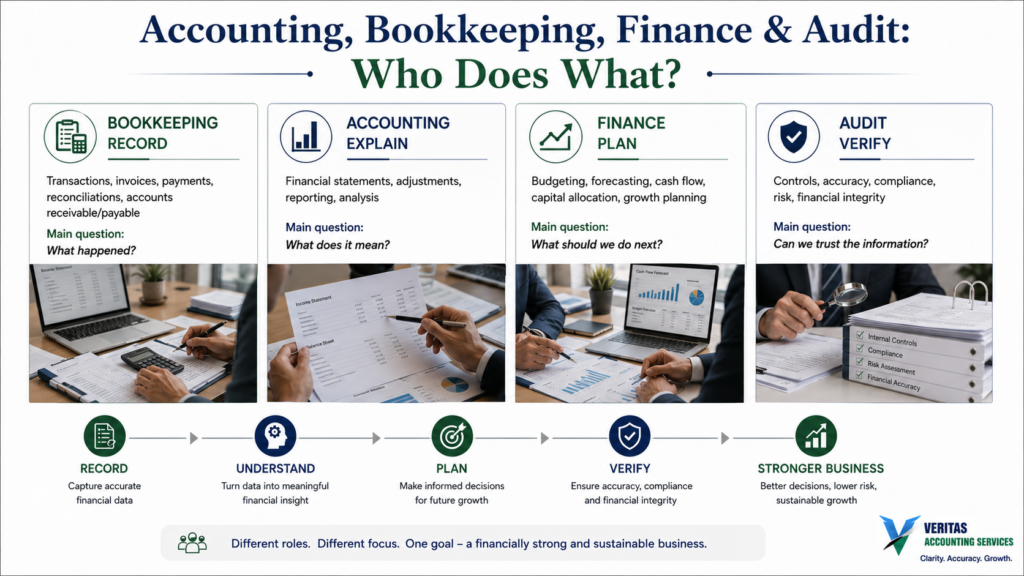
Accounting bookkeeping finance audit framework protecting financial success

The 4 Powerful Pillars That Protect Your Financial Success: Accounting, Bookkeeping, Finance & Audit

Accounting bookkeeping finance audit functions are the foundation of every financially successful business. When these four disciplines work together, they create clarity, compliance, control, and long-term growth. When ignored, they expose companies to risk, mismanagement, and financial instability.

These four functions are not interchangeable. Each serves a distinct role. When aligned properly, they create clarity, control, compliance, and strategic direction. When misunderstood or neglected, they expose businesses to risk, inefficiency, and costly surprises.

Understanding these four powerful pillars is essential for business owners, CFOs, and finance leaders who want sustainable financial success.


Pillar 1: Bookkeeping — The Foundation of Financial Accuracy

Accounting bookkeeping finance audit framework protecting financial success

Bookkeeping is the operational backbone of every financial system. It involves the systematic recording of daily financial transactions, including:

  • Sales and revenue entries
  • Vendor payments
  • Payroll expenses
  • Bank reconciliations
  • Accounts receivable and payable tracking

Without clean bookkeeping, everything else collapses.

Why Bookkeeping Matters

Accurate bookkeeping ensures:

  • Real-time visibility into cash flow
  • Clean bank and credit card reconciliations
  • Proper categorization of expenses
  • Reliable financial reporting

Poor bookkeeping creates distorted financial statements, missed tax deductions, cash flow blind spots, and compliance issues.

For growing businesses, scalable bookkeeping systems prevent operational chaos. For established companies, it ensures financial transparency and audit readiness.

Bookkeeping is not strategy — it is structure. But without structure, strategy fails.


Pillar 2: Accounting — Turning Data Into Financial Clarity

Accounting bookkeeping finance audit framework protecting financial success

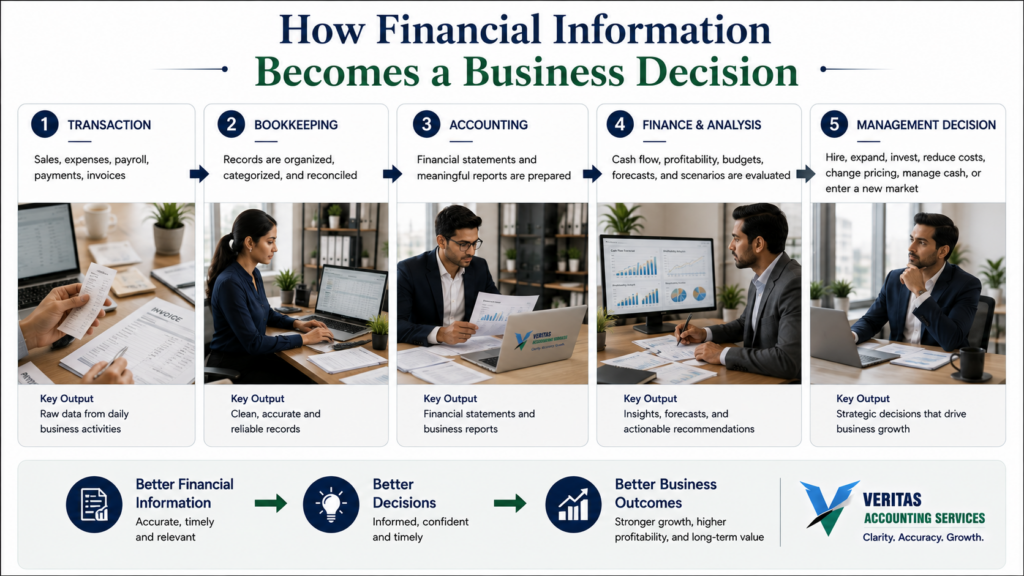
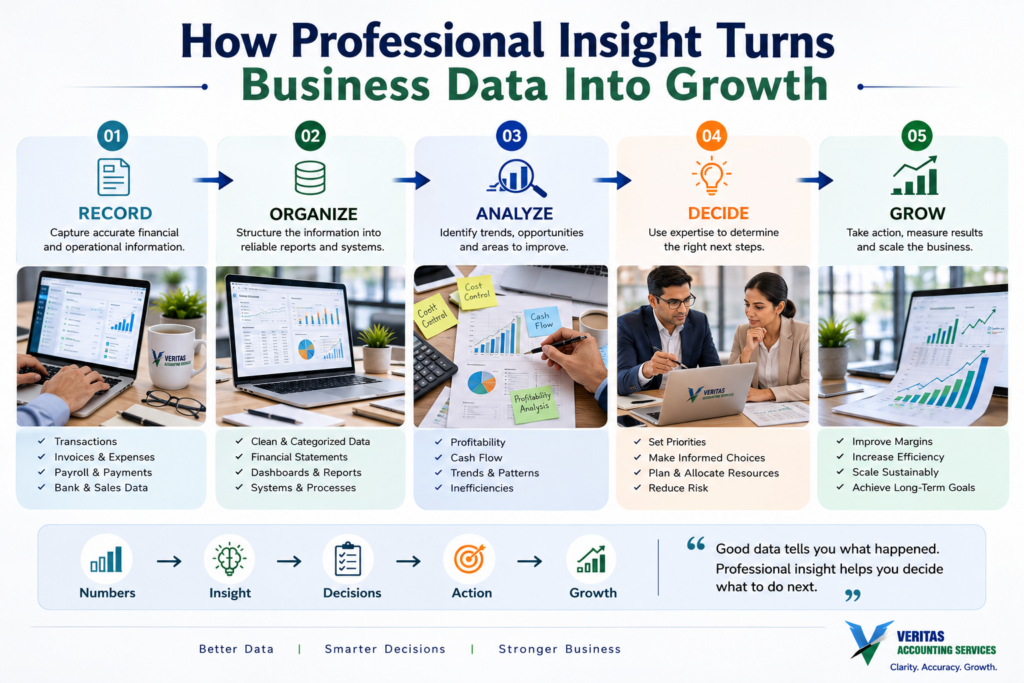
While bookkeeping records transactions, accounting interprets them.

Accounting transforms raw financial data into meaningful insights through:

  • Financial statement preparation
  • Accrual adjustments
  • Revenue recognition
  • Expense matching
  • Asset depreciation
  • Tax compliance alignment

In simple terms:
Bookkeeping records what happened.
Accounting explains what it means.

The Role of Accounting in Business Stability

Strong accounting ensures:

  • Accurate profit and loss statements
  • Reliable balance sheets
  • Compliance with accounting standards
  • Proper tax positioning
  • Informed business decision-making

Accounting also ensures businesses adhere to GAAP (Generally Accepted Accounting Principles) or relevant reporting frameworks when applicable.

Without accounting oversight, businesses risk:

  • Misstated earnings
  • Compliance penalties
  • Cash flow mismanagement
  • Tax exposure

Accounting is the bridge between operations and strategic leadership.


Pillar 3: Finance — Driving Strategy and Growth

Accounting bookkeeping finance audit framework protecting financial success

Finance goes beyond reporting. It focuses on planning, forecasting, capital management, and strategic decision-making.

While bookkeeping and accounting look at historical performance, finance focuses on the future.

Core Finance Functions Include:

  • Budgeting and forecasting
  • Cash flow modeling
  • Capital allocation decisions
  • Debt and equity management
  • Risk assessment
  • Financial scenario planning

Finance answers critical questions:

  • Can we afford expansion?
  • How much working capital do we need?
  • Should we reinvest profits or reduce debt?
  • What is our break-even threshold?

Strong financial management protects businesses from liquidity crises and ensures long-term sustainability.

A company may be profitable on paper but fail due to poor cash flow management. Finance prevents that disconnect.


Pillar 4: Audit — Safeguarding Integrity and Compliance

Audit serves as the independent safeguard of financial accuracy and internal controls.

Auditing evaluates:

  • Financial statement reliability
  • Internal control effectiveness
  • Fraud risk exposure
  • Regulatory compliance
  • Operational integrity

Audit can be internal (conducted within the organization) or external (performed by independent professionals).

Why Audit Protects Financial Success

Audit ensures:

  • Errors are identified early
  • Fraud risks are minimized
  • Financial statements are credible
  • Stakeholders maintain confidence

Investors, lenders, regulators, and business partners rely on audited financial data for trust.

Even businesses not legally required to undergo audits benefit from periodic internal reviews to strengthen controls and prevent leakage.

Audit is not about distrust — it is about discipline and transparency.


How the 4 Pillars Work Together

These four pillars are interconnected:

  • Bookkeeping supplies clean data.
  • Accounting ensures accurate reporting.
  • Finance turns reports into strategy.
  • Audit verifies integrity and compliance.

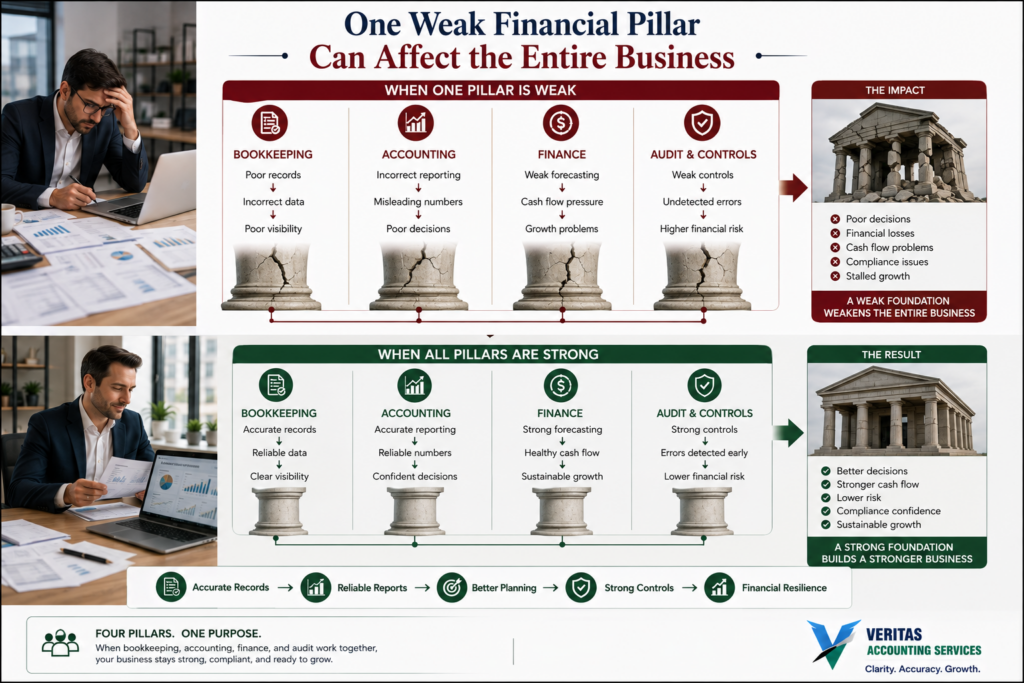
When any one pillar weakens, the entire structure becomes unstable.

For example:

  • Weak bookkeeping leads to inaccurate accounting.
  • Inaccurate accounting distorts financial planning.
  • Poor financial planning creates liquidity risk.
  • Weak controls increase audit findings.

True financial success depends on alignment across all four.


Common Misconceptions Businesses Have

1. “Bookkeeping and accounting are the same.”

They are not. Bookkeeping records. Accounting analyzes.

2. “Finance is only for large corporations.”

Every business needs financial planning, regardless of size.

3. “Audit is only required when legally mandated.”

Proactive audits protect businesses from internal breakdowns.

4. “Profit equals financial success.”

Profit without cash flow management and compliance can lead to failure.

Understanding these distinctions strengthens leadership decisions.


Risks of Ignoring Any One Pillar

Neglecting bookkeeping:

  • Inaccurate tax filings
  • Missed deductions
  • Cash flow misstatements

Neglecting accounting:

  • Misleading financial statements
  • Regulatory risk
  • Poor business decisions

Neglecting finance:

  • Over-leveraging
  • Poor capital allocation
  • Expansion miscalculations

Neglecting audit:

  • Internal fraud exposure
  • Compliance failures
  • Investor distrust

Each pillar protects against a different type of risk.


The Strategic Advantage of Integration

Forward-thinking businesses integrate all four pillars through:

  • Cloud-based accounting systems
  • Automated reconciliation tools
  • Financial dashboards
  • Internal control frameworks
  • Regular financial reviews

Technology enhances efficiency, but expertise ensures accuracy.

Automation can streamline bookkeeping.
Professional accounting ensures compliance.
Strategic finance drives growth.
Independent audit protects credibility.

The integration of systems and expertise defines modern financial leadership.


When to Strengthen Each Pillar

You should reassess your financial structure when:

  • Revenue growth accelerates
  • Investor funding is introduced
  • International operations expand
  • Regulatory complexity increases
  • Cash flow volatility emerges

Growth without financial infrastructure creates fragility.

Strengthening accounting, bookkeeping, finance, and audit early prevents future crises.


The Leadership Perspective

For CEOs and founders, these four pillars are not administrative burdens — they are strategic assets.

Strong financial foundations:

  • Increase valuation
  • Improve investor confidence
  • Support scalable growth
  • Reduce compliance risk
  • Strengthen operational clarity

Financial success is not accidental. It is engineered through disciplined systems.


The Bottom Line

The 4 Powerful Pillars That Protect Your Financial Success — accounting, bookkeeping, finance, and audit — are not optional functions. They are essential safeguards.

Bookkeeping ensures accuracy.
Accounting provides clarity.
Finance drives strategy.
Audit protects integrity.

Together, they create financial resilience.

Businesses that respect and invest in these pillars do more than survive — they build sustainable, scalable, and trustworthy enterprises.

In a competitive environment, financial strength is not just about generating profit. It is about protecting it.

And protection begins with these four powerful pillars.

GET IN TOUCH

Schedule a FREE Call

Missed Something on Your Tax Return? 6 Smart Ways to Fix It Legally

An amended tax return is the correct way to fix mistakes after filing your taxes. If you realize…

The Ultimate 9-Step Guide for Non-US Founders to Start & Run a US Company Legally

Starting a U.S. business as a foreign founder is no longer complex—but it is structured. With the…

3 Costly Tax Residency Mistakes That Can Destroy a Client’s Return

Before a tax professional chooses the correct tax form, determines taxable income, or identifies…

Big Change for 2026: When Catch-Up Contributions Must Go Roth

A major retirement planning shift is coming. Beginning in 2026, Roth catch-up contributions 2026…

Big Donation, Bigger Mistake: Why the Tax Court Rejected a $188,563 Charitable Deduction

A large charitable donation may reflect generosity, goodwill, and community spirit. But as one…

Waiting for Your EITC or ACTC Refund? 3 Critical IRS Dates to Know in 2026

Each tax season, questions about refund timing surge—especially from taxpayers who rely on…

Surprised by a Lump-Sum Social Security Check? Here’s How the Tax Rules Really Work

Receiving a lump-sum Social Security payment often brings relief, especially after months or years…

Connect on our Socials!

Roth catch-up contributions 2026

Big Change for 2026: When Catch-Up Contributions Must Go Roth

A major retirement planning shift is coming. Beginning in 2026, Roth catch-up contributions 2026 will become mandatory for certain higher-wage employees under SECURE 2.0.

For years, many professionals nearing retirement used pre-tax catch-up contributions to reduce taxable income while increasing retirement savings. That flexibility is changing.

To understand the impact, we first need to break down what catch-up contributions are, how they worked before, and what exactly changes in 2026.


What Are Catch-Up Contributions?

Catch-up contributions are additional retirement plan contributions allowed for individuals age 50 or older.

Normally, retirement plans like 401(k)s limit how much employees can defer from their salary each year. Once someone turns 50, the IRS allows them to contribute an extra amount above the standard annual limit.

These extra contributions are called catch-up contributions.

The purpose is simple:

  • Help older workers accelerate retirement savings
  • Make up for years when contributions may have been lower
  • Provide tax planning flexibility near retirement

Before 2026, catch-up contributions could be made either:

  • On a pre-tax basis, or
  • On a Roth basis, if the plan allowed

That flexibility gave high earners powerful tax planning options.


What Is a Roth Catch-Up Contribution?

A Roth catch-up contribution is simply a catch-up contribution made on an after-tax basis.

This means:

  • The contribution is included in current taxable income
  • Taxes are paid now
  • Qualified distributions in retirement are tax-free

By contrast, pre-tax catch-up contributions:

  • Reduce current taxable income
  • Defer taxes until retirement
  • Are fully taxable when withdrawn

Until now, employees could choose between these two treatments.


How Catch-Up Contributions Worked Before 2026

Roth catch-up contributions 2026

Before the Roth catch-up contributions 2026 rule:

  • Employees age 50+ could make catch-up contributions.
  • They could elect pre-tax treatment.
  • They could elect Roth treatment.
  • The choice was entirely voluntary.

Many high earners preferred pre-tax catch-up contributions because they reduced current-year taxable income during peak earning years.

This strategy was particularly useful for:

  • Executives
  • Physicians
  • Business owners
  • Professionals nearing retirement

That voluntary flexibility disappears in 2026 for certain employees.


What Is Changing in 2026?

Under SECURE 2.0, a new provision under §414(v)(7)(A) introduces the mandatory Roth catch-up rule.

Beginning with taxable years after December 31, 2026:

If an employee’s prior-year FICA wages exceed the indexed wage threshold, their catch-up contributions must be made as Roth.

That means:

  • No pre-tax option for catch-up contributions
  • Catch-up contributions must go to a designated Roth account (DRA)
  • Current taxable income increases

This is the core of the Roth catch-up contributions 2026 change.


Roth catch-up contributions 2026

Who Is Affected by Roth Catch-Up Contributions 2026?

The rule applies to employees whose prior-year FICA wages from the same employer exceed an indexed threshold.

Important clarifications:

  • Wages are determined using Box 3 of Form W-2 (FICA wages)
  • Not Box 1 taxable wages
  • Not total household income
  • Not self-employment income

If prior-year wages exceed the threshold:
Catch-up contributions must be Roth.

If wages do not exceed the threshold:
Employees may still choose pre-tax catch-up contributions.

New hires without prior-year FICA wages from the employer are not subject to the rule for that year.


Which Retirement Plans Are Covered?

Roth catch-up contributions 2026

The Roth catch-up contributions 2026 rule applies to:

  • §401(k) plans
  • §403(b) plans
  • Governmental §457(b) plans

It does not apply to:

  • SIMPLE plans
  • SEP plans

This means most common employer-sponsored defined contribution plans must comply.


What About the Higher Age-Based Catch-Up Increase?

SECURE 2.0 also increased catch-up limits for employees ages 60–63.

However, this change does not override the Roth requirement.

If the wage threshold is met:

  • Standard catch-up contributions must be Roth
  • Higher age-based catch-up contributions must also be Roth

The amount increases.
The tax treatment does not change.


What Happens If the Plan Does Not Offer Roth?

This is a significant issue.

Employer plans are not required to offer Roth contributions. But if they do not include a Roth feature:

Employees subject to Roth catch-up contributions 2026 cannot make catch-up contributions at all.

They cannot contribute them pre-tax.
They cannot contribute them Roth.

As a result, many plan sponsors are amending plan documents and updating payroll systems ahead of 2026.


Immediate Tax Impact for High Earners

The biggest shift under Roth catch-up contributions 2026 is the tax timing.

Before 2026:
Catch-up contributions reduced taxable income.

After 2026:
Catch-up contributions increase taxable income.

For example:

If a client contributes $7,500 in catch-up contributions:

  • Previously: taxable income decreased by $7,500
  • Now: taxable income increases by $7,500

This affects:

  • Federal tax liability
  • State income taxes
  • Withholding amounts
  • Estimated payments
  • Medicare premium exposure

Cash flow planning becomes essential.


Why Congress Made This Change

The SECURE 2.0 Roth catch-up rule is largely a revenue acceleration measure.

By forcing higher earners to contribute catch-up amounts on a Roth basis:

  • Taxes are collected now
  • Instead of deferred decades into retirement

This increases short-term federal revenue.

For savers, however, the retirement savings opportunity remains intact — only the tax timing changes.


Strategic Planning Opportunities

Even though Roth catch-up contributions 2026 eliminate pre-tax flexibility for certain earners, strategic planning remains possible.

Tax professionals can help clients:

  • Adjust regular deferral elections
  • Optimize withholding
  • Evaluate Roth conversions
  • Coordinate charitable planning
  • Diversify retirement income streams

In some cases, forced Roth contributions may actually enhance long-term tax diversification.


Payroll and Employer Compliance

Employers must:

  • Identify employees above the wage threshold annually
  • Update payroll systems
  • Amend plan documents if necessary
  • Communicate changes clearly

Treasury regulations generally apply after December 31, 2026. Earlier implementation is allowed under good-faith interpretation.

Employers should begin preparation well before 2026.


The Bottom Line

The Roth catch-up contributions 2026 rule marks one of the most significant retirement tax changes in recent years.

Before 2026:
Catch-up contributions could be pre-tax or Roth.

After 2026:
Certain high-wage employees must contribute catch-up amounts on a Roth basis.

The opportunity to save remains.
The tax timing changes.

For high earners and tax professionals, preparation now prevents surprises later.

Understanding what catch-up contributions are, how Roth catch-ups work, and how Roth catch-up contributions 2026 alter the landscape ensures smarter retirement planning in the years ahead.

The shift to Roth catch-up contributions 2026 does not eliminate retirement savings opportunities — it changes when taxes are paid. With careful modeling and timely adjustments, this new rule can be integrated into a broader, long-term retirement strategy.

Smart preparation in 2025 will make 2026 a planning opportunity, not a tax surprise.

GET IN TOUCH

Schedule a FREE Call

Missed Something on Your Tax Return? 6 Smart Ways to Fix It Legally

An amended tax return is the correct way to fix mistakes after filing your taxes. If you realize…

The Ultimate 9-Step Guide for Non-US Founders to Start & Run a US Company Legally

Starting a U.S. business as a foreign founder is no longer complex—but it is structured. With the…

3 Costly Tax Residency Mistakes That Can Destroy a Client’s Return

Before a tax professional chooses the correct tax form, determines taxable income, or identifies…

Big Change for 2026: When Catch-Up Contributions Must Go Roth

A major retirement planning shift is coming. Beginning in 2026, Roth catch-up contributions 2026…

Big Donation, Bigger Mistake: Why the Tax Court Rejected a $188,563 Charitable Deduction

A large charitable donation may reflect generosity, goodwill, and community spirit. But as one…

Waiting for Your EITC or ACTC Refund? 3 Critical IRS Dates to Know in 2026

Each tax season, questions about refund timing surge—especially from taxpayers who rely on…

Surprised by a Lump-Sum Social Security Check? Here’s How the Tax Rules Really Work

Receiving a lump-sum Social Security payment often brings relief, especially after months or years…

Connect on our Socials!

Tax Court charitable deduction

Big Donation, Bigger Mistake: Why the Tax Court Rejected a $188,563 Charitable Deduction

A large charitable donation may reflect generosity, goodwill, and community spirit. But as one recent Tax Court charitable deduction case proves, generosity alone is never enough to secure a tax benefit.

In early 2026, the U.S. Tax Court rejected a $188,563 noncash charitable contribution claimed by taxpayers in Gibson v. Commissioner. The ruling is a powerful reminder that charitable deductions are governed by strict substantiation rules under §170 of the Internal Revenue Code.

The lesson is clear: documentation determines deductions — not intentions.


The Facts Behind the Tax Court Charitable Deduction Case

Tax Court charitable deduction

The taxpayers filed a joint 2019 return claiming nearly $194,000 in noncash charitable contributions. The majority of that deduction came from more than 4,000 items described as “high-end cycling equipment apparel.”

The claimed fair market value?
$188,563.

To support the deduction, the taxpayers included:

  • Schedule A (Itemized Deductions)
  • Form 8283 (Noncash Charitable Contributions)
  • A charitable receipt
  • An appraisal report (produced during IRS examination)

At first glance, it appeared the paperwork existed. But the Tax Court charitable deduction was ultimately denied because critical substantiation requirements were not satisfied.


Why the Tax Court Charitable Deduction Was Denied

Tax Court charitable deduction

Charitable contribution deductions are considered a “matter of legislative grace.” That phrase means taxpayers must strictly comply with statutory requirements in order to receive the benefit.

Under §170 substantiation rules:

For noncash donations over $500:

Taxpayers must maintain records showing:

  • How the property was acquired
  • When it was acquired
  • The donor’s adjusted basis (cost)

For donations exceeding $5,000:

Taxpayers must obtain:

  • A qualified appraisal
  • From a qualified appraiser
  • Properly complete Form 8283
  • Attach required documentation to the return

The Tax Court charitable deduction failed because these requirements were not properly met.


The Critical Basis Problem

One of the biggest weaknesses in the case was the lack of reliable basis information.

The taxpayers claimed the items were received as a gift from a family member. However:

  • They could not confirm whether the property was inherited or gifted during the donor’s lifetime.
  • They could not establish the original owner’s cost basis.
  • They lacked documentation supporting acquisition details.

This matters because the charitable deduction is not always based solely on fair market value.

If the donated property would generate ordinary income or short-term capital gain upon sale, the deduction may be limited to adjusted basis — not fair market value.

Without reliable basis documentation, the court could not verify the allowable amount.

Result: The Tax Court charitable deduction was denied.


The Appraisal Was Not Enough

Although the taxpayers eventually produced an appraisal report, timing and compliance matter.

The court found issues including:

  • Failure to establish that the appraiser met the IRS definition of a qualified appraiser.
  • Lack of critical acquisition and basis information within the appraisal.
  • Questions regarding proper documentation attachment.

Under IRS charitable deduction rules, producing an appraisal after an audit begins does not cure technical filing deficiencies.

The Tax Court charitable deduction demonstrates that compliance must occur at the time of filing.


Fair Market Value Is Not Always the Answer

Many taxpayers believe that fair market value automatically determines the deductible amount. This is incorrect.

In this case, testimony suggested confusion regarding how fair market value applied. The court found no support for assumptions that deductions could be arbitrarily reduced or discounted percentages applied.

The IRS allowed only a small portion of the total claimed noncash charitable contribution.

The remaining $188,563 was disallowed.

Again, the Tax Court charitable deduction ruling reinforces that valuation must align with statutory rules — not personal interpretation.


The Burden of Proof in a Tax Court Charitable Deduction Case

Under §7491(a), the burden of proof generally remains with the taxpayer unless strict recordkeeping requirements are satisfied.

To shift the burden to the IRS, taxpayers must:

  • Maintain proper records
  • Introduce credible evidence
  • Fully comply with substantiation requirements

In this case, the taxpayers failed to meet those standards.

Without adequate charitable deduction documentation, courts will not reconstruct the deduction on behalf of taxpayers.


What Tax Professionals Should Learn

Tax Court charitable deduction

The Tax Court charitable deduction decision provides a practical checklist for advisors.

Before filing large noncash charitable contribution deductions, ask:

  • Who originally owned the property?
  • What was the acquisition date?
  • What was the adjusted basis?
  • Does the appraisal meet IRS regulatory requirements?
  • Is Form 8283 fully completed and attached?
  • Has the appraiser’s qualification been verified?

If any of these answers are uncertain, the deduction is vulnerable.


Why the IRS Scrutinizes Large Noncash Charitable Contributions

Noncash charitable contribution deductions are a frequent audit focus area.

Reasons include:

  • Inflated fair market values
  • Improper appraisal procedures
  • Incomplete Form 8283 filings
  • Missing acquisition records
  • Basis miscalculations

The Tax Court charitable deduction ruling illustrates that the IRS and courts apply strict compliance standards, particularly for high-dollar deductions.


Documentation Is the Real Tax Strategy

This case was not about fraud or intentional misconduct.

It was about incomplete records.

Tax law does not operate on assumption or fairness. It operates on documentation.

Even a legitimate donation will fail if statutory substantiation rules are ignored.

That is the ultimate takeaway from this Tax Court charitable deduction case.


For taxpayers:

  • Maintain acquisition records permanently for high-value property.
  • Understand basis limitations before claiming fair market value.
  • Secure a qualified appraisal before filing.
  • Avoid last-minute valuation decisions.

For tax professionals:

  • Educate clients before donation occurs.
  • Review appraisal credentials.
  • Verify Form 8283 completion carefully.
  • Document basis thoroughly.
  • Slow the process down when large deductions are involved.

Front-end diligence prevents back-end litigation.


Final Takeaway

The Tax Court charitable deduction decision in Gibson v. Commissioner is not about generosity. It is about compliance.

A $188,563 deduction disappeared not because the donation lacked goodwill, but because it lacked technical substantiation.

The court will not fill in missing details. The IRS will not assume accuracy. And fair market value alone will not rescue incomplete documentation.

Charitable giving remains powerful and meaningful. But for tax purposes, the most important word is not generosity — it is documentation.

GET IN TOUCH

Schedule a FREE Call

Missed Something on Your Tax Return? 6 Smart Ways to Fix It Legally

An amended tax return is the correct way to fix mistakes after filing your taxes. If you realize…

The Ultimate 9-Step Guide for Non-US Founders to Start & Run a US Company Legally

Starting a U.S. business as a foreign founder is no longer complex—but it is structured. With the…

3 Costly Tax Residency Mistakes That Can Destroy a Client’s Return

Before a tax professional chooses the correct tax form, determines taxable income, or identifies…

Big Change for 2026: When Catch-Up Contributions Must Go Roth

A major retirement planning shift is coming. Beginning in 2026, Roth catch-up contributions 2026…

Big Donation, Bigger Mistake: Why the Tax Court Rejected a $188,563 Charitable Deduction

A large charitable donation may reflect generosity, goodwill, and community spirit. But as one…

Waiting for Your EITC or ACTC Refund? 3 Critical IRS Dates to Know in 2026

Each tax season, questions about refund timing surge—especially from taxpayers who rely on…

Surprised by a Lump-Sum Social Security Check? Here’s How the Tax Rules Really Work

Receiving a lump-sum Social Security payment often brings relief, especially after months or years…

Connect on our Socials!

EITC and ACTC refund dates

Waiting for Your EITC or ACTC Refund? 3 Critical IRS Dates to Know in 2026

Each tax season, questions about refund timing surge—especially from taxpayers who rely on refundable credits like the Earned Income Tax Credit (EITC) and the Additional Child Tax Credit (ACTC). These refunds often represent a meaningful source of financial support, and delays can cause understandable concern.

For the 2026 filing season, the IRS has set clear expectations around when EITC and ACTC refunds will be released. While the rules themselves are not new, understanding the timing—and the reasons behind it—can help taxpayers plan better and reduce frustration. Knowing the three critical IRS dates makes all the difference.


EITC and ACTC refund dates

Why EITC and ACTC Refunds Follow a Different Timeline

Refunds that include the EITC or ACTC are subject to special rules under the Protecting Americans from Tax Hikes (PATH) Act. The PATH Act requires the IRS to hold these refunds until mid-February, regardless of how early the return is filed.

The goal is fraud prevention. By delaying refunds, the IRS has additional time to verify:

  • Income reported on Forms W-2 and 1099
  • Withholding amounts
  • Dependent and qualifying child information

Although the delay can be frustrating, it has become a predictable and built-in part of the filing season.


📅 The 3 Critical IRS Dates to Know for 2026

EITC and ACTC refund dates

1. Mid-February 2026: Refund Holds Begin to Lift

Under the PATH Act, the IRS cannot issue refunds that include EITC or ACTC before mid-February. This rule applies even if:

  • The return is filed on the first day of the season
  • The return is accurate and complete
  • Direct deposit is selected

This means taxpayers claiming these credits should not expect refunds in January or early February.


2. February 21, 2026: “Where’s My Refund?” Updates

By around February 21, 2026, the IRS expects its “Where’s My Refund?” tool to begin showing meaningful updates for most EITC and ACTC filers.

Once a return is approved, the tool will display a projected deposit date, which helps set realistic expectations. Tax professionals should encourage clients to rely on this tool rather than daily follow-ups.


3. Around March 2, 2026: Most Refunds Are Issued

The IRS has stated that most taxpayers who file early, claim EITC or ACTC, and choose direct deposit should receive refunds around March 2, 2026, assuming no issues with the return.

Some refunds may arrive slightly earlier or later depending on:

  • Bank or debit card processing times
  • Weekends or holidays
  • Internal financial institution policies

Paper-filed returns and refunds issued by check will take longer.


How Refund Delivery Method Affects Timing

Choosing electronic filing with direct deposit remains the fastest and most reliable way to receive a refund. Taxpayers who opt for:

  • Paper filing
  • Mailed checks

should expect additional delays beyond the March 2 target window.

Even when the IRS releases funds, the final deposit timing depends on how quickly the taxpayer’s financial institution processes incoming payments.


Common Issues That Can Delay EITC or ACTC Refunds

Even with clear refund dates, some returns are delayed due to errors or mismatches. Common triggers include:

  • Incorrect Social Security numbers for dependents
  • Income that does not match Forms W-2 or 1099-NEC
  • Errors on Schedule 8812 (Credits for Qualifying Children and Other Dependents)
  • Missing or incomplete documentation

Because refundable credits are a major IRS enforcement focus, these returns receive additional scrutiny.


Why Accuracy Matters More Than Speed

Filing early is helpful, but accuracy matters more than speed when claiming EITC or ACTC. Tax professionals must meet strict due diligence requirements, and even small mistakes can cause processing delays or correspondence audits.

Verifying eligibility, reviewing dependent qualifications, and confirming income documents before filing helps prevent avoidable delays and protects both the taxpayer and the preparer.


Helping Clients Plan Around Refund Timing

For many families, EITC and ACTC refunds are used to:

  • Pay down debt
  • Catch up on household expenses
  • Build emergency savings

Clear communication about refund timing helps clients plan responsibly and reduces pressure to use high-cost refund advance products.

Setting expectations early—especially explaining that March refunds are normal, not delayed—can significantly reduce anxiety during filing season.


Using “Where’s My Refund?” as a Client Education Tool

The IRS “Where’s My Refund?” tool remains one of the most effective ways to manage expectations. Once a return shows as approved, the projected deposit date provides a reliable window for when funds should arrive.

Encouraging clients to use this tool empowers them and reduces unnecessary follow-ups.


A Timely Reminder for Tax Professionals

As refund-related questions increase, proactive education becomes a value-add. Explaining:

  • The PATH Act delay
  • The March 2 target date
  • Common causes of delays

helps build trust and reinforces confidence in your practice.

For professionals looking to deepen their technical understanding, continued education on child-related credits remains essential—especially as enforcement around refundable credits continues to evolve.


Final Takeaway

Waiting for an EITC or ACTC refund can feel stressful, but the timeline for 2026 is clear and predictable. Understanding the three critical IRS dates—mid-February holds, late-February status updates, and early-March deposits—helps taxpayers plan with confidence.

With accurate filing, electronic submission, and direct deposit, most refunds will arrive right on schedule. And with the right guidance, what feels like a delay becomes simply part of a system designed to protect taxpayers and the integrity of the tax process.

GET IN TOUCH

Schedule a FREE Call

Missed Something on Your Tax Return? 6 Smart Ways to Fix It Legally

An amended tax return is the correct way to fix mistakes after filing your taxes. If you realize…

The Ultimate 9-Step Guide for Non-US Founders to Start & Run a US Company Legally

Starting a U.S. business as a foreign founder is no longer complex—but it is structured. With the…

3 Costly Tax Residency Mistakes That Can Destroy a Client’s Return

Before a tax professional chooses the correct tax form, determines taxable income, or identifies…

Big Change for 2026: When Catch-Up Contributions Must Go Roth

A major retirement planning shift is coming. Beginning in 2026, Roth catch-up contributions 2026…

Big Donation, Bigger Mistake: Why the Tax Court Rejected a $188,563 Charitable Deduction

A large charitable donation may reflect generosity, goodwill, and community spirit. But as one…

Waiting for Your EITC or ACTC Refund? 3 Critical IRS Dates to Know in 2026

Each tax season, questions about refund timing surge—especially from taxpayers who rely on…

Surprised by a Lump-Sum Social Security Check? Here’s How the Tax Rules Really Work

Receiving a lump-sum Social Security payment often brings relief, especially after months or years…

Connect on our Socials!

lump-sum Social Security benefits

Surprised by a Lump-Sum Social Security Check? Here’s How the Tax Rules Really Work

Receiving a lump-sum Social Security payment often brings relief, especially after months or years of waiting for approval. But that relief is frequently followed by confusion—and sometimes fear—once clients realize taxes may apply.

For the 2026 filing season, the tax rules for lump-sum Social Security benefits remain largely unchanged. However, clearer IRS reporting guidance and ongoing income pressures make understanding these rules more important than ever. With the right approach, a lump-sum payment does not have to result in a tax shock.


What Are Lump-Sum Social Security Benefits?

Lump-Sum Social Security Benefits

Lump-sum Social Security benefits occur when the Social Security Administration approves benefits retroactively and pays multiple months or years of missed benefits in a single check.

This most often happens with:

  • Disability claims delayed by appeals
  • Retirement benefits approved late
  • Survivor benefits processed after administrative delays

Although the payment covers prior periods, the IRS treats the entire amount as received in one tax year, which is where most confusion begins.


How Lump-Sum Social Security Benefits Are Taxed

The IRS requires taxpayers to report all Social Security benefits in the year they are received, even when those benefits relate to earlier years. This includes lump-sum Social Security benefits paid retroactively.

However, taxpayers are not required to amend prior-year tax returns. Instead, the tax law provides a special calculation designed to prevent unfair tax spikes.

This distinction is critical. Reporting does not automatically mean the entire payment is taxed at once.


Using the Lump-Sum Election for Social Security Benefits

Lump-Sum Social Security Benefits

To address retroactive payments, the IRS allows a special calculation known as the lump-sum election for Social Security benefits.

This method allows taxpayers to:

  • Recalculate how much of the benefits would have been taxable in the prior year(s)
  • Use the income thresholds that applied in those years
  • Carry forward only the taxable portion into the current return

If this method produces a lower taxable amount, the taxpayer may use it. If it does not, the standard calculation applies instead.

For 2026 filings, Forms 1040 and 1040-SR now include a checkbox on Line 6c to indicate that the lump-sum election was used. While no separate form is required, this checkbox helps document the calculation and improves return clarity.


Why Lump-Sum Social Security Benefits Trigger Tax Confusion

Many clients believe Social Security taxation thresholds increase with inflation. They do not.

The thresholds remain frozen at:

  • $25,000 and $34,000 for single filers
  • $32,000 and $44,000 for married filing jointly

Once combined income exceeds these levels, up to 50% and eventually 85% of Social Security benefits may be taxable. A lump-sum Social Security payment can temporarily push income above these limits, making careful calculation essential.


Multiple Years, Multiple Lump-Sum Calculations

When lump-sum Social Security benefits cover more than one prior year, the special calculation may be applied separately to each year included in the payment.

This is common in disability cases that span multiple years. Accurate prior-year income records and careful review of Form SSA-1099 are critical to applying the rules correctly.

Tax professionals should confirm:

  • Which years are included
  • Filing status for each year
  • Income levels that affect benefit taxation

Special Issues With Disability Lump-Sum Social Security Benefits

Lump-sum Social Security benefits

Disability claims often involve attorney representation. Clients frequently assume attorney fees reduce taxable Social Security benefits. They do not.

Social Security reports gross benefits before attorney fees on Form SSA-1099. Under the One Big Beautiful Bill Act (OBBBA), miscellaneous itemized deductions are permanently suspended, meaning attorney fees no longer reduce taxable income.

Clients should be prepared for this outcome to avoid unpleasant surprises.


What Tax Professionals Should Explain About Lump-Sum Social Security Benefits

Reassurance is essential. A lump-sum Social Security payment does not automatically mean higher taxes.

Clients should understand:

  • The IRS provides a special calculation method
  • Prior-year returns do not need to be amended
  • Proper reporting can significantly reduce taxable benefits

Handled correctly, lump-sum Social Security benefits become a planning opportunity rather than a problem.


Planning Beyond the Lump-Sum Payment

Discussing lump-sum Social Security benefits often leads to broader planning conversations, including:

  • Voluntary withholding on Social Security
  • Estimated tax payments
  • Medicare premium surcharges
  • Coordinating Social Security with pensions or retirement accounts

These conversations strengthen long-term client relationships and reinforce the advisor’s role as a trusted planner.


Final Takeaway

Lump-sum Social Security benefits can feel overwhelming, but the tax rules are designed to be fair. With the correct calculations, accurate reporting, and clear communication, most clients can avoid unnecessary tax stress.

For tax professionals, understanding how lump-sum Social Security benefits are taxed is a valuable way to deliver clarity, confidence, and meaningful guidance during an important financial moment.

GET IN TOUCH

Schedule a FREE Call

Missed Something on Your Tax Return? 6 Smart Ways to Fix It Legally

An amended tax return is the correct way to fix mistakes after filing your taxes. If you realize…

The Ultimate 9-Step Guide for Non-US Founders to Start & Run a US Company Legally

Starting a U.S. business as a foreign founder is no longer complex—but it is structured. With the…

3 Costly Tax Residency Mistakes That Can Destroy a Client’s Return

Before a tax professional chooses the correct tax form, determines taxable income, or identifies…

Big Change for 2026: When Catch-Up Contributions Must Go Roth

A major retirement planning shift is coming. Beginning in 2026, Roth catch-up contributions 2026…

Big Donation, Bigger Mistake: Why the Tax Court Rejected a $188,563 Charitable Deduction

A large charitable donation may reflect generosity, goodwill, and community spirit. But as one…

Waiting for Your EITC or ACTC Refund? 3 Critical IRS Dates to Know in 2026

Each tax season, questions about refund timing surge—especially from taxpayers who rely on…

Surprised by a Lump-Sum Social Security Check? Here’s How the Tax Rules Really Work

Receiving a lump-sum Social Security payment often brings relief, especially after months or years…

Connect on our Socials!

S corporation accounting and taxation

Is an S Corporation the Right Move? Accounting, Taxes, and Costly Mistakes Explained

Choosing the right business structure is one of the most impactful decisions a business owner can make. Many entrepreneurs are drawn to the S corporation because of its potential tax savings, but fewer understand the accounting discipline and compliance rules that come with it. An S corporation can be a smart move—but only when it is set up and maintained correctly.

Without proper S corporation accounting and taxation, the benefits that attract business owners can quickly turn into IRS scrutiny, penalties, and expensive corrections. This guide explains how S corporations work, how they are taxed, what accounting requirements matter most, and the costly mistakes business owners should avoid.


What Is an S Corporation?

S corporation accounting and taxation

An S corporation is a business entity that allows income, losses, deductions, and credits to pass through to shareholders for federal tax purposes. While it is legally formed as a corporation—or an LLC that elects S status—it avoids the double taxation associated with C corporations.

To become an S corporation, a business must file Form 2553 with the IRS and meet eligibility requirements. Once approved, the entity files an annual Form 1120-S, and shareholders report their share of income on their personal returns through Schedule K-1.

Understanding S corporation accounting and taxation starts with recognizing that tax savings depend on strict compliance.


Who Can Own an S Corporation?

The IRS places firm restrictions on who can own an S corporation. Violating these rules can automatically terminate S status.

Key ownership requirements include:

  • A maximum of 100 shareholders
  • Shareholders must generally be US citizens or resident individuals
  • Only one class of stock is permitted
  • Certain trusts and estates may qualify, but partnerships and corporations usually do not

Ownership changes should always be reviewed in advance to protect S corporation status.


How S Corporation Taxation Works

S corporation accounting and taxation

Pass-Through Income

An S corporation does not pay federal income tax at the entity level. Instead, profits and losses pass through to shareholders, who report them on their individual tax returns.

One of the most misunderstood aspects of S corporation accounting and taxation is that shareholders pay tax on their share of income even if no cash is distributed. Distributions are not required for income to be taxable.


Reasonable Compensation: A Critical IRS Rule

The IRS requires shareholders who actively work in the business to receive reasonable compensation as wages. This rule exists to prevent owners from avoiding payroll taxes.

Reasonable compensation must:

  • Be paid through payroll
  • Be subject to Social Security and Medicare taxes
  • Reflect industry standards and job duties

Any remaining profits may be distributed and are generally not subject to payroll taxes. However, underpaying salary is one of the most common audit triggers for S corporations. Proper handling of reasonable compensation is central to compliant S corporation accounting and taxation.


Distributions and Shareholder Basis

Distributions are often viewed as “tax-free,” but that is only true up to the shareholder’s basis. Basis is the shareholder’s investment in the company and determines:

  • Whether losses are deductible
  • Whether distributions are taxable
  • Gain or loss upon sale of shares

Accurate basis tracking is essential. Without it, distributions may be incorrectly reported, leading to unexpected taxes.


Accounting Requirements for S Corporations

Choosing an Accounting Method

Most S corporations use either the cash or accrual method of accounting. The selected method must be applied consistently and accurately. Proper S corporation accounting and taxation depends on correct income recognition and expense timing.


Tracking Shareholder Basis Correctly

Shareholder basis increases with:

  • Capital contributions
  • Pass-through income

It decreases with:

  • Distributions
  • Pass-through losses

Many S corporations fail to track basis annually, which can create problems even when bookkeeping appears accurate.


Reconciling Book and Tax Differences

Financial accounting income does not always equal taxable income. Differences arise from depreciation methods, limitations on meals, and timing differences. These must be reconciled properly on Form 1120-S to ensure accurate reporting.


Payroll and State Compliance Considerations

S corporations must comply with:

  • Federal and state payroll filings
  • Unemployment insurance
  • Workers’ compensation requirements
  • State income or franchise taxes

Some states impose entity-level taxes on S corporations or do not fully follow federal S corp rules. Multi-state operations require careful income sourcing and compliance planning.


Costly S Corporation Mistakes to Avoid

Many S corporation problems stem from avoidable errors, including:

  • Paying distributions without payroll
  • Underpaying owner salary
  • Missing payroll tax filings
  • Violating shareholder eligibility rules
  • Ignoring shareholder basis tracking

These mistakes can result in penalties, interest, and loss of S corporation status.


When an S Corporation Makes Sense—and When It Doesn’t

An S corporation is often well-suited for:

  • Profitable owner-operated businesses
  • Professional service firms
  • Consulting and agency businesses

It may not be ideal for:

  • Companies seeking outside investors
  • Businesses issuing multiple equity classes
  • Businesses planning to retain significant earnings

Entity selection should be revisited as income, ownership, and goals evolve.


Tax Planning Opportunities for S Corporations

When managed properly, S corporation accounting and taxation can support:

  • Reduced self-employment taxes
  • Optimized owner compensation
  • Strategic distribution planning
  • Retirement contribution strategies

Proactive planning turns compliance into a financial advantage rather than a burden.


Final Thoughts

An S corporation can be a powerful structure—but it is not automatically the right move for every business. The benefits only materialize when accounting, payroll, and tax rules are followed carefully.

Business owners who understand S corporation accounting and taxation and work with experienced professionals are far more likely to capture tax savings while avoiding costly mistakes. When handled correctly, an S corporation becomes not just a tax strategy, but a stable foundation for long-term growth.

GET IN TOUCH

Schedule a FREE Call
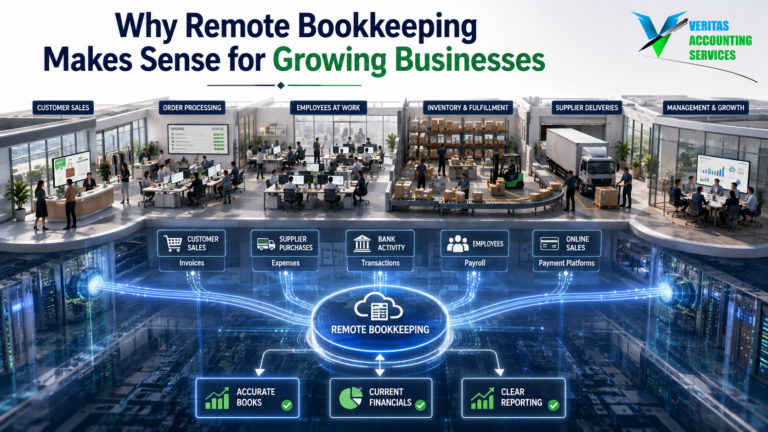
Missed Something on Your Tax Return? 6 Smart Ways to Fix It Legally

An amended tax return is the correct way to fix mistakes after filing your taxes. If you realize…

The Ultimate 9-Step Guide for Non-US Founders to Start & Run a US Company Legally

Starting a U.S. business as a foreign founder is no longer complex—but it is structured. With the…

3 Costly Tax Residency Mistakes That Can Destroy a Client’s Return

Before a tax professional chooses the correct tax form, determines taxable income, or identifies…

Big Change for 2026: When Catch-Up Contributions Must Go Roth

A major retirement planning shift is coming. Beginning in 2026, Roth catch-up contributions 2026…

Big Donation, Bigger Mistake: Why the Tax Court Rejected a $188,563 Charitable Deduction

A large charitable donation may reflect generosity, goodwill, and community spirit. But as one…

Waiting for Your EITC or ACTC Refund? 3 Critical IRS Dates to Know in 2026

Each tax season, questions about refund timing surge—especially from taxpayers who rely on…

Surprised by a Lump-Sum Social Security Check? Here’s How the Tax Rules Really Work

Receiving a lump-sum Social Security payment often brings relief, especially after months or years…

Connect on our Socials!