




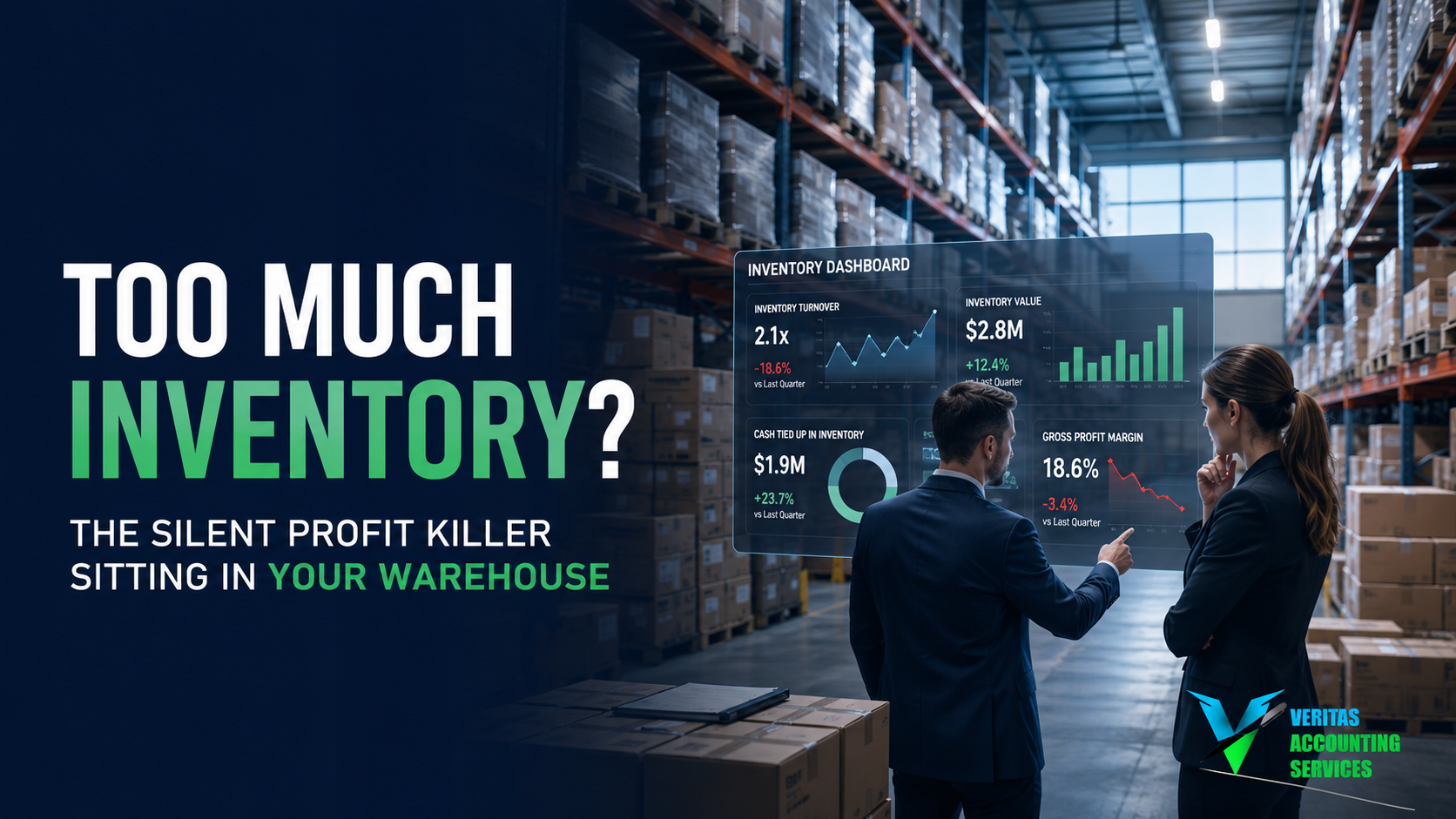

Too Much Inventory? The Silent Profit Killer Sitting in Your Warehouse
Many business owners believe having plenty of inventory is a sign of preparedness. Shelves full of products create a sense of security, ensuring customer orders can always be fulfilled.
However, what looks like a valuable business asset can quietly become one of your largest financial burdens.
Excess inventory doesn’t just occupy warehouse space—it locks up working capital, increases inventory costs, reduces profitability, and limits your ability to invest in business growth.
The most successful businesses don’t simply buy more inventory. They manage inventory strategically to maximize cash flow, reduce waste, and improve financial performance.
Inventory Isn’t Just Stock—It’s Money Sitting on the Shelf
Every item stored in your warehouse represents money that is no longer available for other business needs.
Until inventory is sold, your investment remains tied up.
That means less cash available for:
- Marketing campaigns
- Hiring skilled employees
- Expanding operations
- Purchasing faster-moving products
- Investing in new technology
Many businesses focus only on purchasing costs while overlooking the long-term inventory costs associated with holding products for months—or even years.
Inventory should generate profits, not consume cash.
Why Excess Inventory Hurts Your Business
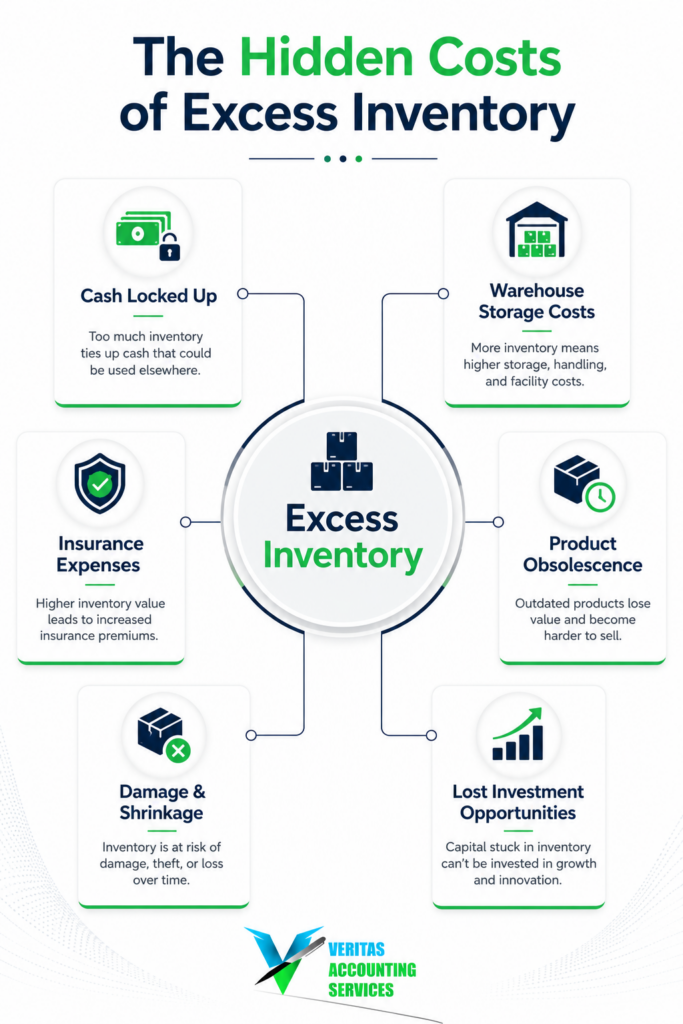
Holding extra stock may seem harmless, but it creates financial pressure in several ways.
Cash Flow Gets Trapped
Cash invested in slow-moving products cannot be used elsewhere.
Healthy businesses rely on strong cash flow to pay suppliers, employees, taxes, and operating expenses. Excess inventory reduces financial flexibility and often forces businesses to borrow money unnecessarily.
Storage Expenses Continue to Grow
Every additional pallet or shelf requires:
- Warehouse space
- Rent
- Utilities
- Insurance
- Security
- Inventory handling
These ongoing inventory costs continue whether products sell or not.
Products Lose Value
Inventory rarely becomes more valuable over time.
Businesses frequently experience:
- Obsolete products
- Expired inventory
- Seasonal items losing demand
- Packaging changes
- New product launches replacing old models
When products become outdated, businesses often sell them at heavy discounts—or write them off completely.
Higher Risk of Damage and Theft
The longer products remain in storage, the greater the likelihood of:
- Damage
- Theft
- Misplacement
- Shrinkage
- Quality deterioration
These losses directly reduce profits while increasing overall inventory costs.
The Hidden Costs Most Businesses Ignore
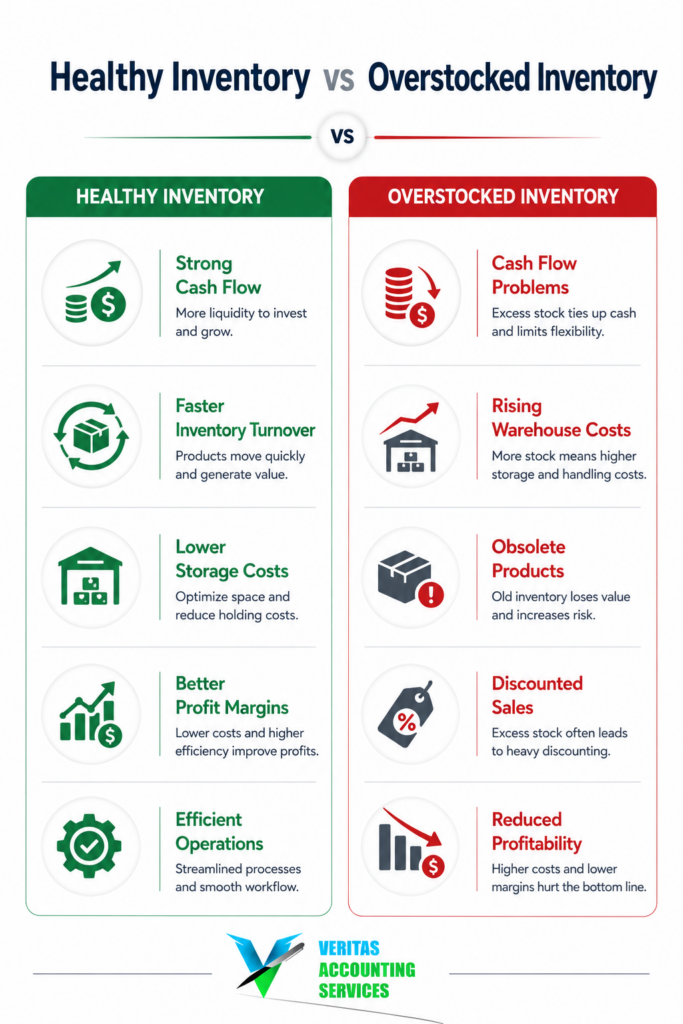
Many business owners calculate only the purchase price of inventory.
The true carrying cost is much higher.
Hidden expenses often include:
| Hidden Cost | Business Impact |
|---|---|
| Storage | Higher warehouse expenses |
| Insurance | Increased operating costs |
| Financing | Interest on borrowed funds |
| Obsolescence | Inventory write-offs |
| Damage & Theft | Lost profit |
| Handling | Additional labour costs |
| Technology | Inventory software and tracking |
| Opportunity Cost | Missed investment opportunities |
When combined, these costs can consume 20%–30% of inventory value annually, making effective inventory management essential for protecting profitability.
Warning Signs Your Inventory Is Too High
Your business may be carrying excessive inventory if you notice any of these warning signs:
- Products haven’t sold for several months.
- Warehouse shelves remain full year-round.
- Cash flow is consistently tight despite healthy sales.
- Frequent discounting is required to clear stock.
- Inventory write-offs are increasing.
- New inventory arrives before existing stock is sold.
- Inventory value continues growing faster than revenue.
If several of these indicators apply to your business, it’s time to review your purchasing strategy and overall inventory costs.
How Better Inventory Management Improves Profitability
Reducing inventory doesn’t mean risking stock shortages.
It means maintaining the right inventory at the right time.
Consider these practical strategies:
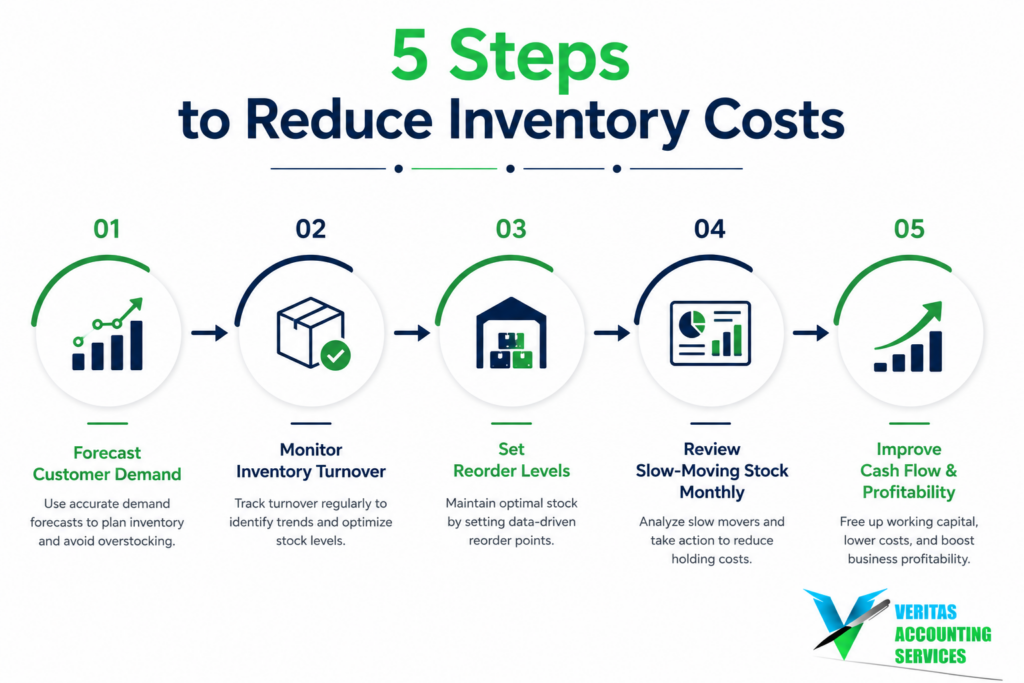
Forecast Demand More Accurately
Use historical sales trends, seasonality, and customer demand to purchase smarter instead of simply buying more.
Track Inventory Turnover
Monitor how quickly products sell.
Slow-moving items should be reviewed regularly and removed before they become obsolete.
Review Inventory Reports Monthly
Don’t wait until year-end.
Regular reporting helps identify:
- Slow-moving products
- Dead stock
- Overstocked items
- Purchasing trends
Better visibility leads to better decisions.
Set Minimum and Maximum Stock Levels
Establish reorder points based on actual demand rather than assumptions.
This reduces unnecessary purchasing while maintaining customer service levels.
Use Technology to Improve Accuracy
Modern inventory management systems provide real-time visibility into:
- Stock levels
- Sales trends
- Purchase orders
- Supplier lead times
Accurate information helps reduce inventory costs and improve operational efficiency.
Work With Financial Advisors
Inventory decisions should never be based solely on warehouse capacity.
Regular financial analysis helps determine:
- Inventory turnover ratios
- Gross margin by product
- Cash conversion cycle
- Working capital requirements
Combining operational data with financial reporting leads to stronger business decisions.
Final Thoughts
Inventory should support business growth—not quietly reduce profitability.
Businesses that actively monitor inventory costs gain stronger cash flow, lower operating expenses, and healthier profit margins. Every product sitting too long on a shelf represents capital that could be working harder elsewhere.
By reviewing purchasing decisions, monitoring inventory turnover, and using accurate financial reporting, you can transform inventory from a hidden expense into a strategic advantage.
The goal isn’t simply to reduce inventory—it’s to ensure every dollar invested in stock contributes to sustainable business growth.
Frequently Asked Questions
What are inventory costs?
Inventory costs include purchasing, storage, insurance, handling, financing, and losses from damage or obsolete stock.
Why is too much inventory bad for cash flow?
Excess inventory ties up working capital, reducing the cash available for payroll, marketing, supplier payments, and business expansion.
How often should businesses review inventory?
Most businesses should review inventory reports at least monthly to identify slow-moving or obsolete stock before it affects profitability.
What is inventory turnover?
Inventory turnover measures how quickly inventory is sold and replaced over a period. Higher turnover generally indicates more efficient inventory management.
How can businesses reduce inventory costs?
Businesses can reduce inventory costs by improving demand forecasting, setting reorder levels, monitoring inventory turnover, reviewing reports regularly, and using inventory management software.
Call to Action
Is your inventory helping your business—or quietly reducing your profits?
At Veritas Accounting Services, we help businesses analyze inventory performance, improve cash flow, optimize working capital, and make informed financial decisions through accurate bookkeeping and management reporting.
Contact us today to discover how better financial insights can strengthen your business.
GET IN TOUCH
Schedule a FREE Call