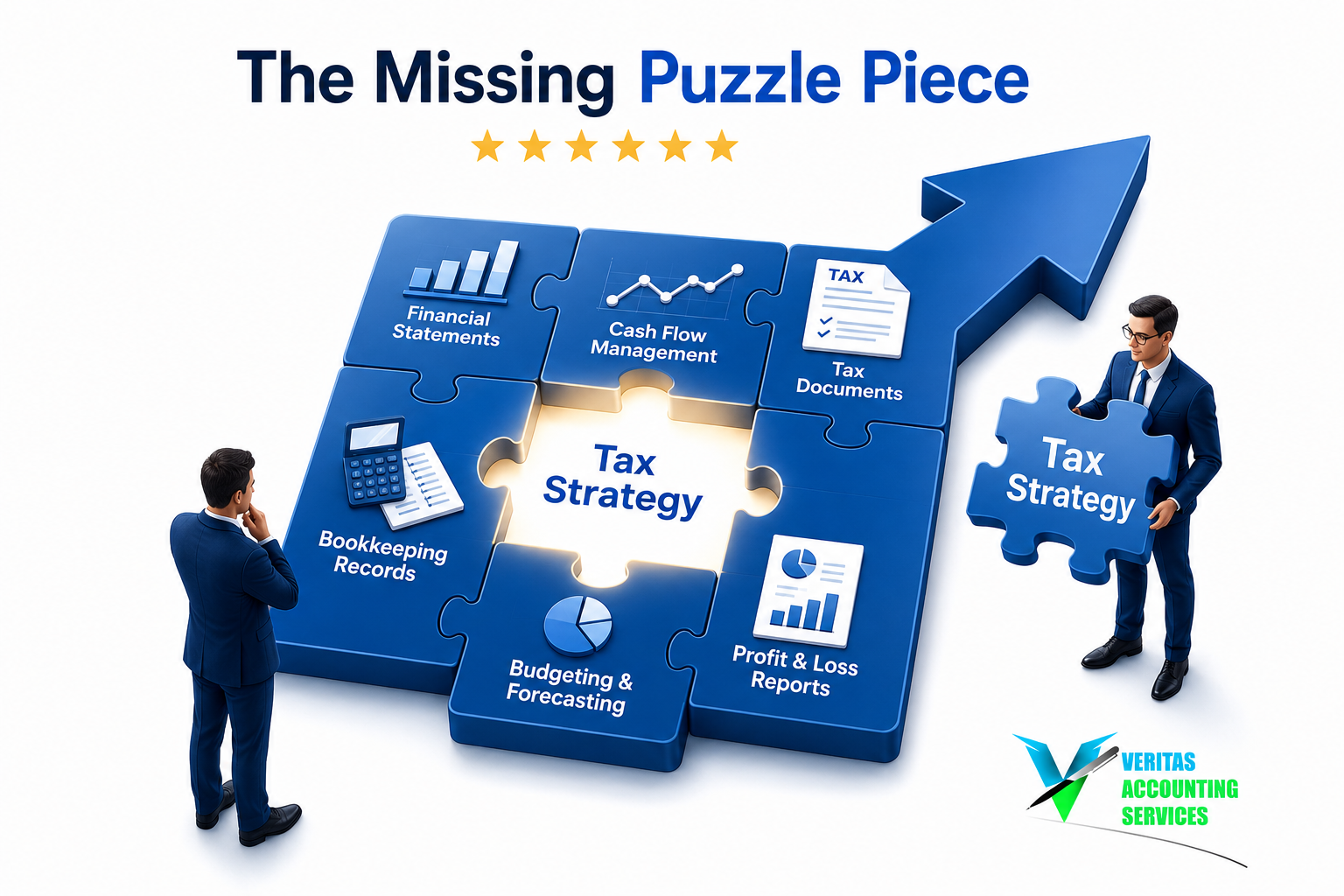
You’re Not Paying Too Much Tax—You’re Missing a Tax Strategy
Every year, thousands of business owners walk into their accountant’s office hoping for one thing:
“Can we reduce this year’s tax bill?”
Unfortunately, the answer is often disappointing.
By the time the financial year has ended, most opportunities to reduce taxes have already disappeared.
Many business owners believe they are paying too much tax because tax rates are high.
The reality is often very different.
They aren’t paying more because of tax laws.
They’re paying more because they never had a tax strategy.
This is where tax planning becomes one of the most valuable financial tools available to any business.
Unlike tax filing, which records what has already happened, tax planning focuses on making better financial decisions throughout the year. It helps businesses legally minimize tax liabilities, improve cash flow, and make smarter investment decisions before deadlines arrive.
The biggest tax savings rarely happen in March, April, or during the filing season.
They happen months earlier.
Whether you’re a startup, a growing SME, an e-commerce business, or an established company, proactive tax planning can significantly improve your financial position while keeping your business fully compliant.
In this article, we’ll explain why businesses often overpay taxes, the difference between tax filing and tax planning, and the strategies successful businesses use to keep more of their hard-earned profits.
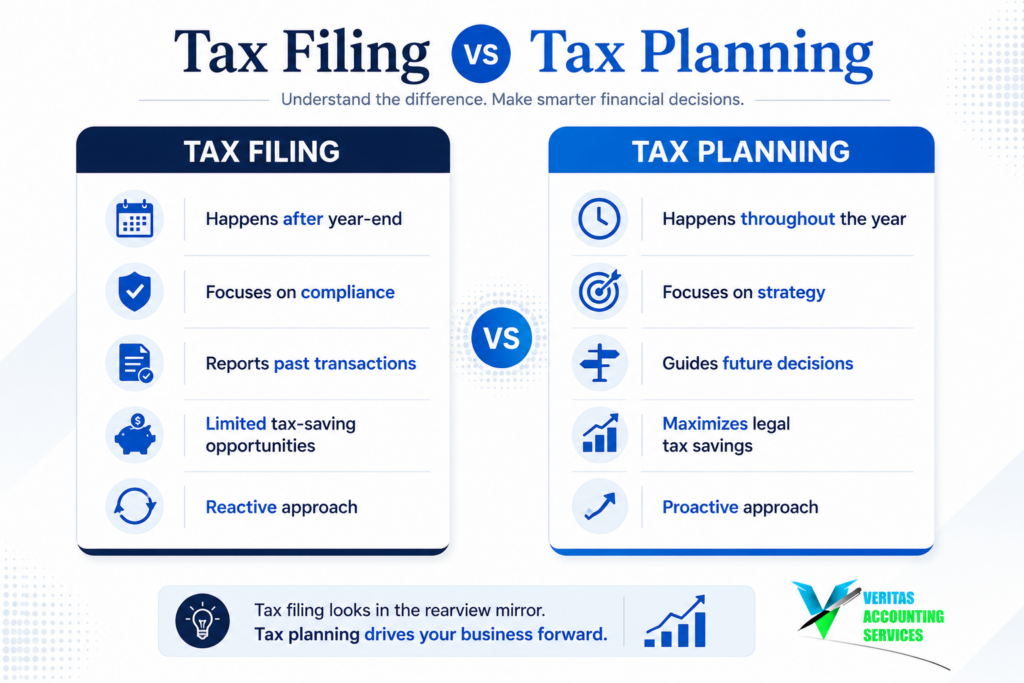
Tax Filing and Tax Planning Are Not the Same Thing
One of the biggest misconceptions among business owners is believing that filing taxes and tax planning are the same service.
They are not.
Tax filing is a compliance activity.
Tax planning is a strategic activity.
Tax filing focuses on preparing accurate tax returns based on transactions that have already occurred.
Tax planning focuses on influencing those transactions before they happen.
Think of it this way.
Tax filing looks in the rear-view mirror.
Tax planning looks through the windshield.
Once the financial year has ended, your accountant can only calculate the tax based on the information available.
Very little can be changed.
However, when tax planning takes place throughout the year, businesses have time to make informed financial decisions that can legally reduce their tax burden.
These decisions may include:
Timing major purchases
Choosing the right business structure
Managing depreciation claims
Planning dividend distributions
Utilizing available deductions and credits
Forecasting taxable income
Structuring owner compensation efficiently
This is why effective tax planning creates opportunities that tax filing simply cannot.
Veritas Expert Insight
The best tax savings don’t happen when your tax return is prepared. They happen months before the financial year ends through proactive planning and informed financial decisions.
Why Most Businesses End Up Paying More Tax
Many businesses don’t intentionally ignore tax planning.
They’re simply too busy running daily operations.
Sales.
Customer service.
Hiring.
Inventory.
Marketing.
Cash flow.
Tax planning often gets postponed until the accountant requests financial records.
Unfortunately, that’s exactly when it’s too late.
One of the biggest advantages of proactive tax planning is having enough time to make financial decisions that affect taxable income before the year closes.
Without that planning, businesses often:
Miss legitimate deductions
Delay important investments
Purchase assets at the wrong time
Pay unnecessary penalties
Lose available tax benefits
Make inefficient compensation decisions
These missed opportunities can cost thousands of dollars every year.
Good tax planning is not about avoiding taxes.
It’s about understanding the rules and using them effectively.
Businesses that plan ahead usually retain more cash, improve profitability, and gain greater financial flexibility.
1. Waiting Until Tax Season
One of the biggest tax mistakes businesses make is treating tax planning as a once-a-year activity.
By the time tax season arrives, your income has already been earned.
Expenses have already been incurred.
Investment decisions have already been made.
At that stage, your accountant is primarily reporting history—not creating tax-saving opportunities.
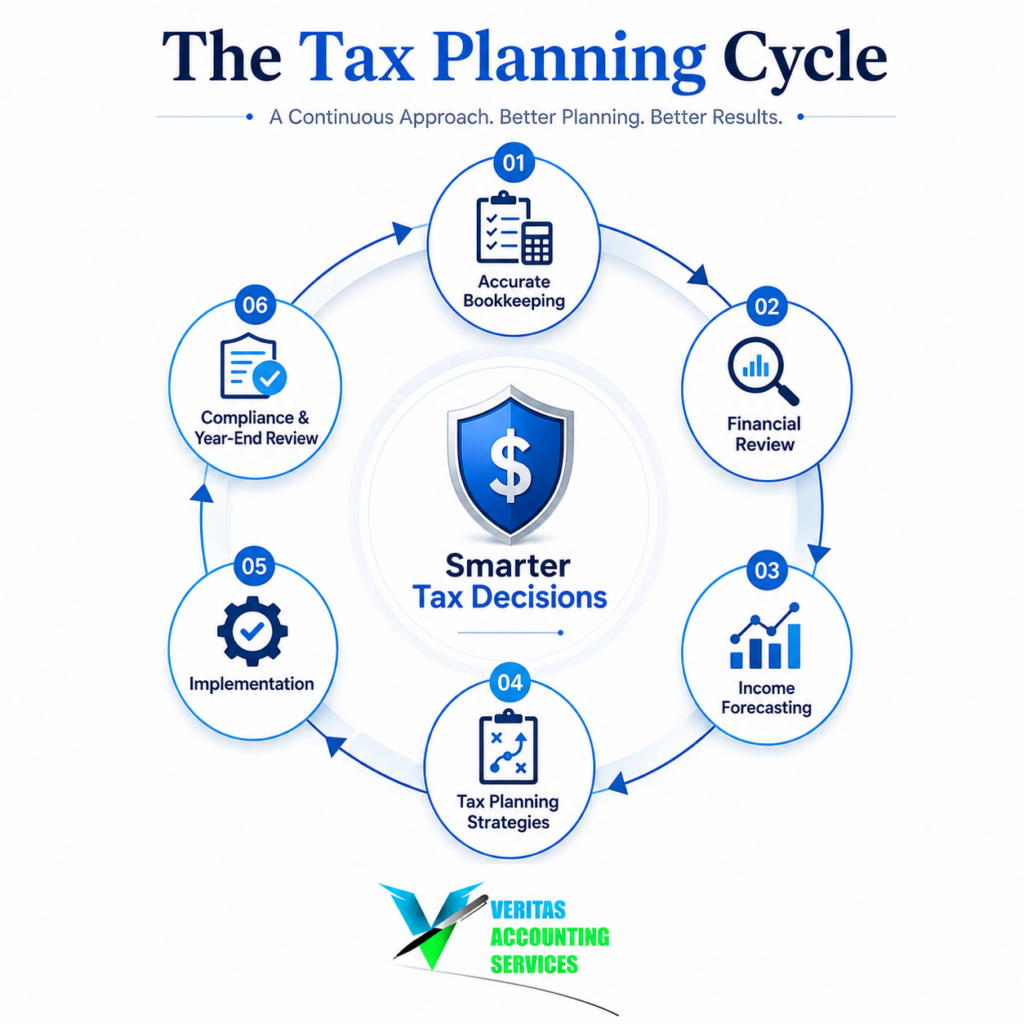
Successful businesses understand that tax planning is a continuous process.
They review financial performance throughout the year, estimate taxable income regularly, and adjust business decisions before deadlines arrive.
This proactive approach provides greater control over tax liabilities while reducing year-end surprises.
2. Poor Record Keeping Leads to Lost Deductions
Accurate bookkeeping is the foundation of successful tax planning.
Without reliable financial records, businesses struggle to identify deductible expenses, monitor profitability, and prepare accurate tax returns.
Missing invoices.
Incomplete expense records.
Unreconciled bank accounts.
Poor documentation.
All of these increase the likelihood of missed deductions and unnecessary tax payments.
Proper bookkeeping doesn’t just help during tax season.
It supports effective tax planning throughout the year by providing reliable financial information for better decision-making.
3. Choosing the Wrong Business Structure
Many entrepreneurs select a business structure when starting their company and never review it again.
As the business grows, that structure may no longer be the most tax-efficient option.
Depending on the country and applicable tax laws, operating as a sole proprietor, partnership, limited liability company, or corporation can produce very different tax outcomes.
A periodic review helps ensure that the business structure continues to align with operational needs, profitability, and long-term goals.
This is another area where strategic tax planning can generate substantial savings.
4. Ignoring Timing Differences
Timing plays a significant role in taxation.
The same business transaction can produce different tax consequences depending on when it occurs.
For example:
Purchasing equipment before year-end may accelerate depreciation deductions.
Deferring certain income may shift taxable profits into a later period where appropriate.
Paying eligible business expenses before year-end may increase allowable deductions.
These decisions are rarely accidental.
They are the result of proactive tax planning supported by accurate financial forecasting.
Business owners who understand timing strategies often create meaningful tax savings without changing their overall business operations.
5. Making Decisions Without Financial Forecasts
Many businesses prepare budgets but never estimate future taxable income.
Without forecasts, it becomes difficult to identify potential tax liabilities until they have already occurred.
Forecasting allows management to estimate profits, evaluate investment decisions, and prepare for upcoming tax obligations well before payment deadlines.
This makes tax planning significantly more effective.
Instead of reacting to tax bills, businesses begin managing them strategically.
Forecasting also improves cash flow because taxes become predictable rather than unexpected. 6. Smart Tax Planning Starts with Accurate Bookkeeping
Many business owners think tax planning begins when they meet their accountant.
In reality, tax planning begins with accurate bookkeeping.
Every business decision relies on reliable financial data. If your books are incomplete, transactions are misclassified, or bank accounts haven’t been reconciled, it becomes difficult to identify legitimate tax-saving opportunities.
Good bookkeeping provides the foundation for effective tax planning.
It allows businesses to:
Monitor deductible expenses throughout the year.
Track profitability accurately.
Estimate taxable income regularly.
Identify unusual expenses before year-end.
Prepare for tax obligations without surprises.
Without accurate records, even the best tax advisor has limited options.
This is why businesses that maintain clean financial records are usually in a much stronger position to benefit from proactive tax planning.
7. Cash Flow and Tax Planning Go Hand in Hand
One of the biggest misconceptions is that tax planning is only about reducing taxes.
Good tax planning also improves cash flow.
Unexpected tax liabilities often create financial pressure because businesses haven’t planned for them.
When tax obligations are estimated throughout the year, management can:
Set aside sufficient funds.
Avoid borrowing to pay taxes.
Improve budgeting.
Make investment decisions with confidence.
Maintain healthy working capital.
Cash flow problems rarely happen overnight.
They develop when businesses fail to anticipate future obligations.
Strategic tax planning helps eliminate those surprises by making taxes part of the financial planning process rather than a last-minute emergency.
8. A Virtual CFO Makes Tax Planning More Effective
Tax planning shouldn’t happen in isolation.
It works best when combined with budgeting, forecasting, cash flow management, and financial reporting.
This is where a Virtual CFO creates significant value.
Instead of focusing only on tax compliance, a Virtual CFO helps business owners understand how every major financial decision affects profitability, cash flow, and future tax obligations.
A Virtual CFO regularly reviews:
Revenue forecasts
Profitability trends
Capital expenditure plans
Business expansion
Owner compensation
Cash flow projections
Working capital requirements
These insights allow businesses to make informed decisions before the financial year ends.
Effective tax planning is no longer just about filing returns.
It becomes part of an overall financial strategy that supports sustainable business growth.
Veritas Expert Insight
The most successful businesses don’t wait until tax season to discuss taxes. They make tax planning part of every major financial decision throughout the year.
9. Common Tax Planning Mistakes That Cost Businesses Money
Even profitable businesses make avoidable mistakes that increase their tax liability.
Some of the most common include:
Waiting Until Year-End
By the time the financial year closes, many tax-saving opportunities are no longer available.
Mixing Personal and Business Expenses
Poor separation creates bookkeeping errors, increases compliance risks, and makes tax planning less effective.
Ignoring Business Growth
As businesses grow, their tax strategy should evolve.
A structure that worked during the startup phase may no longer be the most tax-efficient.
Failing to Review Financial Statements
Business owners often review financial reports only when required by lenders or tax authorities.
Regular reviews provide valuable insights that improve tax planning throughout the year.
Assuming Compliance Equals Strategy
Submitting tax returns on time is important.
However, compliance alone does not create tax savings.
Strategic tax planning goes far beyond filing deadlines.
Tax Planning Is a Competitive Advantage
Businesses that invest in tax planning don’t simply pay less tax.
They make better financial decisions.
They improve cash flow.
They allocate capital more efficiently.
They invest with greater confidence.
They avoid unnecessary financial stress.
Perhaps most importantly, they gain greater control over their future.
Every dollar legally saved through effective tax planning is a dollar that can be reinvested into the business.
That could mean hiring new employees, expanding into new markets, purchasing equipment, investing in technology, or strengthening cash reserves.
Tax planning is not about finding loopholes.
It is about understanding the law, planning ahead, and making informed financial decisions that support long-term success.
Final Thoughts
Many business owners believe they are paying too much tax.
In reality, the problem often isn’t the amount of tax they pay.
The problem is the absence of a proactive tax strategy.
Waiting until tax season limits your options.
Planning throughout the year creates opportunities.
It transforms taxation from a year-end obligation into an ongoing business strategy.
At Veritas Accounting Services, we work closely with business owners to develop practical tax planning strategies that align with their financial goals.
From bookkeeping and financial reporting to forecasting and advisory services, our focus is not only on compliance but also on helping businesses make smarter financial decisions throughout the year.
Because successful businesses don’t leave tax savings to chance.
They plan for them.
Ready to Build a Smarter Tax Strategy?
If your business only thinks about taxes during filing season, you’re probably missing valuable opportunities to improve cash flow and reduce your tax liability.
At Veritas Accounting Services, we help businesses move beyond compliance with proactive tax planning, accurate bookkeeping, and strategic financial advisory services.