






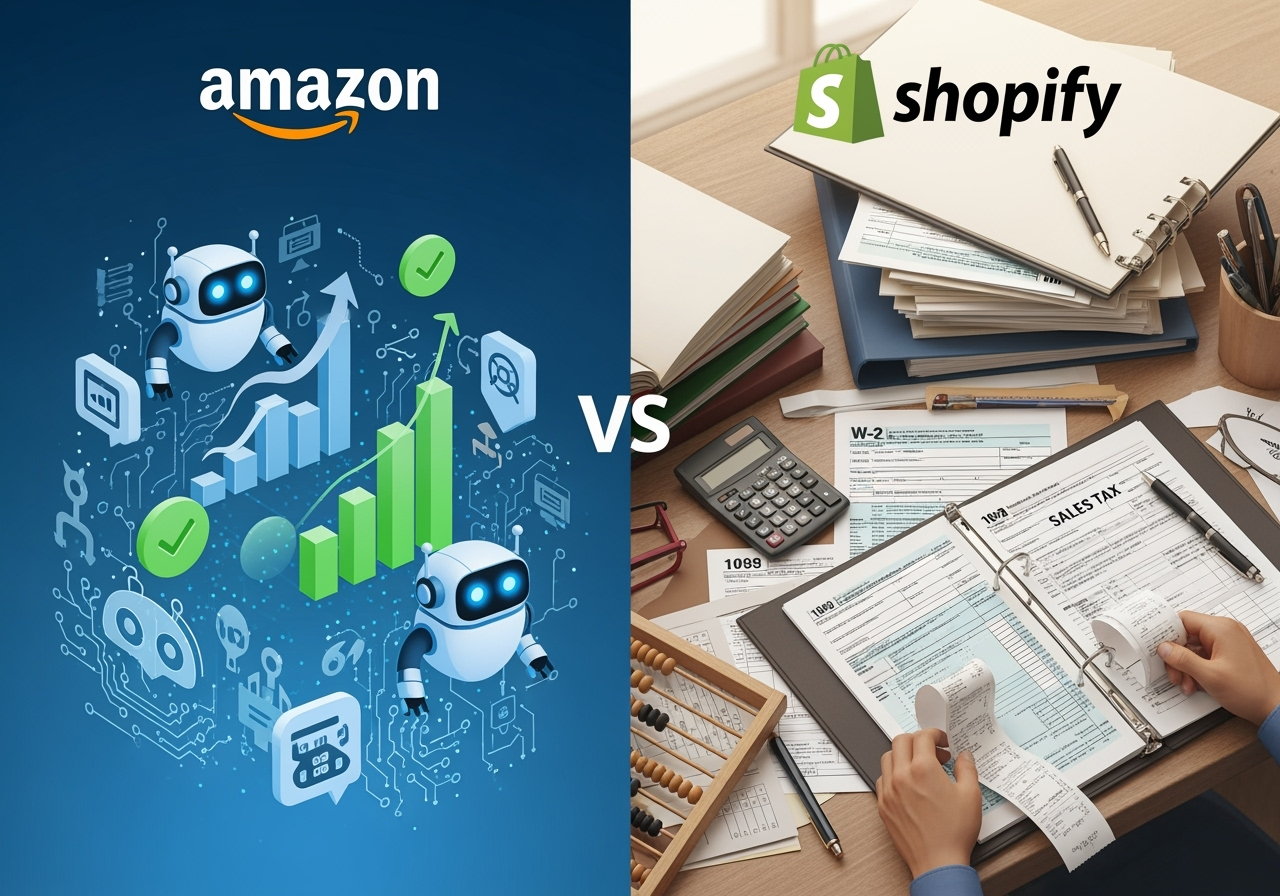

Sales Tax Nexus Warning For Amazon and Shopify Sellers
The landscape of multi-platform e-commerce selling has never been more complex, especially when it comes to sales tax nexus compliance. If you’re among the millions of entrepreneurs selling through both Shopify and Amazon, you’re navigating two fundamentally different tax collection systems that could cost you thousands in penalties if misunderstood.
Recent data shows that 73% of multi-platform sellers are making critical compliance mistakes, with the average penalty reaching $4,200 per business in 2024. The stakes have risen dramatically with Shopify’s announcement that they will begin collecting marketplace facilitator taxes automatically on all U.S. nexus transactions in 2025, fundamentally changing the compliance landscape for millions of sellers.
The Game-Changing Difference: Amazon vs. Shopify
Understanding the fundamental difference between Amazon and Shopify is crucial for your compliance strategy.
Amazon operates as a marketplace facilitator, meaning it creates a centralized storefront where multiple sellers offer products and maintains significant control over transactions. This classification requires Amazon to collect and remit sales tax on behalf of third-party sellers in all 45 sales tax states.
Amazon’s coverage is comprehensive — it handles approximately 89% of third-party seller obligations automatically. Whether you’re using FBA (Fulfilled by Amazon) or FBM (Fulfilled by Merchant), Amazon collects tax, manages complex inventory tracking across fulfillment centers, and even provides audit protection for covered transactions.
Shopify, conversely, has functioned as an e-commerce platform rather than a marketplace facilitator. It provides technology infrastructure for independent online stores but doesn’t create a centralized marketplace. This meant Shopify sellers were responsible for their own sales tax compliance — until now.
Shopify’s 2025 Revolution: What’s Changing
Here’s the game-changer: Shopify will begin automatic marketplace facilitator tax collection on U.S. nexus transactions in 2025. This represents a seismic shift affecting millions of Shopify stores and fundamentally altering the compliance landscape for multi-platform sellers.
Unlike Amazon’s blanket coverage, Shopify’s system will focus specifically on nexus-triggered obligations. This means Shopify will only collect tax in states where your business has established nexus through economic thresholds (typically $100,000 in annual sales) or physical presence.
The rollout timeline varies by store size. Shopify Plus merchants will see changes beginning in early 2025, while standard Shopify stores will transition throughout the year. This phased approach allows for system testing, but it also means you need to stay informed about your specific transition timeline.
The Multi-Platform Compliance Challenge
Here’s where it gets tricky for sellers using both platforms. Economic nexus thresholds are based on total sales into a state, regardless of platform. If you sell $60,000 through Amazon and $50,000 through Shopify into California, you’ve exceeded the $100,000 threshold and have nexus obligations.
Amazon will handle tax collection for its portion, but you’re responsible for ensuring compliance on Shopify sales. This coordination challenge is why multi-platform sellers reach nexus thresholds 67% faster than single-platform sellers and trigger nexus in an average of 4.7 states compared to 2.8 states for single-platform sellers.
State-by-State Variations That Matter
Different states have varying approaches that create additional complexity for multi-platform sellers:
- California maintains a $500,000 threshold with no transaction count requirement. With $891 million collected in economic nexus enforcement revenue in 2024, California demonstrates aggressive enforcement that makes compliance essential.
- Texas recently eliminated its transaction count requirement, focusing solely on the $500,000 revenue threshold. This simplification benefits multi-platform sellers by reducing tracking complexity.
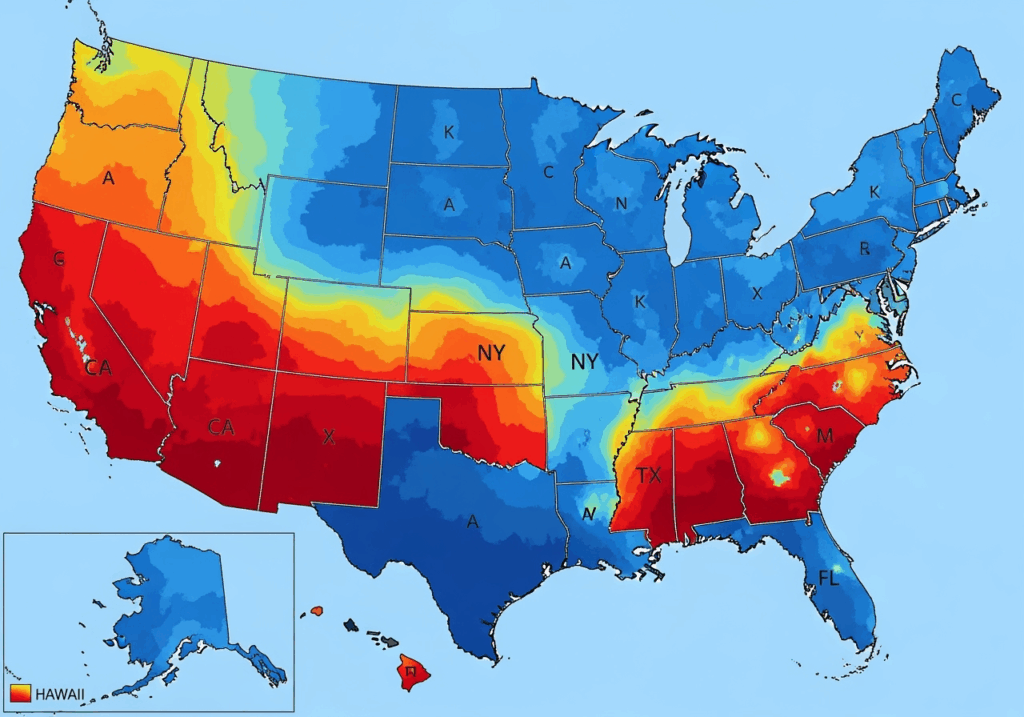
- New York maintains both revenue ($500,000) and transaction count (100 transactions) thresholds. The relatively low transaction count means multi-platform sellers can trigger nexus quickly, even with modest sales volumes.
- Florida has implemented an automated nexus detection system that cross-references sales data from multiple sources — particularly relevant for multi-platform sellers who may not properly track combined sales.
The Hidden Costs of Multi-Platform Selling
The complexity of managing both platforms creates significant hidden costs. Research shows that businesses selling through both Amazon and Shopify spend an average of 73% more on compliance activities compared to single-platform sellers.
Data fragmentation represents one of the biggest challenges. Amazon provides detailed sales reports by state, but these must be combined with Shopify data to get a complete picture of nexus obligations. Many sellers struggle with this integration, leading to either over-compliance (unnecessary registrations) or under-compliance (missing nexus obligations).
Professional service utilization is significantly higher among multi-platform sellers, with 84% using external compliance help compared to 52% of single-platform sellers. This reflects both the increased complexity and the recognition that professional management often costs less than potential penalties.
Technology Solutions: Your Compliance Lifeline
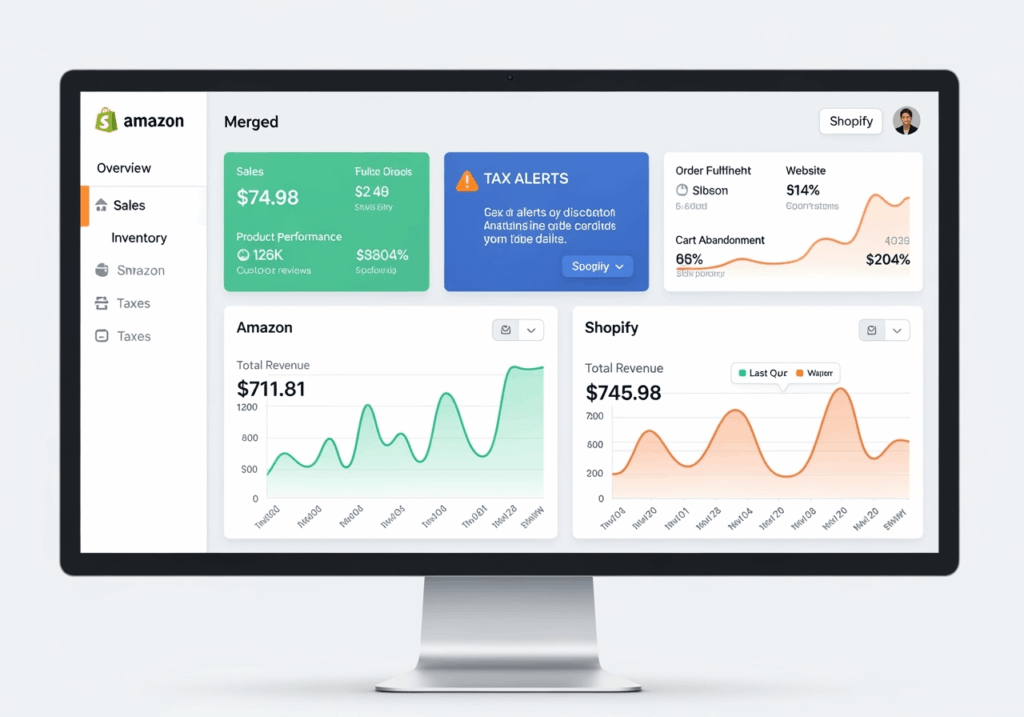
Effective multi-platform selling requires sophisticated technology solutions that integrate data from both Amazon and Shopify while providing comprehensive compliance management. The complexity makes automation essential for most sellers.
Sales tax automation platforms now offer direct connections to both Amazon Seller Central and Shopify admin systems. These integrations automatically pull sales data, calculate combined nexus obligations, and provide real-time compliance monitoring across all channels.
The ROI is compelling: automated systems reduce compliance costs by an average of 67% compared to manual management, while improving accuracy from 77% to 97%. For sellers managing both platforms, automation typically pays for itself within 4–6 months.
GET IN TOUCH
Connect With Us for 1-1 Call!
International Sellers: Additional Complexity

International sellers face unique challenges when selling through both platforms in the U.S. market. The combination of cross-border requirements and multi-platform compliance creates challenges requiring specialized expertise.
U.S. tax ID requirements apply regardless of platform, but the process becomes more complex when selling through multiple channels. International sellers need an EIN (Employer Identification Number) that must be used consistently across all platforms to avoid compliance complications.
Banking considerations become critical. U.S. bank accounts are strongly recommended for tax remittance, and having a single account for both Amazon and Shopify sales simplifies reconciliation and compliance tracking.
Data shows that 91% of international multi-platform sellers use professional services, compared to 67% of domestic sellers, reflecting the additional complexity of managing both U.S. state tax obligations and home country requirements.
Preparing for Shopify’s 2025 Changes
The transition to Shopify’s marketplace facilitator system requires proactive planning. Here’s what you need to do:
- Conduct a Nexus Analysis: Understand your current obligations before automatic collection begins. Include historical sales data, current registration status, and projected growth.
- Review System Integration: Ensure your accounting systems can handle the change from manual to automatic tax collection. This may require software updates or configuration changes.
- Update Documentation: Review existing exemption certificates, registration documents, and filing schedules to align with Shopify’s new system.
- Stay Informed: Monitor your specific transition timeline, as changes will roll out throughout 2025.
Professional vs. DIY: Making the Right Choice
The decision between professional compliance management and DIY approaches becomes more complex for multi-platform sellers due to increased administrative burden and risk exposure.
DIY compliance for multi-platform sellers requires significant time investment — research shows sellers managing both platforms internally spend 18–25 hours monthly on compliance activities, compared to 8–12 hours for single-platform sellers.
The error rate is also significantly higher, with 34% of self-managed multi-platform sellers making compliance mistakes that result in penalties or over-compliance costs.
Professional service costs typically range from $400–800 monthly for comprehensive management, depending on sales volume and complexity. The break-even point occurs when monthly sales across both platforms exceed approximately $150,000, or when selling in more than 5 states with nexus obligations.
Veritas Accounting Services: Your Multi-Platform Partner

At Veritas Accounting Services, we understand the unique challenges facing multi-platform sellers navigating both Amazon and Shopify compliance requirements. Our decade of professional excellence across 6+ countries has equipped us with specialized expertise in managing complex, multi-channel tax obligations.
Our multi-platform clients achieve close to 99.7% compliance accuracy while reducing administrative burden by an average of 89%. Our integrated approach eliminates the data fragmentation that plagues many multi-platform sellers, providing clear visibility into combined nexus obligations and compliance requirements.
We offer comprehensive services including:
- Automated threshold monitoring across all channels
- Coordinated registration and filing management
- Integrated reporting that combines Amazon and Shopify data
- Strategic planning for platform expansion
For international sellers, we provide additional services including U.S. tax ID acquisition, cross-border banking coordination, and currency conversion tracking.
Your Path Forward
Success in multi-platform selling requires strategic thinking about compliance that goes beyond simply meeting minimum requirements. The most successful sellers view compliance as a competitive advantage, rather than a necessary burden.
With Shopify’s 2025 changes approaching, now is the time to evaluate your compliance strategy. Whether you choose professional management or enhanced DIY approaches, the key is taking action based on strategic priorities rather than reactive responses to regulatory complexity.
The e-commerce landscape continues evolving, with marketplace facilitator laws expanding and compliance requirements becoming more sophisticated. Multi-platform sellers who master these complexities now will be better positioned for future expansion and sustained profitability.
Don’t let compliance complexity limit your growth potential.
📩 Contact Veritas Accounting Services today at hello@veritasaccountingservices.com or +1 (678) 723-6003 to discuss your specific multi-platform compliance needs and discover how strategic compliance management can support your business success across both Amazon and Shopify.
Veritas Accounting Services — Transforming financial management with precision, compliance, and global expertise. Serving businesses across the US, UK, UAE, Singapore, Malaysia, and Ireland with over 1000+ successful projects completed.
GET IN TOUCH
Schedule a FREE Call









Connect with us here!
