








Missed Something on Your Tax Return? 6 Smart Ways to Fix It Legally
An amended tax return is the correct way to fix mistakes after filing your taxes.
If you realize after filing that something was missed—whether income, deductions, or credits—you are not alone. The IRS allows taxpayers to correct errors through an amended tax return, helping ensure compliance and accuracy.
Knowing when and how to file an amended return can prevent penalties, recover refunds, and keep your financial records clean.
Here are 6 smart and practical ways to fix your tax return legally.
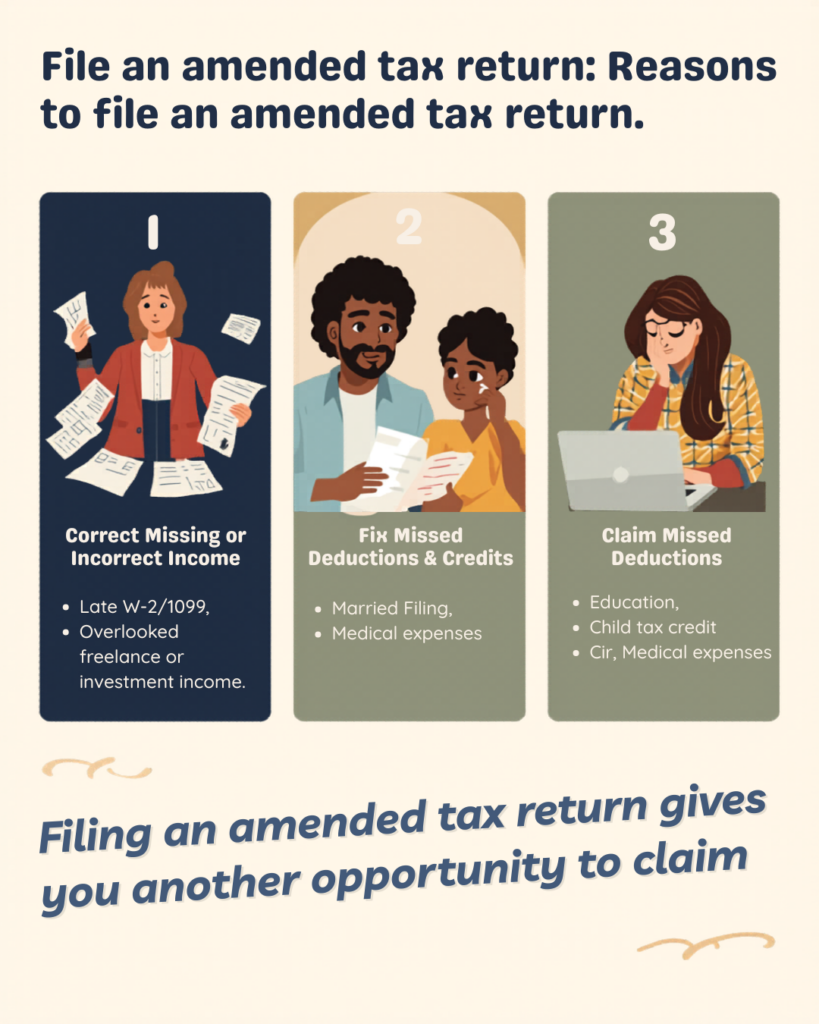
1. Correct Missing or Incorrect Income
One of the most common reasons to file an amended tax return is unreported or incorrect income.
This can happen when:
- A Form W-2 or 1099 is received late
- Freelance or side income is overlooked
- Investment or foreign income is missed
Updating your return ensures your income matches IRS records and helps avoid notices or penalties.
2. Fix Filing Status Errors
Filing under the wrong status can significantly impact your tax outcome.
For example:
- Filing as single instead of head of household
- Missing eligibility for married filing jointly
If your filing status was incorrect, you can revise it by submitting an amended return. This correction may reduce your tax liability or increase your refund.
3. Claim Missed Deductions and Credits
Many taxpayers miss out on valuable tax benefits simply due to oversight.
Common missed items include:
- Education credits
- Child tax credit
- Business expenses
- Medical deductions
Filing an amended tax return gives you another opportunity to claim these and potentially increase your refund.
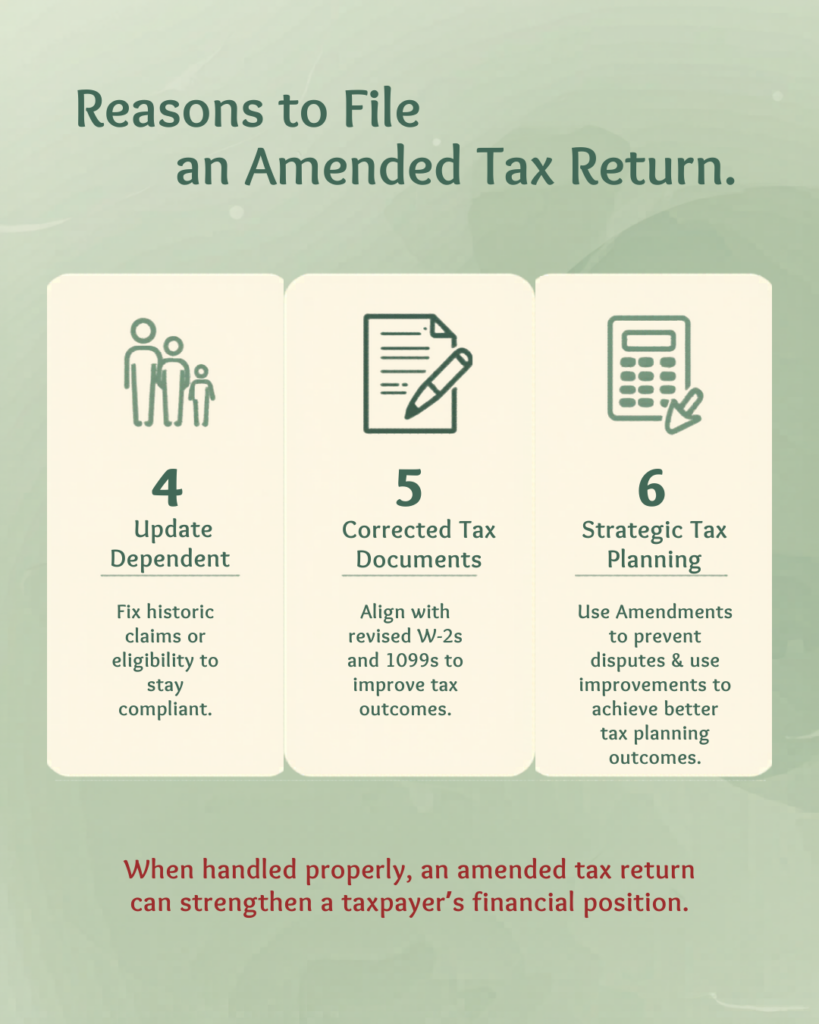
4. Update Dependent Information
Errors related to dependents are more common than expected.
You may need to amend your return if:
- A dependent was not claimed
- A dependent was claimed incorrectly
- Eligibility rules were misunderstood
Correcting dependent details ensures compliance and prevents disputes with the IRS.
5. Adjust for Corrected Tax Documents
Sometimes, taxpayers receive updated or corrected forms after filing.
Examples include:
- Revised W-2
- Updated 1099
- Corrected brokerage statements
When this happens, it’s important to update your return so it aligns with official records. This helps avoid mismatches and IRS notices.
6. Use Amendments for Better Tax Planning
An amended return is not only for fixing mistakes—it can also improve your tax outcome.
Tax professionals often use amendments to:
- Recalculate tax liability
- Optimize deductions
- Correct overlooked planning opportunities
When used correctly, it can strengthen your overall financial position.
When Should You File an Amended Tax Return?
You should consider filing an amended tax return when there are material errors such as:
- Incorrect income reporting
- Wrong filing status
- Missed deductions or credits
- Changes in dependent information
However, minor math errors usually do not require amendment, as the IRS often corrects them automatically.
Time Limits for Filing an Amended Return
Timing matters.
Generally, you must file within:
- 3 years from the original filing date, or
- 2 years from the date tax was paid,
whichever is later.
If your correction results in a refund, filing within this period is essential to claim it.
How to File an Amended Tax Return
Filing is a structured process and should be handled carefully.
Step 1: Review the Original Return
Identify what needs correction.
Step 2: Gather Supporting Documents
Collect updated or missing forms.
Step 3: Complete Form 1040-X
This is the official form used to correct previously filed returns.
Step 4: Submit the Return
Depending on the year, you can file electronically or by mail.
Step 5: Track the Status
The IRS provides tools to monitor progress, though processing may take several weeks.
What Happens After You File?
After submission, the IRS reviews the changes.
Possible outcomes include:
- Refund issuance
- Adjustment in tax liability
- Request for additional information
Amended returns typically take longer to process than original filings, so patience is important.
Common Mistakes to Avoid
When correcting a return, avoid these common issues:
- Filing multiple amendments unnecessarily
- Leaving out supporting documents
- Providing unclear explanations
- Correcting only partial information
A complete and accurate amendment helps avoid delays.
Does Filing an Amended Return Increase Audit Risk?
This is a common concern.
In most cases, filing an amended tax return does not increase audit risk. In fact, correcting errors proactively demonstrates compliance.
However, significant changes should always be well-documented.
Final Takeaway
Mistakes on tax returns are more common than people think—and they can be fixed.
An amended tax return provides a structured and legal way to correct errors, claim missed benefits, and ensure accurate reporting.
Handled correctly, it protects you from penalties, improves compliance, and may even increase your refund.
GET IN TOUCH
Schedule a FREE Call










Connect on our Socials!
