


📩 Get A Quote : hello@veritasaccountingservices.com
Mergers and Acquisitions .Business professionals in a strategic meeting discussing a merger or acquisition with financial data, graphs, and global expansion icons on a screen.

Mergers and Acquisitions Made Easy: Powerful Role of Accounting

In today’s fast-paced and globally competitive business world, mergers and acquisitions (M&A) are more than financial transactions—they’re transformative growth strategies. For startups and scaling businesses alike, acquiring or merging with another company opens the door to new markets, technologies, and talent. But amid the legal negotiations, valuation modeling, and integration planning, one element is too often underestimated: accounting.

Accounting isn’t just about numbers in M&A—it’s the glue that binds the deal together. It ensures compliance, mitigates risk, and lays the groundwork for synergy realisation. Without robust accounting guidance, even the most promising deal can unravel due to unseen liabilities, integration delays, or regulatory red tape.

At Veritas Accounting Services, we’ve guided businesses across Singapore, the UK, and the US, UAE, Malaysia, Ireland etc. through smooth, strategic M&A journeys. Here’s how accounting underpins success before, during, and after the transaction.

Phase 1: Pre-Merger — Financial Due Diligence That Drives Smart Deals

Close-up of a financial spreadsheet showing due diligence for mergers and acquisitions, with revenue analysis and liability checks.

The groundwork for any successful acquisition is laid well before the contract is signed. This is the due diligence phase, where accounting plays a critical role in validating the financial viability and long-term sustainability of the deal.

Key Accounting Considerations:

  • Historical Financial Review: We examine income statements, balance sheets, and cash flows for accuracy, consistency, and anomalies.
  • Liability Analysis: Are there off-balance-sheet liabilities or unresolved legal issues? We dig deep to uncover them.
  • Revenue Recognition Methods: Misaligned practices may inflate earnings or understate risks.
  • Tax Exposure: Evaluating tax obligations, carry forwards, and compliance to avoid future penalties.
  • EBITDA Adjustments: Making normalised adjustments to reflect true operating performance.

💬 Veritas Insight: “Many deals collapse due to avoidable accounting issues. We help you stay grounded in facts, not just projections.”

Phase 2: Deal Structuring — Creating a Financially Sound Foundation

Business professional examining financial reports for M&A deal structuring, with key financial terms like Purchase Price Allocation and Compliance visible.

After due diligence, the focus shifts to structuring the transaction in a way that maximises value and meets regulatory standards. Here’s where accounting strategy makes or breaks the deal’s future.

Core Accounting Responsibilities:

  • Purchase Price Allocation (PPA): Assigning fair values to acquired assets and liabilities, including goodwill, in line with IFRS/GAAP.
  • Chart of Accounts Integration: Designing a unified financial structure for post-merger reporting.
  • Accounting Method Consistency: Aligning accrual/cash methods, depreciation schedules, and fiscal calendars.
  • Cross-Border Compliance: Navigating VAT, GST, and international tax law in multi-jurisdiction transactions.

At Veritas, we provide white-label accounting and virtual CFO services to ensure every financial detail supports the broader strategic intent.

Curious how this could work for your business?

Phase 3: Post-Merger Integration — Turning Two Into One

Business professional consolidating financial systems post-merger, with laptops displaying integrated accounting software and workflow icons.

The most overlooked phase in M&A is post-merger integration, yet it’s where long-term value is truly created—or lost. Financial systems, reporting standards, and team workflows must be aligned quickly and smoothly.

Accounting Integration Must-Haves:

  • System & Software Consolidation: Whether QuickBooks, Xero, or NetSuite—we migrate and standardize tools.
  • Unified Financial Reporting: Delivering one version of truth to leadership, stakeholders, and investors.
  • Internal Controls: Merging risk management policies, audit trails, and approval hierarchies.
  • Change Management: Training finance teams and aligning them to new workflows.

💡 Did You Know? 70% of M&A failures stem from poor integration. Veritas provides 24/7 support across time zones to keep momentum high and operations uninterrupted.

Common M&A Accounting Pitfalls (And How to Avoid Them)

Business professional identifying potential M&A accounting pitfalls like unrecorded liabilities and incompatible systems in financial reports

Even large enterprises stumble when accounting isn’t prioritised in M&A. Here’s what to watch for:

  • Overlooked Liabilities: Undisclosed debts can sink profitability—our forensic reviews prevent surprises.
  • Tech Incompatibility: Disjointed systems delay reporting and confuse teams—our tech audits ensure seamless software merging.
  • Misallocated Purchase Price: Can lead to tax exposure and compliance issues.
  • Delayed Reporting: Slows stakeholder communication—Veritas deploys real-time dashboards to keep you ahead.

Client Story: A Global SaaS Startup’s Smooth Acquisition

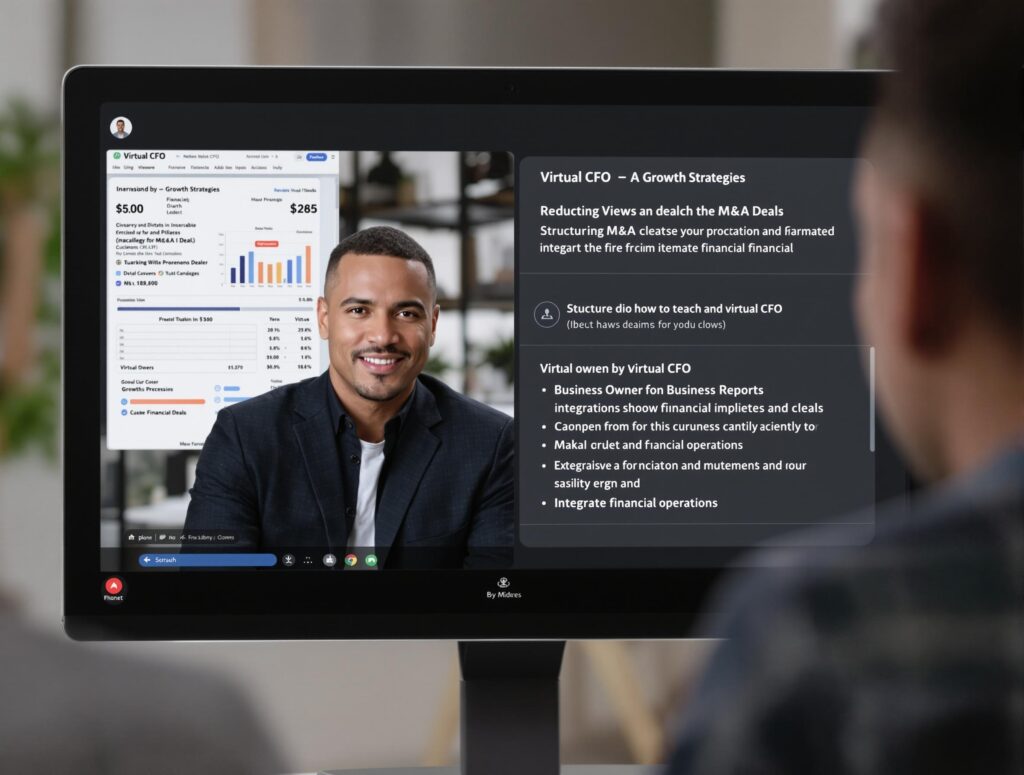
Virtual CFO meeting with a business owner to provide strategic advice on M&A financial integration and growth strategies.

A fast-growing SaaS company in the UK sought to acquire a US-based competitor. With operations and tax systems on different continents, the stakes were high.

Our Role:

  • Reconciled accounting method inconsistencies between both entities.
  • Identified a $250K deferred revenue misclassification.
  • Integrated both firms into a single Xero ecosystem in under 3 weeks.
  • Delivered consolidated reporting for investor presentations within 10 days post-close.

Outcome:
🕒 Integration was 30% faster than projected
📈 Investor trust surged—fueling a new funding round
💼 No downtime in operations across three continents

Accounting’s Strategic Role in M&A Success

Accounting isn’t just a backend function—it’s a strategic driver in M&A. From shaping how the deal is structured to driving informed decision-making post-integration, accounting provides clarity, control, and foresight.

Firms that view accounting as an afterthought risk missteps. Those that treat it as strategic intelligence? They scale with confidence.

FAQ: M&A and Accounting

Q: How early should accounting professionals be brought into the M&A process?
A: Ideally from day one. Early involvement helps identify risks and shape deal structure for optimal outcomes.

Q: What is the role of a virtual CFO in M&A?
A: A virtual CFO supports valuation, scenario planning, financial modeling, and post-merger integration—all without the overhead of a full-time hire.

Q: Is outsourced accounting reliable for M&A?
A: Yes. At Veritas Accounting Services, our clients trust us with end-to-end M&A support across borders, sectors, and time zones.

Why Veritas Accounting Services?

We combine global experience with local insights—empowering you with:

  • Risk mitigation from deal to delivery
  • Strategic virtual CFO guidance
  • Seamless tech and reporting integration
  • Real-time updates, insights, and dashboards

M&A is a complex. With Veritas Accounting Services, it doesn’t have to be.

📞 Let’s Talk

At Veritas Accounting Services, we turn complex financial transitions into strategic growth opportunities. Whether you’re planning your first acquisition or managing a cross-border merger, our expert team ensures your accounting, compliance, and reporting are seamless and future-ready. From due diligence to post-merger integration, we provide the clarity, control, and confidence you need to scale. Don’t let financial blind spots derail your next big move—partner with a team that brings global insight and precision to every deal.

Planning a merger or acquisition?
Let Veritas Accounting Services ensure your financial strategy is built for success.

📅 Book Your Free Strategy Call Now

Missed Something on Your Tax Return? 6 Smart Ways to Fix It Legally

An amended tax return is the correct way to fix mistakes after filing your taxes. If you realize…

The Ultimate 9-Step Guide for Non-US Founders to Start & Run a US Company Legally

Starting a U.S. business as a foreign founder is no longer complex—but it is structured. With the…

3 Costly Tax Residency Mistakes That Can Destroy a Client’s Return

Before a tax professional chooses the correct tax form, determines taxable income, or identifies…

Big Change for 2026: When Catch-Up Contributions Must Go Roth

A major retirement planning shift is coming. Beginning in 2026, Roth catch-up contributions 2026…

Big Donation, Bigger Mistake: Why the Tax Court Rejected a $188,563 Charitable Deduction

A large charitable donation may reflect generosity, goodwill, and community spirit. But as one…

Waiting for Your EITC or ACTC Refund? 3 Critical IRS Dates to Know in 2026

Each tax season, questions about refund timing surge—especially from taxpayers who rely on…

Surprised by a Lump-Sum Social Security Check? Here’s How the Tax Rules Really Work

Receiving a lump-sum Social Security payment often brings relief, especially after months or years…

Schedule a FREE Consultation Call


Connect with us here!

Dynamic startup office environment with entrepreneurs analyzing financial growth data on laptops. Financial graphs and global expansion icons represent startup success and smart accounting strategies.

2025 Start Up Accounting Guide: How to Drive Serious Growth

Hey there, ambitious founder!

Wondering why some startups grow effortlessly while others stall? It’s not luck—it’s smart start up accounting. After helping over 1,000 businesses across six countries, we know what separates thriving startups from the ones that burn out. Spoiler: it’s about having a solid financial plan and automated accounting systems from day one.

Let’s walk through practical, proven steps to help your business grow sustainably, profitably—and globally.

1. Build a Rock-Solid Financial Foundation

Start up Accounting
Modern workspace with a financial planner, laptop displaying cloud accounting software, and smartphone showing startup financial management tools.

The Key to Smart Start up Accounting in 2025

You wouldn’t build a house without a foundation—same goes for your business finances.

Must-Do Basics (Start Now!)

  • Separate your personal and business accounts (this clears 70% of future headaches)
  • Set up a business checking account with online access
  • Use cloud-based accounting tools (QuickBooks or Xero are ideal for small business accounting)
  • Implement a clean invoicing system to streamline payment collection

Starter Tech Stack:

  • Use automated accounting systems to save time
  • Set up real-time financial dashboards for instant access to key metrics
  • Implement growth-ready financial tools that can scale with your business

2. Master Daily & Weekly Money Habits That Drive Growth

Close-up of entrepreneur tracking cash flow on a real-time financial dashboard with graphs and metrics on a laptop screen.

Daily Financial Habits:

  • The Two-Account System: One for income, one for expenses
  • 15-minute daily finance check-in
  • Use receipt scanning apps (ditch paper clutter)
  • Automate data entry with bank feeds to accounting software

Weekly Financial Routine:

  • Monday: Review pending payments and client invoices
  • Friday: Reconcile accounts (30 minutes tops!)
  • Track profit margins and update cash flow forecasts

“Good accounting habits aren’t time-consuming—they’re time-saving.”

3. Your Growth Journey: From Start up to Scale-Up

Infographic showing the growth stages of a startup: Starting Out, Leveling Up, and Scaling Big with visual elements representing global expansion and financial growth.

Scaling your business? Your start up accounting strategy should scale too.

Phase 1: Starting Out ($0–$100K Revenue)

  • Prioritize consistent cash flow management
  • Get tax compliance right from the start
  • Target 15–20% profit margins
  • Begin with basic financial forecasting

Phase 2: Leveling Up ($100K–$500K)

  • Aim for 25%+ profit margins
  • Set up automated financial reporting
  • Explore Virtual CFO services for better decision-making
  • Consider international tax planning

Phase 3: Scaling Big ($500K+)

  • Diversify revenue streams
  • Use advanced financial models to assess profitability
  • Form strategic partnerships for global expansion
  • Establish global tax strategies and compliance processes

4. Automate Smarter, Save Hours Every Week

Entrepreneur using accounting automation tools like QuickBooks and Xero to save time with bank feeds and recurring payments.

Let software do the heavy lifting.

  • Connect bank feeds to QuickBooks/Xero (save 5+ hours/month)
  • Use receipt scanning apps like Expensify or Dext
  • Create recurring invoice templates
  • Automate payment reminders to improve collections

No fluff—just tools that pay for themselves.

5. Crisis-Proof Your Finances Like A Pro

Entrepreneur managing business finances with emergency fund binder and risk management charts, preparing for unexpected financial challenges.

Accounting isn’t just about growth. It’s about resilience and financial risk management.

Build Your Financial Safety Net:

  • Keep 3 months of operating expenses in reserve
  • Use multiple vendors to avoid supply chain risks
  • Set up backup payment processors in case of emergencies
  • Document all critical financial workflows

Cut Costs Without Sacrificing Growth:

  • Do a subscription audit every quarter
  • Negotiate vendor rates based on loyalty
  • Bundle services (insurance, marketing, IT, etc.)
  • Use annual payment discounts where possible

6. Thinking International? Here’s What to Know

World map illustrating global expansion and cross-border payment solutions for startups, with currency and country flags representing international business growth.

Expanding internationally? Start up accounting becomes even more crucial.

  • Set up multi-currency accounts
  • Time payments based on favourable exchange rates
  • Integrate local payment methods for a seamless experience
  • Track global tax compliance across jurisdictions

7. Real Client Results Speak Louder Than Buzzwords

Here’s what our clients consistently achieve:

  • 🚀 30% better cash flow (in under 90 days)
  • 💸 25% lower operating costs
  • ⏱️ 40% faster financial decision-making
  • 🧾 50% improvement in tax efficiency
  • 📈 35% higher profit margins

8. The Virtual CFO Advantage — Scale Smarter, Not Slower

Virtual CFO meeting with entrepreneur, displaying growth strategies and financial reports on a laptop screen, emphasizing strategic business growth.

Think of a Virtual CFO as your on-call financial strategist:

  • Monthly strategic sessions
  • Real-time risk assessment
  • Growth opportunity spotting
  • Global expansion planning
  • Financial performance tracking & forecasting

9. Fast Wins to Implement Today

  • Enable automatic transaction categorization
  • Create a simple financial dashboard for at-a-glance reporting
  • Set up recurring vendor payments for efficiency
  • Track project-level expenses for profit clarity

10. Common Start up Accounting Challenges (And How We Fix Them)

Cash Flow Problems:

  • Automated forecasting tools for real-time updates
  • Optimized payment schedules for better timing
  • Working capital management to ensure liquidity
  • Emergency fund setup for unforeseen expenses

Tax Stress:

  • Real-time tax tracking across multiple jurisdictions
  • Strategic tax planning and proactive filing
  • Multi-jurisdiction compliance to avoid penalties

Global Growth Pains:

  • Smooth currency conversions
  • Cross-border payments without extra fees
  • Expert support in global tax efficiency

Your First 6 Months: A Financial Growth Roadmap

Month 1–3:

  • Financial health check and audit
  • System setup & automation for efficiency
  • Staff training on accounting tech and workflows

Month 4–6:

  • Strategic planning sessions with your CFO
  • Growth KPI tracking and adjustments
  • Ongoing tax and risk reviews

Beyond Month 6:

  • International expansion strategies
  • Partnership development for global reach
  • Continuous optimization and financial performance tracking

Why Choose Veritas Accounting Services?

Headquartered in Rajkot and Atlanta, we help U.S. and global startups scale with confidence.

We offer:

  • 24/7 support (because money never sleeps)
  • QuickBooks & Xero-certified experts
  • Real-time solutions for quick decision-making
  • AI-powered accounting tools for efficiency
  • Global tax strategies and compliance services
  • Crisis-proofing methods to ensure stability

Client Success Snapshot:

Entrepreneur and team celebrating startup success with key financial metrics such as profit margin increases and global expansion milestones on a growth chart.

A local service provider in Atlanta started with messy spreadsheets. In just 18 months, they:

  • Expanded to 3 countries
  • Cut costs by 35%
  • Boosted profit margins by 28%
  • Built a seamless cross-border financial system

Ready to Transform Your Business?

Don’t let financial complexity slow your growth. We’ve helped businesses like yours scale faster, smarter, and globally.

Book Your Free Consultation Today

Includes:

  • Full financial health assessment
  • Custom scaling strategy for your business
  • Accounting tech roadmap for efficiency
  • Personalized tax optimization plan
  • Risk management blueprint
  • BONUS: Financial Growth Toolkit ($500 value) – Only for the first 10 consultations!
Email: 📧 hello@veritasaccountingservices.com

Phone:📞 US: +1 (678) 723-6003 | 🇮🇳 India: +91 97255 52243 (WhatsApp)

Appointment: Click Here to Book Now!


P.S. Still reading? That means you’re serious about growth. Let’s make it happen—smarter finances start today.

Follow us on LinkedIn for daily start up finance tips.

Missed Something on Your Tax Return? 6 Smart Ways to Fix It Legally

An amended tax return is the correct way to fix mistakes after filing your taxes. If you realize…

The Ultimate 9-Step Guide for Non-US Founders to Start & Run a US Company Legally

Starting a U.S. business as a foreign founder is no longer complex—but it is structured. With the…

3 Costly Tax Residency Mistakes That Can Destroy a Client’s Return

Before a tax professional chooses the correct tax form, determines taxable income, or identifies…

Big Change for 2026: When Catch-Up Contributions Must Go Roth

A major retirement planning shift is coming. Beginning in 2026, Roth catch-up contributions 2026…

Big Donation, Bigger Mistake: Why the Tax Court Rejected a $188,563 Charitable Deduction

A large charitable donation may reflect generosity, goodwill, and community spirit. But as one…

Waiting for Your EITC or ACTC Refund? 3 Critical IRS Dates to Know in 2026

Each tax season, questions about refund timing surge—especially from taxpayers who rely on…

Surprised by a Lump-Sum Social Security Check? Here’s How the Tax Rules Really Work

Receiving a lump-sum Social Security payment often brings relief, especially after months or years…

Connect with us here!

VERITAS

VERITAS

VERITAS

Veritas

Futuristic finance team in modern office with AI-powered tools and digital dashboards, 2025 tech aesthetic. automated reconciliation

Automated Reconciliation Blueprint: Save 40+ Hours with Powerful Results

Picture this: It’s month-end, and your finance team isn’t buried under spreadsheets. There’s no frantic last-minute data matching, no overtime expenses, and no stress-induced coffee marathons. Sounds too good to be true? Not anymore. Welcome to automated reconciliation in 2025—a game-changing shift that has redefined how businesses manage their financial operations.

As certified experts who’ve led over 1,000 successful automation projects across the US, UK, UAE, Singapore, Ireland, and Malaysia, we’ve seen firsthand the dramatic transformation in reconciliation processes. The manual methods of old—tedious, error-prone, and time-consuming—are rapidly becoming obsolete. In their place? Streamlined, intelligent systems that do the heavy lifting in real-time.

The Hidden Cost of Manual Reconciliation

Overwhelmed accountant surrounded by paper receipts and spreadsheets, representing manual reconciliation stress

Let’s start with the basics. Traditional reconciliation often eats up more than 40 hours a month—and that’s a conservative estimate. That’s a full workweek spent on just one function of the finance cycle. And it doesn’t stop there. You still have to account for the additional hours lost to correcting errors, identifying discrepancies, and hunting down mismatched transactions.

These inefficiencies cause more than just stress—they impact your bottom line. Delayed financial reporting slows down decision-making, affects forecasting, and can lead to missed opportunities. It can also compromise vendor relationships due to late payments and lost early payment discounts. Human error—inevitable when working manually—only magnifies these issues, contributing to financial leakage and reputational risk.

A New Era of Reconciliation: Powered by Automation

AI-powered financial dashboard with transaction matching and real-time data flow, futuristic design

Fast forward to 2025, and the landscape has changed dramatically. Modern tools like QuickBooks, Xero, Wave, and Zoho Books have evolved into powerful engines of financial automation. These platforms don’t just store data—they actively match transactions in real-time, using advanced AI algorithms to detect and categorize entries with pinpoint accuracy.

If your business operates internationally, there’s even more good news. Today’s systems effortlessly manage multi-currency transactions, applying live exchange rates and matching payments across borders and banks—tasks that used to take entire teams days to complete. Now, they happen in seconds.

Real Companies, Real Results

Before-and-after comparison of chaotic finance office vs. organized automation team with savings metrics

Let’s talk impact.

  • A US-based e-commerce company saw their monthly reconciliation time drop from 45 hours to just 5 hours. Errors were slashed by 99%, and they recouped their investment in less than three months.
  • A UAE-based trading firm reduced reconciliation efforts from 60 hours to 8 monthly, saving over $4,000 every month, all while boosting their accuracy by 95%.

These aren’t isolated cases. From small businesses to large enterprises, companies adopting automation are realizing tangible results—both in time and money saved.

Curious how this could work for your business?

The Blueprint for Successful Implementation

Minimalist flowchart with icons representing audit, software, training, testing for financial automation

Automating reconciliation isn’t just about buying software—it’s about designing a solution tailored to your business. Here’s how the most successful firms approach it:

  • Process Audit – Evaluate your current workflow. What tools are being used? Where are the bottlenecks? Are there compliance concerns to address?
  • Software Selection – Choose tools that integrate smoothly with your existing ERP or accounting platforms. Consider scalability, customization, and localization needs.
  • Team Training – Even the best tools fall flat without the right training. A well-prepared team ensures a smooth transition and consistent use of automation features.
  • Testing and Monitoring – Roll out the system in phases, test extensively, and monitor results to ensure accuracy and efficiency from day one.

Looking Ahead: What’s Next for Automated Reconciliation?

Futuristic AI brain with blockchain, fraud detection, and predictive analytics in digital finance

Automation in 2025 is not standing still—it’s evolving at breakneck speed. New technologies are shaping the next frontier of financial processes:

  • Blockchain Integration – Ensures transaction integrity, traceability, and transparency across multiple parties.
  • Predictive Reconciliation – Systems that learn from past data to flag anomalies before they cause problems.
  • Real-Time Fraud Detection – AI algorithms now monitor financial patterns in real-time to catch and stop suspicious activity.

These advancements mean reconciliation isn’t just becoming easier—it’s becoming smarter and safer, too.

Challenges to Watch Out For

Road with obstacles representing integration issues, data quality problems, and adoption resistance in financial automation

Of course, no system is perfect. Businesses still face challenges during implementation:

  • Data Quality Issues – Garbage in, garbage out. If your data isn’t clean, no automation system can help. Start with robust cleansing and validation processes.
  • Integration Complexities – Not all platforms play nicely with each other. Choose software with strong API support and proven integration track records.
  • Adoption Resistance – Teams used to manual processes may resist change. Consistent communication, hands-on training, and leadership support are crucial for buy-in.

With the right guidance, these challenges are completely manageable. And the payoff? More time, better accuracy, and less stress for your team.

The ROI of Automation: More Than Just Time Saved

Happy finance team celebrating increased accuracy and reduced time with automation in a tech-driven office

When done right, automated reconciliation doesn’t just save time—it transforms finance from a reactive function into a strategic powerhouse.

  • Improved Financial Control – With real-time visibility, businesses can make faster, better decisions.
  • Strategic Refocusing – Freed from repetitive tasks, finance teams can focus on planning, forecasting, and value creation.
  • Customer and Vendor Satisfaction – Faster reconciliations lead to more timely payments, better relationships, and improved trust.

Why Veritas Accounting Services?

At Veritas Accounting, we’ve helped hundreds of clients across continents implement reconciliation automation with precision. Whether you’re operating in Atlanta or Rajkot, our certified experts in QuickBooks, Xero, and other leading platforms bring a unique blend of global insight and local experience.

From the first consultation to post-implementation support, we tailor every step of the process to meet your business’s exact needs. Our track record speaks for itself: better accuracy, faster closings, and happier finance teams.

Ready to Save 40+ Hours Monthly?

The future of finance is automated. If you’re still relying on manual reconciliation, you’re not just losing time—you’re falling behind. The good news? Transitioning is easier than ever with the right partner.

📧 Contact us at hello@veritasaccountingservices.com
📞 Call us: +1 (678) 723-6003 (US) or +91 9725552243 (India)

Let’s build a smarter, faster, and more efficient financial future—starting today.

Schedule a FREE Consultation Call

Missed Something on Your Tax Return? 6 Smart Ways to Fix It Legally

An amended tax return is the correct way to fix mistakes after filing your taxes. If you realize…

The Ultimate 9-Step Guide for Non-US Founders to Start & Run a US Company Legally

Starting a U.S. business as a foreign founder is no longer complex—but it is structured. With the…

3 Costly Tax Residency Mistakes That Can Destroy a Client’s Return

Before a tax professional chooses the correct tax form, determines taxable income, or identifies…

Big Change for 2026: When Catch-Up Contributions Must Go Roth

A major retirement planning shift is coming. Beginning in 2026, Roth catch-up contributions 2026…

Big Donation, Bigger Mistake: Why the Tax Court Rejected a $188,563 Charitable Deduction

A large charitable donation may reflect generosity, goodwill, and community spirit. But as one…

Waiting for Your EITC or ACTC Refund? 3 Critical IRS Dates to Know in 2026

Each tax season, questions about refund timing surge—especially from taxpayers who rely on…

Surprised by a Lump-Sum Social Security Check? Here’s How the Tax Rules Really Work

Receiving a lump-sum Social Security payment often brings relief, especially after months or years…

Connect with us here!

The Hidden Consequences of Delayed Financial Reporting: How to Overcome Costs and Drive Business Growth in 2025

“But we just closed our books last week!”

That’s what Sarah, a Singapore-based business owner, told me during our recent consultation. She was shocked to learn that her company had been consistently under-pricing their services in the UK market for the past three months. By the time her quarterly reports revealed the impact of currency fluctuations and increased supplier costs, she had already lost nearly $30,000 in potential profits in delayed financial reporting.

“If only I had known earlier,” she sighed. It’s a phrase we hear far too often in our line of work.

James, a US-based entrepreneur expanding into the UAE market, shared a similar story: “I thought monthly financial reporting was enough until we missed a crucial pricing adjustment opportunity during Ramadan. That single delay cost us more than what we would have paid for real-time financial services for an entire year.”

Does this scenario sound familiar? If you’re running a global business, chances are you’ve experienced similar situations where delayed financial insights have cost you more than just money – they’ve cost you opportunities, growth, and peace of mind.

In the fast-paced world of international business, delayed financial reporting isn’t just an inconvenience—it’s a silent profit killer. While many businesses focus on obvious costs like transaction fees and exchange rates, the hidden expenses of delayed financial insights often go unnoticed until they’ve already impacted the bottom line. Drawing from our decade of professional excellence and over 1,000 successful projects across the US, UK, UAE, Singapore, Ireland, and Malaysia, we’ve identified how delayed reporting creates a domino effect of financial challenges that can cripple even the most promising businesses.

The Global Impact of Delayed Reporting

financial reporting delays business impact

The most immediate impact of delayed financial reporting manifests in day-to-day operations, particularly in inventory management and pricing strategies. Consider a recent case we encountered with a UAE-based retailer who lost $50,000 due to delayed stock reporting. Without real-time insights, their inventory management became a costly guessing game, leading to both overstock situations and missed sales opportunities. This scenario plays out repeatedly across different markets, where businesses operate with outdated information, making crucial pricing decisions based on stale data. In today’s volatile market, even a week-old report can lead to significant pricing misalignments and eroded profit margins.

Cross-Border Complexities

international business reporting

The ripple effects of delayed reporting become even more pronounced in cross-border operations. When businesses operate across multiple time zones, from Singapore to Ireland, the complexity multiplies exponentially. Currency fluctuations can dramatically impact profitability, yet many businesses discover these impacts weeks or months after the fact. We’ve witnessed countless situations where companies miss favorable exchange rate windows or fail to hedge against currency risks simply because they lack timely financial visibility.

Consider this real-world example: An Irish manufacturing company exporting to Malaysia was operating with a two-week reporting delay. During this period, a significant currency fluctuation occurred, affecting their profit margins by 12%. By the time they received their updated financial reports, they had already committed to several large orders at the old pricing structure, effectively eating into their profits for the next quarter.

Curious how this could work for your business?

The Strategic Cost

global financial visibility

Perhaps the most significant impact of delayed reporting lies in strategic decision-making. Recently, we worked with an Irish company that postponed its market expansion plans due to uncertainty about their financial position. By the time they received their updated financial reports and felt confident to move forward, their competitors had already established a strong presence in their target market. This scenario illustrates how delayed reporting creates a form of decision paralysis, where businesses either make uninformed choices or, worse, make no decisions at all.

Technology as a Solution

real-time financial reporting

The technology solution to these challenges exists, but implementation requires careful consideration. Modern cloud-based systems can provide real-time financial visibility across multiple countries, with automatic currency conversions and reconciliation. At Veritas Accounting, we leverage our expertise with QuickBooks, Xero, Wave, and Zoho Books to create comprehensive financial ecosystems that support quick, informed decision-making.

Our approach includes:

  1. Real-Time Integration Systems
    • Multi-currency transaction tracking
    • Automated reconciliation processes
    • Instant financial position updates
    • Cross-border payment monitoring
  2. Advanced Reporting Frameworks
    • Custom dashboard creation
    • Real-time profit and loss tracking
    • Currency impact analysis
    • Regional performance comparisons
  3. Predictive Analytics
    • Cash flow forecasting
    • Market trend analysis
    • Risk assessment tools
    • Opportunity identification systems

Implementation Strategy

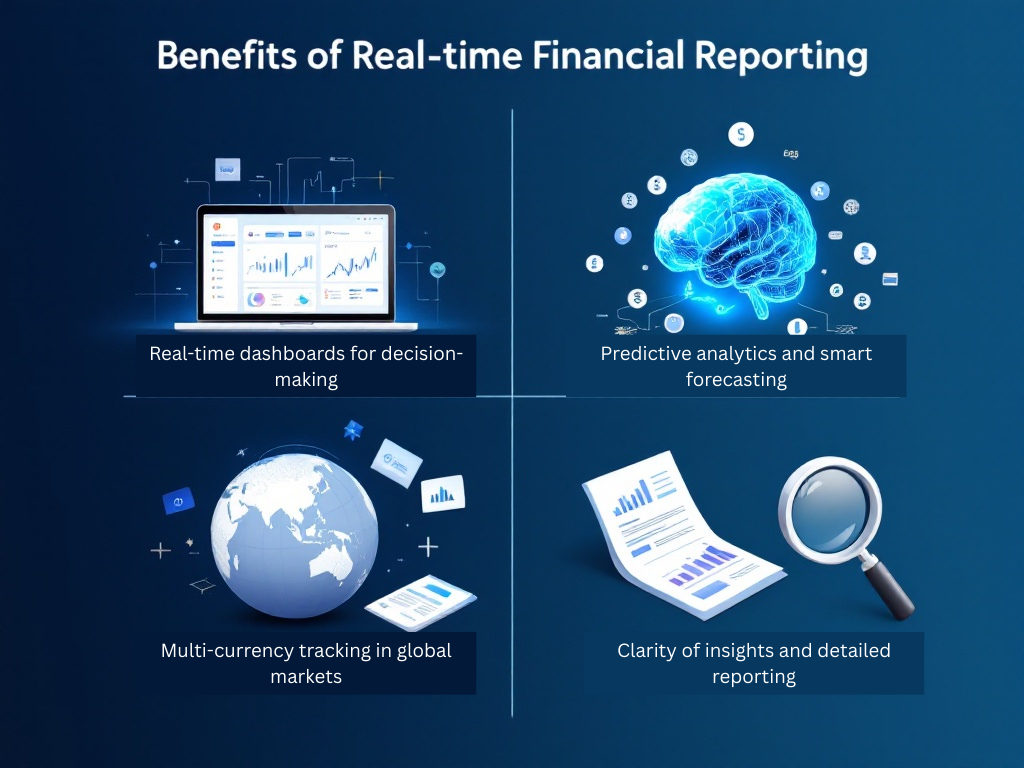
Real-time dashboard for decesion-making
Predictive analytics and smart forecasting
multi-currency tracking in global markets
clarity of insights and detailed reporting

Creating this real-time financial ecosystem begins with a thorough assessment of current reporting lags and their impact on your business. We work closely with clients to design custom reporting frameworks that address their specific needs across different markets. The implementation process is carefully phased to ensure minimal disruption to ongoing operations while maximizing the benefits of real-time reporting.

Our implementation process includes:

  • Comprehensive system audit
  • Custom solution design
  • Phased integration approach
  • Team training and support
  • Continuous monitoring and optimization

The Reality of Modern Business

In today’s interconnected business world, delayed financial reporting isn’t just about late numbers—it’s about missed opportunities and hidden costs that directly impact your bottom line. With offices in Rajkot, Gujarat, India (C-305, The Imperial Heights, 150ft Ring Road) and Atlanta, United States (8735 Dunwoody Place – 4549), Veritas Accounting Services brings global expertise to help you achieve real-time financial visibility.

Success Story

a group of accountants celebrating success of Reduced reporting delays from weeks to hours
Improved profit margins by 23%
Captured market opportunities 40% faster
Decreased currency-related losses by 65%

One of our recent success stories involves a US-based e-commerce company operating across our six service regions. By implementing our real-time reporting system, they:

  • Reduced reporting delays from weeks to hours
  • Improved profit margins by 23%
  • Captured market opportunities 40% faster
  • Decreased currency-related losses by 65%

Looking Ahead

As we move through 2025, the importance of real-time financial reporting continues to grow. Markets are becoming more interconnected, currency fluctuations more frequent, and business opportunities more time-sensitive. The question isn’t whether to implement real-time financial reporting, but rather how quickly you can make the transition.

Don’t let delayed reporting cost you another opportunity. Contact our team of certified experts today at hello@veritasaccountingservices.com or call us at +1(678) 723-6003 (US) or +91 9725552243 (India). Let us help you transform your financial reporting system into a competitive advantage that drives your business forward.

Schedule a FREE Consultation Call

Missed Something on Your Tax Return? 6 Smart Ways to Fix It Legally

An amended tax return is the correct way to fix mistakes after filing your taxes. If you realize…

The Ultimate 9-Step Guide for Non-US Founders to Start & Run a US Company Legally

Starting a U.S. business as a foreign founder is no longer complex—but it is structured. With the…

3 Costly Tax Residency Mistakes That Can Destroy a Client’s Return

Before a tax professional chooses the correct tax form, determines taxable income, or identifies…

Big Change for 2026: When Catch-Up Contributions Must Go Roth

A major retirement planning shift is coming. Beginning in 2026, Roth catch-up contributions 2026…

Big Donation, Bigger Mistake: Why the Tax Court Rejected a $188,563 Charitable Deduction

A large charitable donation may reflect generosity, goodwill, and community spirit. But as one…

Waiting for Your EITC or ACTC Refund? 3 Critical IRS Dates to Know in 2026

Each tax season, questions about refund timing surge—especially from taxpayers who rely on…

Surprised by a Lump-Sum Social Security Check? Here’s How the Tax Rules Really Work

Receiving a lump-sum Social Security payment often brings relief, especially after months or years…

Connect with us here!

Global Financial Management

Global Financial Management for 24/7 Business Growth with Veritas

Can your business run while you sleep?

Ours — and our clients’ — do.

Global financial management isn’t just a luxury anymore — it’s a necessity for companies looking to scale across borders. At Veritas Accounting, we’ve built a 24/7 system that lets your business run while you sleep.At Veritas Accounting, our dual presence in Rajkot, Gujarat India and Atlanta, USA isn’t just about location — it’s a strategic advantage. We’ve built an around-the-clock financial system that helps businesses stay compliant, grow efficiently, and gain financial clarity, no matter the time zone.

Whether you’re a CPA firm in Chicago, an eCommerce brand in London, or a startup in UAE — we help businesses scale globally without scaling their stress.

The Power of Dual-Continent Operations

When you manage international operations, time is either your biggest barrier or your biggest asset.

At Veritas, we’ve transformed our geographic footprint into a 24/7 financial management engine. Here’s how:

Global Financial Management
  • While US clients sleep, our Rajkot team manages their accounts, reconciles statements, and prepares insights.
  • As India wraps up its day, our Atlanta office takes over — handling client communication, compliance, and planning.
  • Financial operations continue without pause, giving you round-the-clock momentum.

Imagine logging in every morning to find fresh reports, updated dashboards, and zero bottlenecks.

What Makes Veritas Different?

We’re not just another outsourced accounting firm — we’re a strategic growth partner.

With over 1,000+ projects across six countries, we offer more than bookkeeping. We bring structure, insight, and strategy to your finances:

  • Deep knowledge of both Eastern and Western financial systems
  • Certified specialists in QuickBooks, Xero, Wave, and Zoho Books
  • International tax & compliance expertise
  • Seamless multi-currency support
  • Cultural fluency that ensures effective cross-border communication
  • End-to-end Virtual CFO services tailored to your business goals

Curious how this could work for your business?

How We Leverage Technology for Global Impact

In today’s digital economy, tech isn’t optional — it’s essential.

At Veritas, we blend human expertise with digital innovation to streamline and future-proof your finances. Our tech stack includes:

  • Seamless integration with cloud accounting platforms (QuickBooks, Zoho, Xero, Wave)
  • AI-powered forecasting and real-time analytics
  • Dashboards that update as fast as your business does
  • Military-grade encryption for secure document exchange
  • Automated multi-currency reporting
  • Live tax compliance monitoring across jurisdictions

Whether you’re scaling up or weathering volatility — we ensure you always know where your finances stand.

Why 24/7 Coverage is a True Game-Changer

This isn’t just about convenience. It’s about business velocity.

Our 24/7 system empowers clients to:

  • Get overnight work done while they’re offline
  • Never miss a compliance deadline
  • Rely on immediate response to urgent requests
  • Maintain constant cash flow visibility
  • Make faster, smarter decisions

It’s like having an in-house accounting department, operating 24/7, at a fraction of the cost.

Real Results, Real Clients

A US-Based CPA Firm

Challenge: Workload overload during tax season
Solution: Our Rajkot team handled return prep while the Atlanta office interfaced with clients
Outcome:

  • Doubled capacity
  • Reduced client response time by 50%
  • Cut operational costs by 30%

“We scaled our practice — without hiring locally. Veritas became an extension of our team.”

A Global eCommerce Brand

Challenge: Inconsistent cash flow and lack of financial visibility across the US, UK etc
Solution: Real-time dashboards, automated invoicing, multi-jurisdictional tax support
Outcome:

  • Expanded into 3 new countries
  • 40% reduction in finance ops cost
  • Full real-time visibility across markets

“We don’t just see numbers now — we understand them.”

Local Teams with Global Muscle

Our two teams bring specialized strengths that power our 360° financial support.

Rajkot Team:

  • Experts in Indian GAAP and offshore compliance
  • Masters at cost-effective operations
  • Deep insights into emerging markets

Atlanta Team:

  • US GAAP & international tax compliance pros
  • Cross-border business strategists
  • Frontline support for Western-based clients

Together, they operate as one — aligned, agile, and always available.

What’s New at Veritas in 2025?

We believe great companies don’t just adapt — they anticipate.

That’s why we’re investing in:

  • AI-driven financial diagnostics that spot trends before they become issues
  • Enhanced Virtual CFO programs for growth-stage businesses
  • Crisis-proofing playbooks for resilient financial systems
  • Consulting services for global financial management
  • Tax structuring strategies that align with your international footprint

Take the First Step Toward Global Success

Here’s what to expect when you partner with Veritas:

  1. Free Initial Assessment
    → We evaluate your current financial setup and identify bottlenecks
  2. Strategic Planning
    → Our dual-location experts map out a customized global roadmap
  3. Implementation
    → From cloud migration to workflow automation, we handle everything
  4. Ongoing Support
    → Round-the-clock availability, proactive updates, and peace of mind

Why Businesses Choose Veritas

  • True 24/7 financial management
  • Certified professionals across platforms
  • Cost-effective without compromising quality
  • Expertise in global compliance & tax
  • Strategic insight, not just data entry
  • Seamless communication across borders
  • Proven track record in scaling international operations

Book Your Free Consultation

Want to scale smarter, not harder?
Let’s uncover how Veritas accounting services can help optimize your global financial management.

During your complimentary session, you’ll receive:

  • An audit of your current systems
  • Insights into compliance risks
  • Strategic tax and cost-saving suggestions
  • A roadmap to expand your operations with confidence

Email: hello@veritasaccountingservices.com
US: +1 (678) 723-6003
India: +91 9725552243
Website: www.veritasaccountingservices.com

Missed Something on Your Tax Return? 6 Smart Ways to Fix It Legally

An amended tax return is the correct way to fix mistakes after filing your taxes. If you realize…

The Ultimate 9-Step Guide for Non-US Founders to Start & Run a US Company Legally

Starting a U.S. business as a foreign founder is no longer complex—but it is structured. With the…

3 Costly Tax Residency Mistakes That Can Destroy a Client’s Return

Before a tax professional chooses the correct tax form, determines taxable income, or identifies…

Big Change for 2026: When Catch-Up Contributions Must Go Roth

A major retirement planning shift is coming. Beginning in 2026, Roth catch-up contributions 2026…

Big Donation, Bigger Mistake: Why the Tax Court Rejected a $188,563 Charitable Deduction

A large charitable donation may reflect generosity, goodwill, and community spirit. But as one…

Waiting for Your EITC or ACTC Refund? 3 Critical IRS Dates to Know in 2026

Each tax season, questions about refund timing surge—especially from taxpayers who rely on…

Surprised by a Lump-Sum Social Security Check? Here’s How the Tax Rules Really Work

Receiving a lump-sum Social Security payment often brings relief, especially after months or years…

Connect with us here!

Payroll Pitfalls

Avoiding Payroll Pitfalls: The Ultimate Guide to Compliance, Efficiency, and Success for Small Businesses

Introduction: Why Payroll Compliance Matters to avoid Payroll Pitfalls

Managing payroll isn’t just about paying employees on time—it’s about ensuring compliance with tax laws, avoiding penalties, and maintaining trust with your workforce. Mistakes in payroll processing can lead to costly fines, employee dissatisfaction, and even legal trouble.

For small businesses, payroll can be especially challenging due to limited resources, changing tax regulations, and the complexity of compliance requirements. In this guide, we’ll cover common payroll mistakes, essential compliance guidelines, and strategies to improve payroll efficiency.

If you’re struggling with payroll management, Veritas Accounting Services can help you navigate compliance and streamline your payroll processes.

1. Common Payroll Mistakes Small Businesses Make

Payroll Pitfalls

Many small business owners unknowingly make payroll errors that can result in financial and legal trouble. Here are some of the most common mistakes:

A. Misclassifying Employees and Independent Contractors

Employees and contractors have different tax obligations. Misclassifying workers can lead to IRS penalties and back taxes.

Solution: Clearly define roles and ensure classification aligns with IRS guidelines.

B. Incorrect Tax Withholding and Payments

Failing to withhold the correct amount for federal, state, and local taxes can result in penalties. Solution: Use payroll software or outsource payroll to ensure accurate tax calculations

Solution:Use payroll software or outsource payroll to ensure accurate tax calculations.

C. Late or Inaccurate Payroll Tax Filings

Missing payroll tax deadlines can trigger fines and interest charges.

Solution: Maintain a payroll tax calendar and automate tax filings.

D. Not Keeping Proper Payroll Records

Businesses are legally required to maintain payroll records for several years. Missing records can lead to compliance issues.

Solution: Store payroll records digitally for easy access and compliance.

E. Failing to Offer Required Benefits

Some small businesses overlook mandatory benefits such as overtime pay, workers’ compensation, or health insurance contributions.

Solution: Stay updated on labor laws and consult a payroll expert if needed.

Get A Free Consultation

2. Payroll Compliance Essentials for Small Businesses

Payroll Compliance

Ensuring payroll compliance involves understanding tax laws, labor regulations, and best practices for accurate payroll processing.

A. Understanding Federal and State Payroll Laws

Businesses must comply with the Fair Labor Standards Act (FLSA), IRS regulations, and state-specific labor laws.

Minimum wage, overtime rules, and paid leave policies vary by state, making compliance more complex.

B. Managing Payroll Taxes Properly

Payroll taxes include Social Security, Medicare (FICA), federal income tax, and unemployment tax (FUTA/SUTA).

Employers must match certain contributions and file tax reports on time.

C. Ensuring Employee Classification is Correct

The IRS uses the Common Law Test to determine if a worker is an employee or a contractor.

Misclassification can lead to audits and hefty fines.

D. Meeting Payroll Reporting Requirements

Employers must file W-2 forms for employees and 1099-NEC forms for contractors at the end of the year.

Keeping payroll reports organized helps during audits or tax season.

3. How to Improve Payroll Efficiency for Your Business

Payroll Efficiency

Now that we’ve covered common mistakes and compliance essentials, let’s explore how you can make payroll more efficient.

A. Use Payroll Software to Automate Processes

Payroll software reduces human errors, ensures tax compliance, and automates calculations.

Popular solutions include QuickBooks Payroll, ADP, and Gusto.

B. Outsource Payroll to Experts

Hiring a professional payroll service like Veritas Accounting Services saves time and ensures accuracy.

Outsourcing helps with tax filings, direct deposits, compliance updates, and reporting.

C. Set a Payroll Schedule and Stick to It

Employees rely on timely payments, so consistency is key.

A predictable payroll schedule improves cash flow management.

D. Conduct Regular Payroll Audits

Review payroll records quarterly to catch errors early.

Ensure all tax withholdings and benefit deductions are correct.

E. Train Your Team on Payroll Best Practices

Educating HR and accounting staff about payroll compliance minimizes mistakes.

Regular training ensures everyone stays up to date with legal changes.

Comparison: In-House Payroll & Compliance vs. Outsourcing Payroll

When it comes to managing payroll, small business owners typically face the choice between handling payroll in-house or outsourcing it to professionals. Each option has its pros and cons, and choosing the right approach depends on your business’s specific needs.

In-House Payroll & Compliance

Pros:

  • Control and Customization: With in-house payroll, you have direct control over every aspect of the payroll process. You can customize payroll to meet your business’s unique needs and make real-time adjustments.
  • Immediate Access: Employees and management have immediate access to payroll data and can address issues or questions quickly.
  • Cost Savings (In the Short-Term): In-house payroll may seem cost-effective, especially if your business only has a few employees. The direct costs are limited to payroll software and staff time.

Cons:

  • Time-Consuming: Payroll processing is a complex, repetitive task that can consume significant time, especially when handling calculations, taxes, and compliance.
  • Risk of Errors: In-house payroll teams may not be fully up-to-date with ever-changing tax laws, leading to costly mistakes in payroll calculations or filings.
  • Limited Expertise: Smaller businesses may not have the specialized knowledge to ensure full compliance with payroll regulations and labor laws, increasing the risk of legal problems.
  • Ongoing Training: Constant employee turnover or the need to keep up with new tax laws requires continuous staff training and updates, which can be costly and time-consuming.

Outsourcing Payroll to Experts

Outsourcing Payroll Services

Pros:

  • Expertise & Compliance Assurance: Payroll providers are specialists in the field and stay up-to-date with the latest tax laws, labor regulations, and compliance requirements, reducing the risk of errors.
  • Time-Saving: Outsourcing payroll allows business owners and staff to focus on core activities like growing the business, while payroll professionals handle the intricacies of compliance, tax filings, and reporting.
  • Risk Mitigation: With experts handling your payroll, your business is less likely to face penalties, audits, or legal issues related to payroll mismanagement.
  • Scalability: As your business grows, outsourcing payroll can scale with you without the need to hire additional staff or invest in expensive software updates.

Cons:

  • Less Control: Outsourcing means giving up some control over payroll processes. You may have to rely on third-party providers to handle issues or concerns.
  • Costs: While outsourcing can save time and reduce the risk of penalties, it comes with a cost. Payroll services typically charge fees that can add up, depending on the size of your business.
  • Communication Delays: Some payroll service providers may have slower response times compared to an in-house team, potentially delaying urgent payroll issues.

4. Why Partner with Veritas Accounting Services for Payroll Management?

Handling payroll on your own can be overwhelming, especially with constantly changing regulations. Veritas Accounting Services simplifies payroll management for small businesses by offering:

  1. Accurate Payroll Processing – Ensure timely and error-free payroll calculations.
  2. Tax Compliance Assistance – Avoid penalties with expert tax filing and compliance support.
  3. Employee Classification Guidance – Prevent costly misclassification mistakes.
  4. Payroll Reporting and Recordkeeping – Stay audit-ready with organized payroll reports.
  5. Time-Saving Automation – Focus on growing your business while we handle payroll.

🚀 Ready to simplify your payroll? Contact Veritas Accounting Services today and let our experts handle the complexities for you!

📞 Schedule a Free Consultation Now

Conclusion: Take Control of Your Payroll Today

Payroll mistakes can be costly, but with the right strategies and expert support, your small business can stay compliant and efficient. By understanding common payroll pitfalls, following compliance essentials, and leveraging expert payroll services, you can protect your business from penalties and improve employee satisfaction.

Don’t let payroll challenges slow you down. Let Veritas Accounting Services handle it for you!

👉 Get Started with Hassle-Free Payroll Management Today!

GET IN TOUCH

Schedule a Free Consultation

Missed Something on Your Tax Return? 6 Smart Ways to Fix It Legally

An amended tax return is the correct way to fix mistakes after filing your taxes. If you realize…

The Ultimate 9-Step Guide for Non-US Founders to Start & Run a US Company Legally

Starting a U.S. business as a foreign founder is no longer complex—but it is structured. With the…

3 Costly Tax Residency Mistakes That Can Destroy a Client’s Return

Before a tax professional chooses the correct tax form, determines taxable income, or identifies…

Big Change for 2026: When Catch-Up Contributions Must Go Roth

A major retirement planning shift is coming. Beginning in 2026, Roth catch-up contributions 2026…

Big Donation, Bigger Mistake: Why the Tax Court Rejected a $188,563 Charitable Deduction

A large charitable donation may reflect generosity, goodwill, and community spirit. But as one…

Waiting for Your EITC or ACTC Refund? 3 Critical IRS Dates to Know in 2026

Each tax season, questions about refund timing surge—especially from taxpayers who rely on…

Surprised by a Lump-Sum Social Security Check? Here’s How the Tax Rules Really Work

Receiving a lump-sum Social Security payment often brings relief, especially after months or years…

Connect with us here!

Financial Health

Unlock Financial Prosperity: 7 Key Post-Tax Areas That Can Transform Your Financial Health

As the dust settles on another tax season, smart business owners know that this is the perfect time to leverage their tax filing insights and financial health for strategic growth. At Veritas Accounting Services, with over a decade of experience serving clients across six countries and completing over 1,000 projects, we’ve observed that the post-tax period offers unique opportunities for financial optimization that many businesses overlook.

While tax filing is an essential yearly responsibility, it is not the end of the road. In fact, it is the beginning of a critical phase in your financial journey. Post-tax season is the ideal time to take a comprehensive look at your business’s finances, optimize operations, and prepare for the future. By using tax filing insights as a springboard for growth, you can drive your business toward more sustainable, long-term success.

The Tax Season Reality Check

While meeting tax obligations is crucial, it is merely a snapshot of your business’s financial health. The real value lies in using this annual checkpoint as a springboard for comprehensive financial planning. Certified experts, well-versed in leading accounting software like QuickBooks, Xero, Wave, and Zoho Books, have identified seven critical areas that demand immediate attention after tax filing.

1. Cash Flow Management: Beyond Basic Bookkeeping

For many businesses, managing cash flow is more than just about ensuring there is enough money in the bank to cover expenses. Post-tax season often reveals cash flow patterns that were not immediately apparent during day-to-day operations. This is where effective cash flow management can significantly impact your bottom line.

Our virtual CFO services have helped numerous clients across the Globe identify:

  • Seasonal fluctuations affecting working capital
  • Hidden cash flow bottlenecks
  • Opportunities for improving collection cycles
  • International payment optimization strategies

The key is not just tracking cash flow but understanding the stories behind the numbers. With real-time monitoring through integrated accounting software, businesses can make proactive decisions rather than reactive adjustments. Understanding your cash flow allows you to forecast future expenses, manage unexpected changes, and position your company for more predictable growth.

2. Financial Ratios: Your Business’s Vital Signs

Just as a doctor checks your vital signs, your business needs regular ratio analysis to ensure optimal health. Financial ratios provide a clear picture of your company’s overall financial health, liquidity, profitability, and operational efficiency.

Financial Health

Critical ratios to monitor include:

  • Liquidity ratios for short-term solvency (e.g., current ratio, quick ratio)
  • Efficiency ratios for resource utilization (e.g., asset turnover, inventory turnover)
  • Profitability ratios for business performance (e.g., return on assets, return on equity)
  • Leverage ratios for long-term stability (e.g., debt-to-equity ratio)

Regular ratio analysis helps businesses benchmark against industry standards, measure progress, and identify areas for improvement. Working with an experienced team of professionals can ensure your financial ratios align with your growth goals and industry best practices.

3. Compliance Calendar: Staying Ahead of Deadlines

Tax season might be over, but compliance is a year-round responsibility. As tax laws, fiscal year deadlines, and regulatory requirements change, businesses need to stay ahead of the curve to avoid penalties and ensure smooth operations.

For businesses operating across multiple countries, keeping track of different fiscal year deadlines, international regulations, and proper documentation can become overwhelming. However, staying compliant is non-negotiable.

Key actions include:

  • Tracking varying fiscal year deadlines
  • Monitoring changing international regulations
  • Maintaining proper documentation
  • Planning for upcoming financial obligations

Our global experience ensures clients never miss crucial deadlines across different jurisdictions. A well-managed compliance calendar allows businesses to stay organized and minimize the risk of late fees, fines, or legal issues.

4. Growth Planning: Turning Insights into Action

Financial ratios analysis

Post-tax analysis often reveals growth opportunities that might have been overlooked during regular operations. Whether it is identifying new markets or scaling operations, this is the time to reassess your business strategies and explore avenues for expansion.

Key considerations for growth planning include:

  • Market expansion possibilities (domestic and international)
  • Investments in technology or infrastructure to enhance productivity
  • Hiring needs and timing
  • International market entry strategies

Our virtual CFO services provide the strategic insight needed to turn these opportunities into actionable plans. Growth planning not only includes assessing current opportunities but also preparing your business to scale and take advantage of market trends.

GET IN TOUCH

Schedule a Free Consultation

5. Technology Integration: Maximizing Efficiency

In today’s fast-paced digital landscape, businesses must embrace technology to stay competitive. Leveraging the latest accounting software and business management tools can drive significant improvements in efficiency, accuracy, and decision-making.

At Veritas, our expertise with leading accounting software enables businesses to:

  • Automate routine transactions
  • Generate real-time reports for better decision-making
  • Integrate multiple financial platforms to streamline workflows
  • Access financial data securely from anywhere
Technology integration in accounting

This technological integration is particularly crucial for businesses operating across different time zones and currencies. With automation, businesses can reduce manual errors, increase productivity, and make data-driven decisions in real-time.

6. Risk Management: Protecting Your Future

The post-tax period is ideal for reviewing and updating risk management strategies. In today’s interconnected global economy, businesses face a variety of risks that can threaten profitability and growth. It is critical to proactively address potential risks before they evolve into major issues.

Key areas for risk management include:

  • Currency fluctuation risks for international transactions
  • Compliance risks across jurisdictions
  • Operational risks (e.g., supply chain disruptions, cybersecurity threats)
  • Market-specific challenges (e.g., competition, customer demand shifts)

Our international experience helps businesses anticipate and mitigate risks before they become problems. With a solid risk management plan, businesses can weather economic downturns, regulatory changes, and unexpected crises with resilience.

7. Profit Optimization: Beyond Cost Cutting

While cost reduction is important, sustainable growth requires a balanced approach to profit optimization. Focusing on increasing revenue and improving operational efficiency can provide higher long-term returns than simply cutting costs.

Key areas to focus on for profit optimization include:

  • Revenue diversification opportunities to expand income streams
  • Pricing strategy reviews to ensure your prices reflect market demand
  • Operational efficiency improvements to reduce waste and improve margins
  • Strategic investment planning to support long-term growth initiatives

At Veritas, we help businesses identify opportunities for profit growth that go beyond cost-cutting. With the right strategy, your business can boost profitability and create a more resilient financial structure.

Taking Action: Your Next Steps

The key to maximizing these insights lies in taking prompt action. Here is how to get started:

  1. Schedule a Comprehensive Review: Begin with a thorough analysis of your tax filing and financial statements. Our team at Veritas can help identify key areas for improvement.
  2. Develop an Action Plan: Create a prioritized list of improvements based on your review. Focus on quick wins while building toward long-term goals.
  3. Implement Regular Monitoring: Set up systematic reviews using integrated accounting software to track progress and identify new opportunities.
  4. Seek Expert Guidance: With offices in Rajkot and Atlanta, our team provides global expertise with local understanding. Whether you need bookkeeping, virtual CFO services, or strategic financial planning, we’re here to help.

Conclusion

The post-tax period presents a unique opportunity to transform your financial management approach. By focusing on these seven critical areas, businesses can build a stronger foundation for growth and success. At Veritas Accounting Services, we combine our decade of experience, global reach, and technical expertise to help businesses thrive in an increasingly complex financial landscape.

Don’t wait for the next tax season to review your financial health. Contact us today at hello@veritasaccountingservices.com or call +1(678) 723-6003

Schedule your comprehensive financial health check. With our QuickBooks and Xero certified experts, we will help you turn tax season insights into year-round business success.

GET IN TOUCH

Schedule a Free Consultation

Missed Something on Your Tax Return? 6 Smart Ways to Fix It Legally

An amended tax return is the correct way to fix mistakes after filing your taxes. If you realize…

The Ultimate 9-Step Guide for Non-US Founders to Start & Run a US Company Legally

Starting a U.S. business as a foreign founder is no longer complex—but it is structured. With the…

3 Costly Tax Residency Mistakes That Can Destroy a Client’s Return

Before a tax professional chooses the correct tax form, determines taxable income, or identifies…

Big Change for 2026: When Catch-Up Contributions Must Go Roth

A major retirement planning shift is coming. Beginning in 2026, Roth catch-up contributions 2026…

Big Donation, Bigger Mistake: Why the Tax Court Rejected a $188,563 Charitable Deduction

A large charitable donation may reflect generosity, goodwill, and community spirit. But as one…

Waiting for Your EITC or ACTC Refund? 3 Critical IRS Dates to Know in 2026

Each tax season, questions about refund timing surge—especially from taxpayers who rely on…

Surprised by a Lump-Sum Social Security Check? Here’s How the Tax Rules Really Work

Receiving a lump-sum Social Security payment often brings relief, especially after months or years…

Connect Here!

Cash Flow Management

How to Improve Cash Flow Management for Your Business in 2025

Cash flow is the foundation of every successful business. Yet, many startups, small businesses, and mid-sized enterprises struggle with cash shortages, delayed payments, and unexpected expenses that threaten their stability.

According to a recent study, 82% of business failures are due to poor cash flow management. Whether you’re a new business owner or an established entrepreneur, managing cash flow effectively is key to long-term success.

At Veritas Accounting Services, we help businesses like yours take control of cash flow, avoid financial pitfalls, and build a strategy for long-term success. In this guide, we’ll explore the biggest cash flow pain points businesses face and how Veritas Accounting Services can provide tailored solutions to overcome them.

Understanding Cash Flow Management: Why It Matters?

Before diving into the pain points and solutions, let’s define cash flow management.

Cash flow refers to the movement of money in and out of your business. A positive cash flow means you have more money coming in than going out, while a negative cash flow indicates you are spending more than you are earning.

Poor cash flow management can lead to:

  • Missed payroll and late vendor payments
  • Debt accumulation and high-interest expenses
  • Lack of funds for growth and investment

By monitoring, forecasting, and optimizing cash flow, businesses can avoid financial crises and ensure long-term stability.

The Biggest Cash Flow Pain Points and How to Solve Them!

Business Pain Points

1. Late Payments from Customers

📌 Pain Point:

Many businesses experience delayed payments, affecting their ability to cover operating expenses and payroll. Chasing payments is time-consuming and frustrating.

✅ How Veritas Helps:

  • We set up automated invoicing with reminders to speed up collections.
  • We help implement early payment incentives to encourage faster payments.
  • We assist with invoice financing, so you get cash upfront instead of waiting for customers.

Pro Tip: Offer a discount for early payments or charge penalties for late payments to encourage on-time settlements.

2. High Operational Costs Draining Cash Flow

📌 Pain Point:

Uncontrolled expenses, high rent, and unnecessary spending deplete cash reserves, leaving little room for growth.

✅ How Veritas Helps:

  • We conduct a cost-reduction audit to identify where you can save money.
  • We help re-negotiate vendor contracts for better payment terms.
  • We provide budgeting strategies to ensure cash is used efficiently.

Pro Tip: Regularly review your subscription-based expenses (e.g., SaaS tools, memberships) and cut those that don’t add value.

3. Seasonal Revenue Fluctuations

📌 Pain Point:

Many businesses, especially retail and service-based industries, struggle with inconsistent income, leading to cash shortages in off-seasons.

✅ How Veritas Helps:

  • We create custom cash flow forecasts to plan for slow months.
  • We help businesses introduce recurring revenue models to stabilize income.
  • We assist in building emergency funds to manage seasonal downturns.

Pro Tip: Diversify your income streams to maintain revenue during off-seasons.

4. Overstocking Inventory & Cash Flow Blockage

📌 Pain Point:

Businesses that tie up too much cash in inventory struggle with liquidity. This leads to excess stock, wasted capital, and storage costs.

✅ How Veritas Helps:

  • We optimize inventory management strategies using demand forecasting.
  • We recommend just-in-time inventory practices to free up cash.
  • We analyze which products are slow-moving and help you liquidate excess stock efficiently.

Pro Tip: Use inventory management software to track and forecast product demand accurately.

GET IN TOUCH

Schedule Call For A Free Quote

5. Poor Pricing and Low Profit Margins

📌 Pain Point:

Many businesses underprice their products/services, leading to low profit margins and cash flow struggles.

✅ How Veritas Helps:

  • We conduct competitive pricing analysis to ensure you’re not undercharging.
  • We help implement value-based pricing for maximum profitability.
  • We develop tiered pricing models to increase revenue without losing customers.

Pro Tip: Regularly review your pricing strategy based on market trends and competitor analysis.

6. Excessive Debt and Loan Repayments

📌 Pain Point:

Heavy reliance on loans and high-interest debt puts businesses under financial stress, reducing available cash.

✅ How Veritas Helps:

  • We help restructure loans to lower monthly payments.
  • We explore alternative financing options with better terms.
  • We create debt repayment plans that don’t disrupt cash flow.

Pro Tip: Use a business line of credit instead of high-interest loans for short-term cash flow needs.

7. Unexpected Tax Liabilities

📌 Pain Point:

Many businesses fail to plan for tax payments, leading to last-minute cash shortages and hefty penalties.

✅ How Veritas Helps:

  • We provide proactive tax planning to avoid surprises.
  • We identify tax-saving opportunities to reduce liability.
  • We ensure compliance with all business tax regulations to prevent fines.

Pro Tip: Set aside 15-30% of your profits in a separate tax savings account.

8. Lack of Real-Time Cash Flow Visibility

📌 Pain Point:

Many business owners don’t track their cash flow effectively, leading to poor financial decisions and unexpected shortfalls.

✅ How Veritas Helps:

  • We integrate cloud-based accounting software for real-time financial tracking.
  • We generate customized cash flow reports for better decision-making.
  • We provide expert guidance on financial planning and sustainability.

Pro Tip: Review your cash flow statements weekly to catch potential issues early.

How Veritas Accounting Services Can Help Your Business Thrive?

At Veritas Accounting Services, we don’t just offer generic solutions—we provide tailored financial strategies to help businesses take control of their cash flow, reduce expenses, and plan for future growth.

Why Choose Us?

✔ Customized Financial Strategies: We analyze your business and develop a plan that works for your specific industry and challenges.

✔ Automated Financial Solutions: We help implement cutting-edge financial tools to improve cash flow visibility and efficiency.

✔ Dedicated Support: Our team of experts provides ongoing guidance, so you’re never alone in managing your finances.

✔ Tax & Compliance Assistance: We ensure you stay compliant while maximizing tax-saving opportunities..

Take Control of Your Cash Flow Today!

Cash flow problems don’t have to hold your business back. With expert guidance, smart strategies, and the right tools, you can achieve financial stability and long-term success.

Ready to optimize your cash flow?

Book a free consultation with Veritas Accounting Services today!

Email us at hello@veritasaccountingservices.com or visit https://veritasaccountingservices.com to get started!

GET IN TOUCH

Schedule Call For A Free Quote


Missed Something on Your Tax Return? 6 Smart Ways to Fix It Legally

An amended tax return is the correct way to fix mistakes after filing your taxes. If you realize…

The Ultimate 9-Step Guide for Non-US Founders to Start & Run a US Company Legally

Starting a U.S. business as a foreign founder is no longer complex—but it is structured. With the…

3 Costly Tax Residency Mistakes That Can Destroy a Client’s Return

Before a tax professional chooses the correct tax form, determines taxable income, or identifies…

Big Change for 2026: When Catch-Up Contributions Must Go Roth

A major retirement planning shift is coming. Beginning in 2026, Roth catch-up contributions 2026…

Big Donation, Bigger Mistake: Why the Tax Court Rejected a $188,563 Charitable Deduction

A large charitable donation may reflect generosity, goodwill, and community spirit. But as one…

Waiting for Your EITC or ACTC Refund? 3 Critical IRS Dates to Know in 2026

Each tax season, questions about refund timing surge—especially from taxpayers who rely on…

Surprised by a Lump-Sum Social Security Check? Here’s How the Tax Rules Really Work

Receiving a lump-sum Social Security payment often brings relief, especially after months or years…

Veritas Accounting Services

The Future Of Accounting: Powerful Trends to Watch In 2025

The accounting landscape is evolving rapidly. Driven by technology, regulatory changes, and shifting client expectations, accountants and financial professionals must stay ahead of emerging trends to remain competitive.

As we have entered 2025, several key developments will shape the future of accounting, impacting small businesses, CPA firms, and accounting service providers worldwide. Whether you’re a business owner looking to streamline your financial management or an accounting firm aiming to enhance efficiency, these trends will define the industry’s direction.

Future of Accounting

1. AI and Automation: Reshaping Accounting Workflows

AI and Automation

Artificial Intelligence (AI) and automation are transforming accounting by handling repetitive and time-consuming tasks with precision. From bookkeeping to tax preparation, AI-powered software can process vast amounts of data, minimizing human error and increasing efficiency.

Key Impacts

  • AI-driven accounting tools can categorize transactions, reconcile bank statements, and flag anomalies in real time.
  • Chatbots and AI assistants will provide instant responses to common financial queries.
  • Automated invoicing and expense tracking will reduce manual entry and enhance accuracy.

What It Means for Businesses & Firms

Adopting AI-powered tools will free up accountants to focus on high-value tasks like financial advising, forecasting, and strategic planning. CPA firms that leverage automation will gain a competitive edge by offering faster, more efficient services.

2. Cloud Accounting Becomes the Standard

Cloud Accounting

Cloud-based accounting solutions are no longer optional—they’re essential. Platforms like QuickBooks Online, Xero, and FreshBooks enable real-time collaboration, remote access, and seamless data sharing between accountants and clients.

Why It Matters

  • Businesses can access their financial data from anywhere, ensuring greater flexibility.
  • Automatic software updates eliminate the need for costly installations and maintenance.
  • Cloud-based platforms improve data security with encrypted backups and multi-factor authentication.

How to Adapt

If your business or firm hasn’t transitioned to cloud accounting yet, 2025 is the year to do it. Clients expect real-time access to financial data, and cloud solutions make it easier to collaborate across locations.

3. Blockchain and Digital Ledger Technology (DLT) in accounting

Blockchain

Blockchain, once associated primarily with cryptocurrency, is making waves in accounting. This decentralized ledger system offers unparalleled security, transparency, and efficiency in financial transactions.

Benefits of Blockchain in Accounting

  • Fraud Prevention: Transactions recorded on a blockchain are immutable, reducing the risk of manipulation.
  • Smart Contracts: Automated agreements ensure compliance and faster processing of transactions.
  • Audit Efficiency: Auditors can verify transactions instantly, reducing the time spent on compliance checks.

Who Should Pay Attention

Accounting firms handling large-scale transactions or audits should explore blockchain’s potential for secure record-keeping. Businesses looking to streamline contracts, payments, and compliance may also benefit.

4. Real-Time Data Analytics for Smarter Decision-Making

Real-Time Data Analytics

Traditional accounting often relied on past data, but real-time analytics are changing the game. Businesses now demand instant insights to make proactive financial decisions.

Trends to Watch

  • Predictive analytics will forecast cash flow trends, helping businesses avoid financial pitfalls.
  • Custom dashboards will provide at-a-glance financial performance metrics.
  • AI-powered insights will help firms tailor financial strategies for clients

How Businesses Can Benefit

Small businesses can use real-time analytics to adjust pricing, optimize expenses, and plan investments with greater accuracy. Accounting firms offering data-driven insights will attract more clients.

5.The Globalization of Accounting Services

Globalization of Accounting Services

With businesses expanding across borders, the demand for international accounting services is growing. Firms must navigate complex tax regulations, currency exchange challenges, and cross-border compliance requirements.

Global Trends in Accounting

  • More businesses are outsourcing accounting tasks to firms specializing in international finance.
  • Cloud platforms enable firms to serve clients worldwide without geographical constraints.
  • AI-driven tools simplify multi-currency transactions and tax calculations.

How Firms Can Stay Competitive

  • Stay updated on international tax laws and compliance requirements.
  • Offer multilingual support and currency conversion services.
  • Partner with firms in different countries to provide seamless cross-border solutions.

6. Cybersecurity: A Top Priority for Financial Data Protection

Financial Data Protection

With the rise of digital accounting, cybersecurity threats are increasing. Cybercriminals target financial data, making robust security measures essential.

Major Risks

  • Phishing attacks that steal sensitive financial information.
  • Ransomware that locks accounting systems until a ransom is paid.
  • Data breaches that expose confidential client details.

Best Practices for Cybersecurity in Accounting

  • Implement two-factor authentication (2FA) for all financial systems.
  • Regularly update software to patch security vulnerabilities.
  • Educate employees and clients on recognizing phishing scams.

Accounting firms must prioritize cybersecurity to build trust with clients and safeguard sensitive data.

7. The Evolution of Tax Laws & Compliance

Tax Laws & Compliance

Tax regulations are becoming more complex, requiring businesses and accounting firms to stay informed about frequent changes.

Upcoming Tax Trends in 2025

  • More governments are introducing digital tax reporting systems.
  • AI-driven tax compliance software is simplifying filing processes.
  • Increased scrutiny on global tax avoidance and corporate transparency.

How to Stay Compliant

  • Use tax software that updates automatically with new regulations.
  • Attend industry webinars and training on changing tax laws.
  • Offer compliance consulting as a value-added service to clients.

8. Expansion of Outsourced Accounting Services

Outsourced Accounting Services

Outsourcing accounting functions is becoming a strategic move for businesses looking to cut costs and focus on growth. More companies are turning to third-party providers for bookkeeping, payroll processing, and tax preparation.

Why Outsourcing Is Gaining Popularity

  • Small businesses can access professional accounting expertise without hiring a full-time team.
  • CPA firms can scale their services by outsourcing routine tasks while focusing on advisory roles.
  • Cloud technology enables seamless collaboration between businesses and outsourced accounting firms

How to Leverage This Trend

  • Businesses should evaluate their accounting needs and explore outsourcing options to improve efficiency.
  • Accounting firms can expand their client base by offering flexible, outsourced accounting packages.
  • Leveraging automation in outsourced services can enhance service delivery and accuracy.

9. The Changing Role of Accountants: From Number Crunchers to Advisors

Financial Advisors

Technology is handling routine tasks, shifting the role of accountants from data entry to strategic advising. Businesses now seek accountants who can provide insights, risk assessments, and financial growth strategies.

How to Adapt to This Shift

  • Develop strong advisory skills to guide clients on financial planning.
  • Use analytics tools to provide in-depth financial forecasts.
  • Offer training or financial literacy programs for small businesses.

The firms that embrace this evolution will strengthen client relationships and increase profitability.

Conclusion: Preparing for the Future of Accounting

The accounting industry in 2025 will be shaped by AI, automation, real-time analytics, cybersecurity, outsourcing, and evolving tax laws. Firms that stay ahead of these trends will gain a competitive advantage, offering more value to clients while improving operational efficiency.

For small businesses, embracing cloud accounting, AI-driven insights, and cybersecurity measures will ensure financial stability and growth. CPA firms and accounting service providers must position themselves as advisors rather than just number crunchers, leveraging technology to deliver smarter, faster, and more efficient services.

Are you ready for the future of accounting? At Veritas Accounting Services, we help businesses and accounting firms navigate these changes with cutting-edge solutions and expert guidance. Contact us today to future-proof your financial success!

GET IN TOUCH

Schedule Call For A Free Quote

 📍 India – C-305, The Imperial Heights, 150ft Ring Road, Rajkot – 360001
📍United States – 8735 Dunwoody Place – 4549, Atlanta, GA 30350


Missed Something on Your Tax Return? 6 Smart Ways to Fix It Legally

An amended tax return is the correct way to fix mistakes after filing your taxes. If you realize…

The Ultimate 9-Step Guide for Non-US Founders to Start & Run a US Company Legally

Starting a U.S. business as a foreign founder is no longer complex—but it is structured. With the…

3 Costly Tax Residency Mistakes That Can Destroy a Client’s Return

Before a tax professional chooses the correct tax form, determines taxable income, or identifies…

Big Change for 2026: When Catch-Up Contributions Must Go Roth

A major retirement planning shift is coming. Beginning in 2026, Roth catch-up contributions 2026…

Big Donation, Bigger Mistake: Why the Tax Court Rejected a $188,563 Charitable Deduction

A large charitable donation may reflect generosity, goodwill, and community spirit. But as one…

Waiting for Your EITC or ACTC Refund? 3 Critical IRS Dates to Know in 2026

Each tax season, questions about refund timing surge—especially from taxpayers who rely on…

Surprised by a Lump-Sum Social Security Check? Here’s How the Tax Rules Really Work

Receiving a lump-sum Social Security payment often brings relief, especially after months or years…

Scaling Up with Confidence: 10 Expert Financial Support for Small Businesses

Managing finances is a crucial yet challenging aspect of running a small business. For many entrepreneurs and business owners, handling cash flow, taxes, and financial planning often feels overwhelming. However, expert financial support can not only ease the burden but also provide the strategic guidance that leads to long-term success. Here’s how professional financial help from Veritas Accounting Services can transform your small business

Expert Financial Support

1. Better Cash Flow Management for Business Owners

Cash flow serves as the lifeblood of any business. Having expert financial support helps you track and manage incoming and outgoing funds effectively. At Veritas Accounting Services, we set up systems to ensure that you always know when money is coming in and going out, preventing cash shortages that could halt operations. By having a solid cash flow management system in place, we help you plan ahead for expenses, make strategic decisions, and maintain smooth business continuity without unnecessary financial stress.

2. Accurate Financial Reporting for Accounting Firms

Financial Reporting Solutions

Expert financial support provides accurate and timely financial reporting, which helps you understand the state of your business. These reports not only track your financial progress but also provide critical insights into areas for growth or improvement. With detailed income statements, balance sheets, and cash flow statements, you’ll make informed decisions that align with your goals. At Veritas Accounting Services, we provide these reports to help you stay on track.

3. Tax Optimization and Compliance for Tax Practitioners

Tax Compliance Services

Navigating taxes can be daunting for small business owners. Our team ensures your business remains compliant with tax laws while minimizing liabilities. We also stay updated on changes in tax laws, so you can rest assured that your business is always in good standing with the tax authorities, ensuring your focus remains on growth. By identifying tax-saving opportunities and deductions, we can save you money and protect you from costly mistakes.

4. Strategic Budgeting and Forecasting for CPA Firms

CPA Firm Financial Management

A well-planned budget and financial forecast are essential for growth. Our strategic budgeting helps you avoid potential financial pitfalls and positions you to seize growth opportunities as they arise, ensuring your business remains financially secure. At Veritas Accounting Services, our experts create realistic budgets and forecasts based on industry trends, historical data, and business goals.  This proactive planning will help you avoid financial pitfalls and take advantage of opportunities.

5. Informed Investment Decisions for Bookkeeping Firms

Efficient Financial Record Management

Making informed investment decisions is crucial for the long-term success of your business. Whether you’re considering expanding operations, purchasing new equipment, or exploring new business ventures, having expert financial guidance can make all the difference. Financial advisors offer an objective perspective on investment decisions. Whether it’s expanding operations, purchasing new equipment, or considering new ventures, having expert financial guidance from Veritas Accounting Services ensures that your investments align with your business goals and provide strong returns.

6. Cost Reduction and Efficiency for Small Businesses

Cost Reduction

Managing costs and maintaining efficiency are essential components of running a successful business. With expert financial support from Veritas Accounting Services, we help identify areas where your business can save money and reduce unnecessary expenditures. Our team conducts a thorough assessment of your operations, looking for inefficiencies or wasteful practices, and recommends practical, cost-effective solutions. By optimizing your spending without compromising quality or service, we help you maximize your profitability, stay competitive in the market, and reinvest savings into growth initiatives.

7. Data-Driven Business Intelligence for Entrepreneurs

Business Intelligence for Entrepreneurs

In today’s fast-paced business world, making informed decisions is essential for success. Data-driven financial analysis is key to gaining valuable insights into your business’s financial health. Gain insights with data-driven financial analysis. Veritas provides dashboards and key performance indicators (KPIs) that give you a clear view of your business’s financial health, enabling strategic, informed decision-making.

8. Financial Analysis for Operational Improvement for Organizations

Financial Analysis

To enhance business performance, it’s crucial to identify and understand key financial metrics that drive your operations. We help identify and analyze key financial metrics to improve business performance. By understanding cost structures, profitability drivers, and efficiency gaps, Veritas provides insights that enable you to enhance operations and make smarter, data-driven decisions for sustainable growth.

9. Succession Planning and Exit Strategy for CPA Firms

Exit Strategy

If you plan to exit your business or hand it over to family members, expert financial support is crucial in developing a smooth succession plan. Veritas Accounting Services helps you maximize the value of your business, ensure tax efficiency, and ease the transition, securing your legacy and the future of your business. Whether you’re selling the business, transferring ownership, or preparing it for the next generation, we provide strategic planning to ensure your legacy is preserved and that the future of your business is secure. Our expertise ensures a seamless transition that benefits both you and the future owners.

10. Scalable Growth Strategies for Accounting Firms

Scalable Growth for Business

As your business grows, the financial complexities increase, requiring advanced strategies for efficient management. At Veritas Accounting Services, we specialize in creating scalable systems that evolve with your business. Whether it’s managing larger operations, expanding your workforce, or serving more clients, we provide tailored solutions that enable smooth growth. Our expert team helps you navigate these changes without losing sight of your financial goals, ensuring that you’re able to scale effectively while minimizing the risks and challenges typically associated with business expansion. With our support, you can confidently grow your accounting firm and achieve long-term success.

Conclusion

Having expert financial support from Veritas Accounting Services is an investment in the future of your business. Our team of QuickBooks and Xero certified experts is dedicated to providing you with the highest level of financial management, ensuring that your business remains efficient, accurate, and compliant. Whether you’re a startup looking to establish a solid financial foundation or an established company aiming to optimize your financial strategies, our professional guidance can bring clarity, efficiency, and growth opportunities that are key to long-term success. We specialize in offering remote accounting services, seamlessly integrating with top accounting software like QuickBooks, Xero, Wave, and Zoho Books, to provide you with real-time insights and data-driven decision-making capabilities.

By focusing on your core business while leaving the financial intricacies to our team, you can achieve your business goals with confidence and peace of mind. Our tailored tax planning strategies are designed to minimize liabilities and maximize profitability, ensuring that you are always ahead of the curve in a competitive market. With over a decade of professional excellence and 1000+ completed projects, Veritas Accounting Services is your trusted partner in navigating the complexities of financial management.

For expert financial support tailored to your needs, reach out to Veritas Accounting Services. We’re here to help you grow your business!

Let us be your trusted partner in financial management and watch your business grow across borders.

Contact us

Website: Veritas Accounting services 

Email: hello@veritasaccountingservices.com

Call us at +1(678) 723-6003

WhatsApp: +91 9725552243.

Or you can book a FREE 30-min Discovery Call/Quote- Click on this button below