








When the Bank Balance and Your Books Disagree
A bank reconciliation check helps you explain why the balance on a business bank statement differs from the cash balance in your books. The difference may have a simple explanation. A deposit recorded on the last day of the month might show up at the bank the next morning, or the bank may have posted a fee you haven’t entered. Your job is to find evidence for each difference and decide what belongs in the books.
Consider a flower shop preparing to close the month. The bank statement ends at $9,850, while the bookkeeping report shows $10,630. The owner wants to know whether the books are missing something and whether the balance is useful for planning next week’s purchases. This guide walks through five checks with that fictional example, then shows what to save and what still needs follow-up.
Table of contents
- Start the bank reconciliation check with the same period
- Match transactions before changing anything
- Separate timing from missing entries
- Work through the two balances
- Review open items before closing
- Frequently asked questions
- Conclusion
Start the bank reconciliation check with the same period
Pull the official statement for the account and period you intend to reconcile. Write down the ending date and balance, then open the cash ledger for the same account through that date. If you have separate checking, savings and card accounts, confirm the account name and last few digits before starting. One bank reconciliation check per account keeps an error in one register from being hidden by an unrelated balance in another.
Use the statement ending balance rather than the available balance on the bank’s current homepage. An available balance can reflect activity or holds after the statement date. For example, when you reconcile October on November 4, a November 3 deposit may already be included in today’s available balance. Including it as part of October’s statement activity would make the difference harder to explain.
Compare your beginning reconciliation balance with the previous completed reconciliation. If the figures differ, look for a change to a previously cleared transaction, such as a deleted check or an edited deposit. Document the change before matching the new period. If you’re taking over an account that has never been reconciled, ask the owner or previous bookkeeper for the last reliable statement and supporting ledger. Agree on where to start and keep a list of gaps that need reconstruction.
The IRS guide to starting a business and keeping records explains checking account reconciliation and why statements and books can differ. The bank reconciliation check in this guide is a management bookkeeping routine. It compares activity and supports the records you keep. Veritas also covers how to organize the source documents behind the ledger. Good bookkeeping and tax records
Match transactions before changing anything
Work from the statement lines and match each deposit, withdrawal or transfer to supporting records. Use the amount, the reference and the business purpose together. A statement may abbreviate a payee or post a transaction on a different date from the receipt. A small gap in date can make sense, but a match needs a defensible link to the same transaction.
If two payments are the same amount, check invoice numbers or the payment confirmation before matching either one. A flower shop might pay $180 twice to the same wholesale supplier in one week. A match based on the first amount you find can leave the wrong bill showing as paid, even when total cash looks right. The bank reconciliation check should help you match the right underlying item as well as the right number.
Merchant payouts are another common source of confusion. Suppose several card sales appear in the point-of-sale report and the processor sends one deposit covering the batch. Use the payout report to connect the bank deposit to the underlying activity. For a payout that contains fees, refunds or adjustments, trace those lines to the processor’s report before changing any sales entry. If the deposit is already recorded in the books, match the imported bank-feed line to that record where appropriate. Adding it as a new sale can count the same activity twice.
Transfers need similar care. If you move $800 from business checking to business savings, look for a withdrawal in checking and a corresponding deposit in savings. Verify both legs against the transfer confirmation and match them to the records in each account. If only one side has cleared by the statement cutoff, note the timing and verify the other side in the next period. This step keeps an ordinary transfer from showing up as new sales or an expense simply because you imported two bank lines.
After you’ve matched the clear items, make two short lists. One is for entries in your books that the bank hasn’t posted by the statement date. The other is for bank entries you can’t find in your books. The next bank reconciliation check is much easier when those two lists remain separate. If you’re working with a bookkeeper, send the statement line, relevant receipt or payout report and a short description for each uncertain item. That gives them enough context to investigate without making a guess.
Separate timing from missing entries
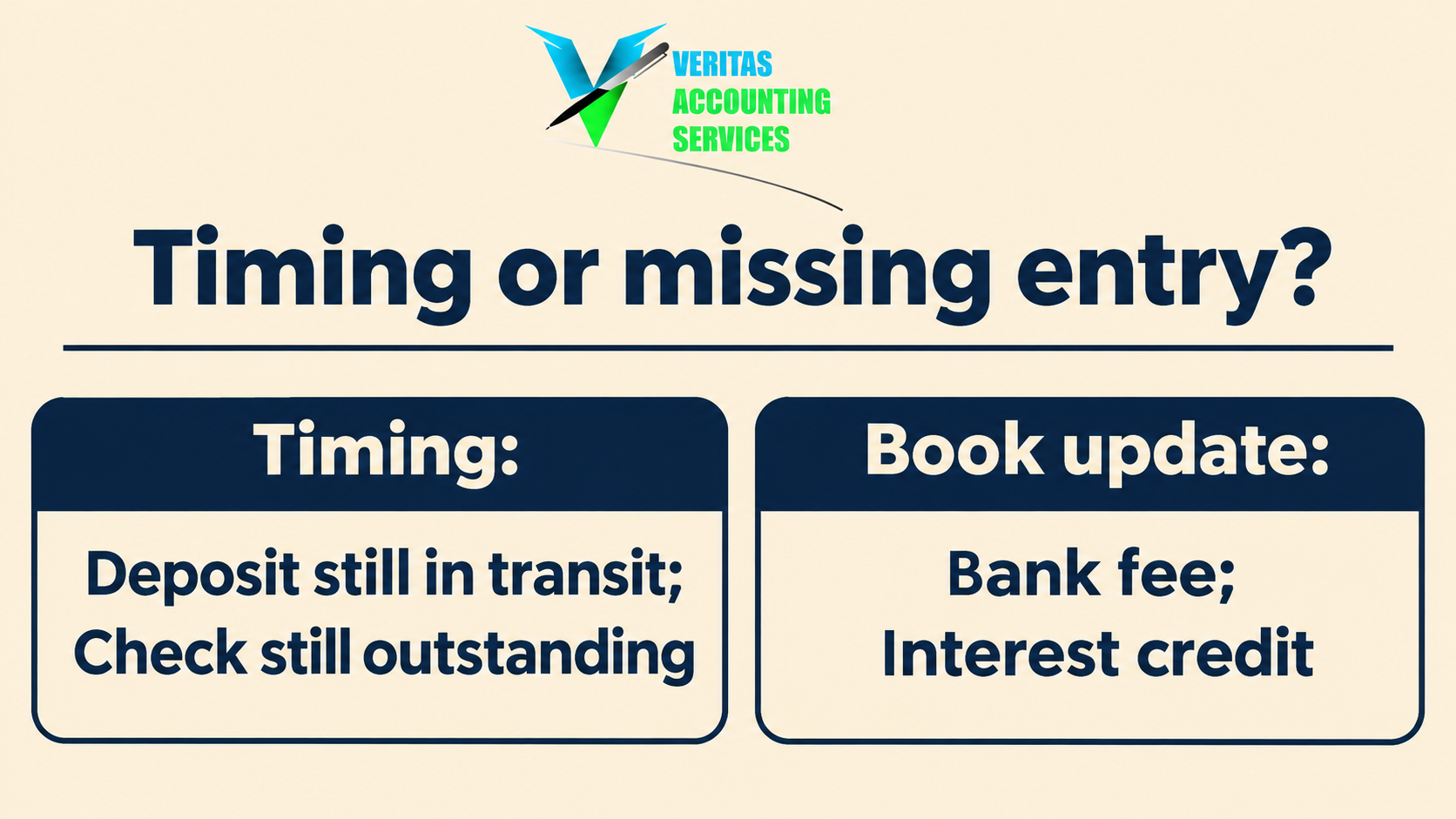
A deposit in transit is money already recorded in the books that the bank hasn’t posted by the statement cutoff. Check the deposit receipt or processor payout record, then look at the next statement or subsequent posted activity to see whether the money arrived. If you can trace the item, show it on the bank side of your bank reconciliation check. The worksheet explains the delay. You already recorded the deposit once.
An outstanding check is a payment already recorded in your books that hasn’t cleared the bank. Check the payee, number, amount and issue date against the payment record. List it on the bank side as a subtraction from the statement balance. The payment will reduce the bank balance when it clears. If a check stays outstanding longer than expected, investigate delivery and payment status before reissuing or reversing it.
A fee on the bank statement that you haven’t recorded is a different kind of item. Verify the charge and record it in the appropriate account. Bank interest credited to the account can also require a book entry. Use the actual statement date and amount, and keep the statement line with the record. A bank reconciliation check gives you a reason for the change and leaves evidence the next reviewer can follow.
If a withdrawal is unfamiliar, gather the transaction details and check with the people who use the account. Follow up with the bank promptly if you suspect an unauthorized transaction. Keep the item visible with a status, a named owner and the next review date. A quick entry to make the difference disappear can obscure the very activity you need to investigate.
Use the bank reconciliation check to test the cutoff
Try a specific cutoff test for any large item close to month-end. Look at when the business recorded it, when the bank posted it and which date the statement ends. Suppose the shop deposited a check at closing on October 31 and the bank posted the credit on November 2. If the deposit is already in the October books and you can verify it with the deposit record, the two dates explain the difference. Your November bank reconciliation check should show the deposit clearing without a second entry.
If the records disagree about the amount, the cutoff alone won’t explain the difference. A $1,200 deposit in the books and a $1,020 bank credit require a closer look at the deposit slip, what the bank accepted and whether part of the deposit was handled separately. Record what you learned before deciding whether a book correction or a bank inquiry is appropriate. If the original transaction is unclear, ask the person who handled the deposit while they can still recall what happened.
Work through the two balances
Here is the shop’s bank reconciliation check for the fictional month. The $1,200 deposit was recorded before the statement closed and appeared at the bank afterward. A $450 supplier check was recorded but had yet to clear. The bank also deducted a $30 fee that the shop hadn’t entered.
| Side | Starting balance | Adjustments | Adjusted balance |
|---|---|---|---|
| Bank statement | $9,850 | Add $1,200 deposit in transit and subtract $450 outstanding check | $10,600 |
| Books | $10,630 | Subtract $30 bank fee | $10,600 |
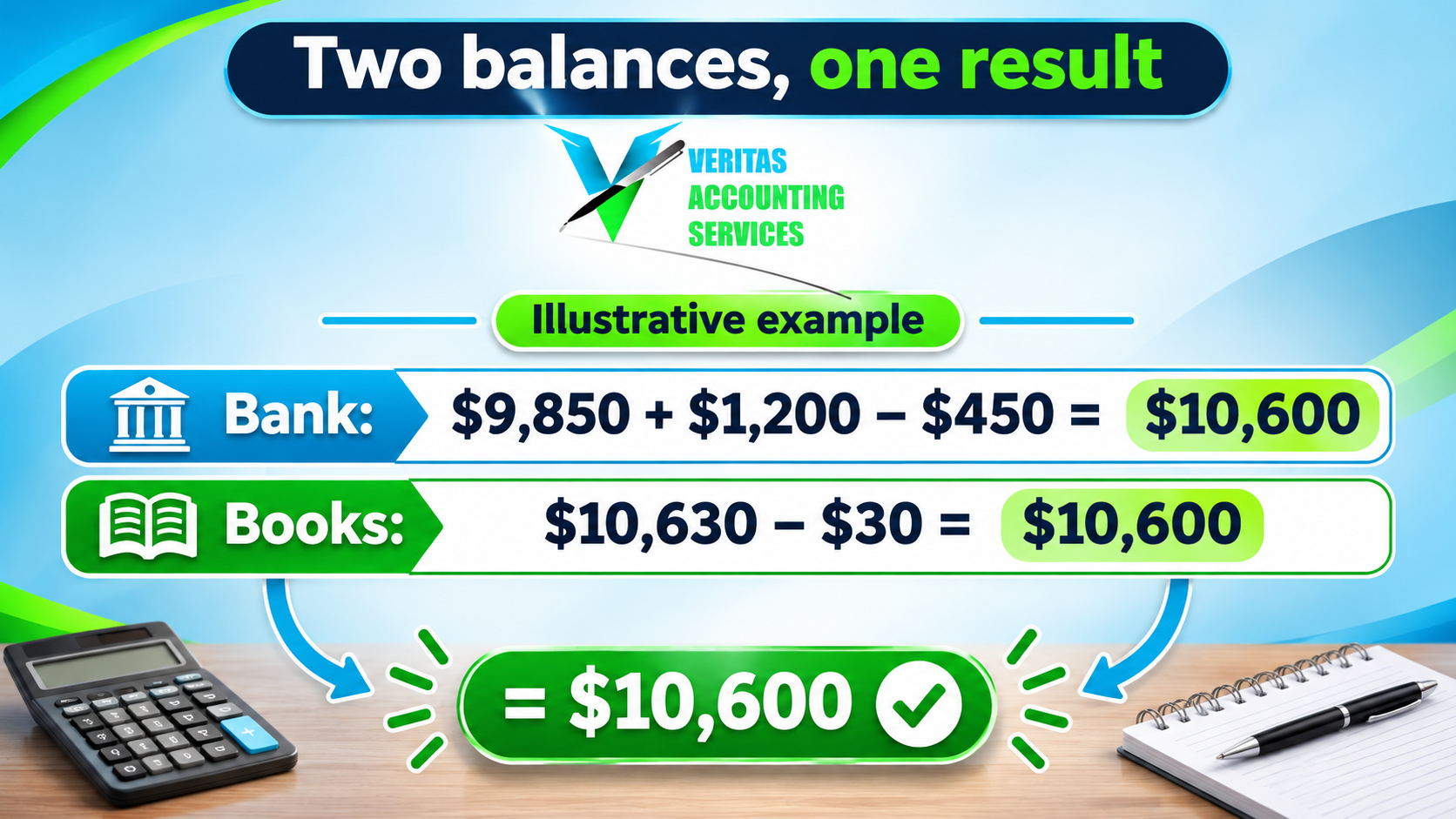
On the bank side, $9,850 plus $1,200 equals $11,050. Subtracting $450 gives $10,600. On the book side, $10,630 minus the $30 fee gives the same $10,600. The fee is the bookkeeping change in this example. The deposit and check stay on the timing list until they clear. Keep the two sides visible so the reviewer can see why each adjustment was made.
The starting difference was $780. That number by itself gives the owner little information. The bank reconciliation check breaks it into items with different next steps. The shop needs to enter the fee, confirm the deposit posted and monitor the check. It can assign those steps separately and avoid changing entries for transactions already recorded.
Use the bank reconciliation check in cash planning
The $10,600 adjusted amount explains the statement-date balance after considering the listed items. To decide whether to pay a supplier today, also look at the bank’s current available funds, holds, payments still in transit and upcoming commitments. A deposit in transit might help explain the books even if you can’t spend it today. Review payroll and rent before deciding how much cash you can commit. A bank reconciliation check and a cash forecast answer related questions at different points in time. Veritas cash flow management guide
For example, if the owner schedules a supplier payment based on the adjusted month-end figure alone, a pending withdrawal could reduce the money available for the batch. Check which transactions already affect the available balance so you don’t subtract them twice. Then bring the reconciled records into your next payment review and confirm any new bills or bank activity since month-end. Veritas vendor payment review
Review open items before closing
A bank reconciliation check can balance while legitimate timing items remain open. Give each item a date, reference, amount and expected clearing date or next step. Review older items before carrying them forward. An old deposit may signal that you need to locate a receipt or talk to your bank. An uncleared check may require contact with the payee. Document what happened before taking corrective action. If an old amount needs to be reversed, confirm with your bookkeeper how to handle it and keep the original record traceable.
Save the statement, reconciliation report and supporting notes in a folder for the account and month. Include links or references for deposits in transit, payment confirmations and corrections. The IRS business recordkeeping overview explains how records support financial statements and items reported on tax returns. A saved bank reconciliation check makes it easier to explain what was known when the month was closed. Veritas guide to common bookkeeping problems
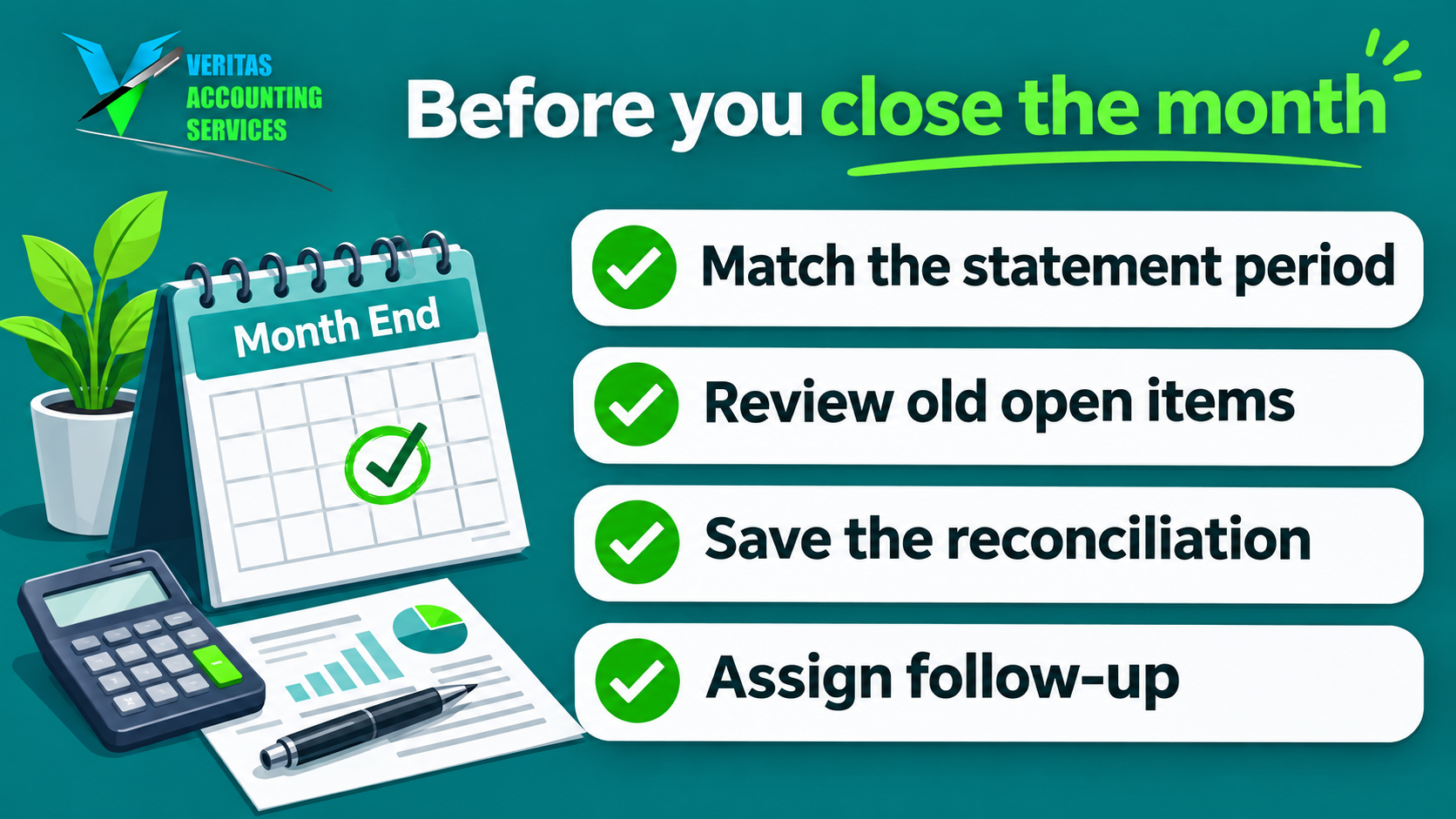
If you work alone, do a second pass focused on unfamiliar payments, duplicate amounts and older open items. If two people share the work, have one prepare the reconciliation and the other review adjustments and evidence where practical. Give the reviewer enough context to tell a timing difference from an actual correction. A short note such as “$450 check issued October 28, supplier confirmed receipt November 4, still open as of review” is more useful than “check pending.”
Track what happens after the statement date
Use a separate follow-up date for each open item. For the flower shop, a deposit should be easy to find once it posts, so the owner can check the next day’s bank activity and note the actual clearing date. The supplier check may take longer. The owner can first confirm delivery, then look for it on the next statement. Record those outcomes against the original items so the next bank reconciliation check shows what changed.
If you correct a ledger entry, save the reason, the original reference and the revised record. For instance, if the $30 fee was entered after the first review, run the book balance again before marking the month complete. This final bank reconciliation check catches a correction posted to the wrong bank account or the wrong date. The reviewer can then see both the original issue and the evidence that it was resolved.
Hand off the bank reconciliation check
Keep a standard folder structure and pick a regular review date. Set one person to retrieve statements and payout reports, one person to prepare or review the bank reconciliation check, and a backup who knows where the files are. A concise handoff should show the period, adjusted balance, unresolved items, and who needs to answer each question. Include the next check date if you need to wait for a statement or a supplier response.
When the same mismatch keeps returning, look at how the transaction first enters the system. If every processor payout needs manual reconstruction, save the batch report when the payout arrives. If transfers repeatedly show up as expenses, agree on a matching method and check both accounts together. If deposits routinely lack support, make it part of closing the shop to save the deposit confirmation with the day’s receipts. Use each bank reconciliation check to identify a recurring cause you can address upstream.
Frequently asked questions
Can I rely on a bank feed instead of doing a bank reconciliation check?
A bank feed can help import and match transactions. Compare the result with the bank statement for the actual period and confirm the statement ending balance. Feed activity can miss an item, show it late or suggest the wrong match. Review exceptions, confirm transfers and keep the statement with the final reconciliation. That gives you a clear record of what you checked even if you change bookkeeping systems later.
What if my bank reconciliation check is off by a small amount?
Start with the amount and date. Look for a fee, rounding, a partial payment or a transaction recorded with the digits in the wrong order. Verify against the underlying record before correcting anything. If you still can’t explain it, record the difference as unresolved and ask your bookkeeper how to proceed. A small difference can point to a repeatable issue, such as the way fees are being recorded.
Do I have to wait for every check to clear before closing?
You can document a verified outstanding check on the reconciliation and follow up afterward. Keep the amount and payee visible, and confirm how it clears in the next bank reconciliation check. If the check appears lost, stale or disputed, check the facts with the payee and bank before sending a replacement. Once resolved, document which payment actually settled the obligation.
How often should I run a bank reconciliation check?
Monthly is a practical starting point for many small businesses because a regular statement provides a cutoff. If your business has frequent deposits or a tight cash position, you can also match activity weekly and use the month-end statement to finish the formal review. Choose a routine that fits the volume and gives someone enough time to investigate exceptions before records are used for decisions.
Conclusion
A bank reconciliation check works best when every difference has a reason and a next action. Start with the same statement date, match transactions, and separate delayed bank activity from missing book entries. Compare both adjusted balances, then save the evidence and assign follow-up on the items that are still open. The result gives you a clearer record of the month and a more reliable starting point for cash planning.
GET IN TOUCH
Schedule a FREE Call
Connect on our Socials!
