








Inflation-Proof Your Business with 7 Proven Accounting Tactics That Cut Costs
As we navigate through 2025, inflation continues to be one of the most pressing challenges facing businesses worldwide. With costs rising across every sector—from raw materials to labor, utilities to transportation—business owners are finding their profit margins squeezed tighter than ever before. The question isn’t whether inflation will affect your business, but how well-prepared you are to weather this economic storm. Let’s Inflation-proof your business.
Recent economic data shows that businesses without proper financial strategies are 73% more likely to experience cash flow crises during inflationary periods. However, companies that implement smart accounting strategies not only survive but often emerge stronger, having used the challenging period to optimize their operations and strengthen their market position.
At Veritas Accounting Services, with over a decade of experience managing 1000+ projects across 6+ countries, we’ve witnessed firsthand how businesses can transform financial challenges into competitive advantages. The key lies in implementing proactive accounting strategies that don’t just react to inflation—they anticipate and neutralize its impact.
Understanding Inflation’s Hidden Impact on Your Business

Inflation doesn’t affect all aspects of your business equally, and understanding these nuances is crucial for developing effective countermeasures. While most business owners focus on obvious cost increases like supplier price hikes, the hidden impacts often prove more damaging to long-term profitability.
Consider the erosion of your cash reserves. Money sitting in low-interest accounts loses purchasing power daily during inflationary periods. A business maintaining $100,000 in cash reserves during a 6% inflation period effectively loses $6,000 in purchasing power annually—money that could have been strategically deployed to generate returns or reduce future costs.
Inventory management becomes particularly complex during inflationary periods. Traditional accounting methods may not accurately reflect the true cost of goods sold when replacement costs significantly exceed historical purchase prices. This discrepancy can lead to pricing decisions based on outdated cost structures, resulting in eroded profit margins despite maintaining historical markup percentages.
The timing of expenses and revenue recognition also becomes critical. Accelerating certain expenses while deferring others can provide significant cash flow advantages. Similarly, contract terms and payment schedules that seemed reasonable during stable economic periods may become problematic when inflation accelerates.
Labor costs present another multifaceted challenge. Beyond direct wage increases, inflation drives up the cost of employee benefits, from health insurance to retirement contributions. The pressure to retain talent during inflationary periods often forces businesses to implement compensation adjustments that outpace productivity gains, further pressuring profit margins.
Strategic Cost Management Through Advanced Accounting

Effective inflation management begins with reimagining your approach to cost accounting. Traditional cost allocation methods often fail to capture the dynamic nature of inflationary pressures, leading to pricing decisions based on incomplete information.
Activity-based costing becomes particularly valuable during inflationary periods. By accurately tracking the true cost of each business activity, you can identify which processes are most vulnerable to inflationary pressures and prioritize optimization efforts accordingly. This granular understanding enables targeted cost reduction strategies rather than across-the-board cuts that may damage operational efficiency.
Real-time cost tracking transforms from a luxury to a necessity during inflationary periods. Monthly financial statements, while useful for historical analysis, provide insufficient frequency for dynamic cost management. Businesses implementing weekly or even daily cost monitoring can identify inflationary impacts immediately and adjust pricing or operations accordingly.
The integration of multiple accounting software platforms—QuickBooks, Xero, Wave, and Zoho Books—enables comprehensive cost tracking across different business functions. This multi-platform approach provides redundancy and specialized functionality that single-software solutions cannot match. For instance, while QuickBooks might excel at general ledger management, Xero’s inventory tracking capabilities might provide superior insights into cost of goods sold fluctuations.
Variance analysis becomes critical for identifying inflationary impacts before they become unmanageable. Regular comparison of actual costs against budgeted amounts, adjusted for known inflationary factors, reveals areas where costs are escalating beyond expected rates. This early warning system enables proactive intervention rather than reactive damage control.
Dynamic Pricing Strategies and Revenue Optimization

Inflation requires a fundamental shift from static to dynamic pricing models. For Inflation-Proof Your Business, Traditional annual price adjustments prove insufficient when costs fluctuate monthly or even weekly. However, implementing dynamic pricing requires sophisticated financial tracking and analysis capabilities that many businesses lack internally.
Value-based pricing becomes increasingly important during inflationary periods. Rather than simply adding inflationary increases to existing prices, successful businesses focus on communicating and delivering enhanced value that justifies premium pricing. For Inflation-Proof Your Business, This approach requires detailed cost-benefit analysis and customer value assessment that goes beyond traditional accounting practices.
Contract management and pricing escalation clauses provide protection against unexpected cost increases. However, implementing these mechanisms requires careful financial modeling to ensure they provide adequate protection without making your offerings uncompetitive. The key lies in understanding your cost structure well enough to predict which expenses are most vulnerable to inflationary pressures.
Revenue recognition timing can provide significant cash flow advantages during inflationary periods. Accelerating revenue recognition where possible, while deferring expenses, improves cash position and reduces the impact of inflation on working capital. For Inflation-Proof Your Business, This strategy requires careful compliance with accounting standards and tax regulations across different jurisdictions.
Customer payment terms become a critical component of inflation management. Shortening payment cycles reduces the impact of inflation on accounts receivable, while offering early payment discounts can improve cash flow even when the discount rate exceeds current interest rates. The key is understanding the true cost of extended payment terms in an inflationary environment.
Cash Flow Optimization in Inflationary Environments

Cash flow management during inflationary periods requires a complete rethinking of traditional approaches. The goal shifts from maximizing cash reserves to optimizing cash velocity and purchasing power preservation.
Accelerated depreciation strategies can provide immediate tax benefits while reducing future taxable income when inflation may have increased tax rates. However, implementing these strategies requires careful coordination between financial reporting and tax planning to ensure compliance while maximizing benefits for Inflation-Proof Your Business.
Inventory management becomes a balancing act between carrying costs and price protection. Strategic inventory purchases ahead of anticipated price increases can provide significant cost savings, but this approach requires accurate demand forecasting and sufficient cash flow to support increased inventory investments.
Supplier relationship management takes on new importance during inflationary periods. Negotiating longer-term contracts with key suppliers can provide cost stability, while diversifying supplier bases reduces vulnerability to individual supplier price increases. These strategies require detailed supplier cost analysis and relationship management that goes beyond traditional procurement approaches.
Working capital optimization becomes critical for maintaining operational flexibility. This involves not just managing cash, but optimizing the entire cash conversion cycle—from inventory purchase through customer payment collection. Reducing this cycle by even a few days can provide significant cash flow improvements during inflationary periods.
GET IN TOUCH
Schedule a FREE Call
Technology Integration for Real-Time Financial Management
Modern accounting software integration provides capabilities that were impossible just a few years ago. The combination of cloud-based platforms with real-time data synchronization enables business owners to monitor financial performance with unprecedented accuracy and speed.
Automated expense categorization and tracking reduces the administrative burden of detailed cost monitoring while improving accuracy. Machine learning algorithms can identify unusual expense patterns that might indicate inflationary pressures in specific cost categories, enabling proactive management responses.
Multi-currency capabilities become essential for businesses operating internationally or dealing with international suppliers. Inflation rates vary significantly between countries, and currency fluctuations can either amplify or offset inflationary impacts. Sophisticated currency hedging strategies require real-time monitoring and analysis capabilities that integrated accounting platforms provide.
Predictive analytics and forecasting tools enable businesses to model different inflationary scenarios and their potential impacts. This capability transforms financial planning from reactive to proactive, enabling strategic decisions based on probable future conditions rather than historical performance.
Integration with banking and payment platforms provides real-time cash flow visibility that enables immediate responses to changing conditions. This integration also facilitates automated cash management strategies that optimize interest earnings and minimize transaction costs.
Global Perspective on Inflation Management
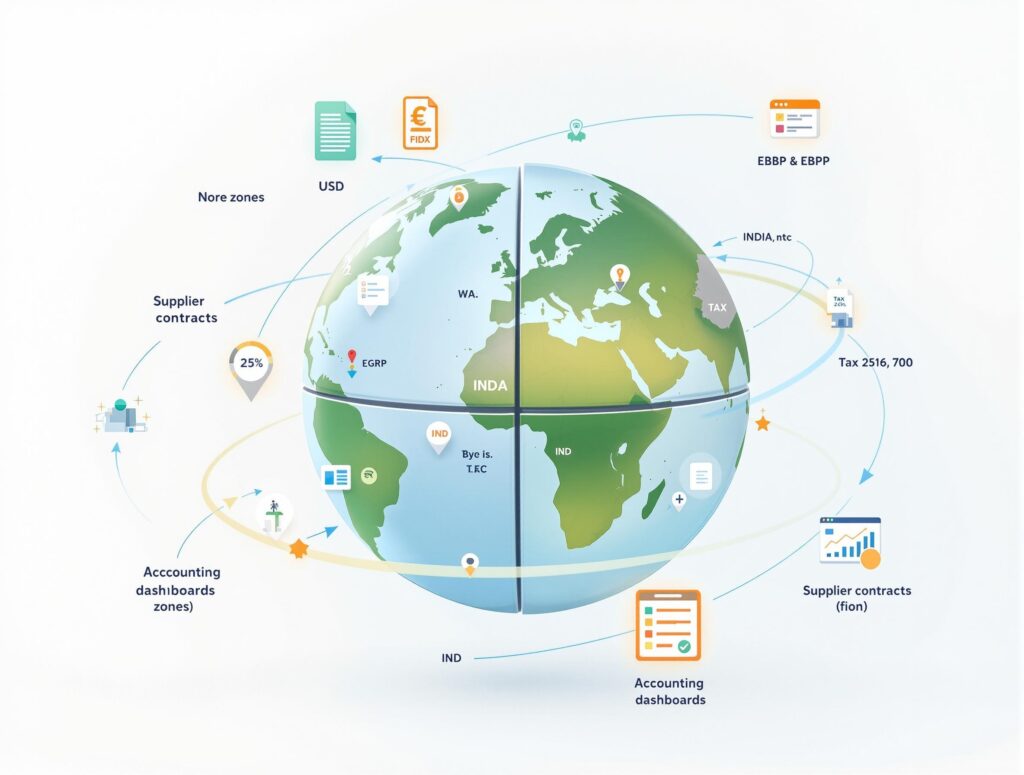
Operating across multiple countries provides unique challenges and opportunities during inflationary periods. Different countries experience varying inflation rates, and regulatory environments may provide different tools for managing inflationary impacts.
Currency diversification can provide natural hedging against localized inflationary pressures. Businesses with revenue streams in multiple currencies may find that currency appreciation in low-inflation countries offsets margin pressure in high-inflation markets. However, this strategy requires sophisticated currency risk management and accounting practices.
Tax optimization strategies vary significantly between jurisdictions, and inflationary periods often provide opportunities for strategic tax planning. Accelerated depreciation, inventory accounting method changes, and timing of income recognition can provide significant benefits, but these strategies must be implemented in compliance with local regulations.
International supplier diversification reduces vulnerability to localized inflationary pressures. However, managing suppliers across multiple countries requires sophisticated logistics and financial management capabilities, including multi-currency accounting and international payment processing.
Regulatory compliance becomes more complex during inflationary periods as governments often implement new policies to address economic challenges. Staying current with regulatory changes across multiple jurisdictions requires dedicated resources and expertise that many businesses lack internally.
Building Long-Term Resilience Through Strategic Planning
Inflation-proofing your business requires more than short-term tactical adjustments—it demands fundamental changes to how you approach financial management and strategic planning. The businesses that emerge strongest from inflationary periods are those that use the challenge as an opportunity to build more robust and efficient operations.
Scenario planning becomes essential for navigating uncertain economic conditions. Developing detailed financial models for different inflationary scenarios enables proactive decision-making and reduces the likelihood of being caught unprepared by changing conditions. These models should include not just direct cost impacts, but also secondary effects like customer behavior changes and competitive responses.
Investment in efficiency improvements often provides the highest returns during inflationary periods. Process automation, technology upgrades, and operational optimization can reduce per-unit costs even as input prices rise. However, these investments require careful financial analysis to ensure they provide adequate returns in the current economic environment.
Customer relationship management becomes increasingly important as businesses compete for a potentially shrinking pool of customers with reduced purchasing power. Understanding customer value and lifetime profitability enables strategic decisions about pricing, service levels, and customer retention investments.
The Veritas Advantage in Inflationary Times
Successfully navigating inflationary challenges requires expertise that goes beyond basic bookkeeping. It demands strategic financial management, real-time monitoring capabilities, and the experience to implement complex strategies across multiple business functions and jurisdictions.
With over 1000 completed projects across 6+ countries, Veritas Accounting Services has developed proven methodologies for helping businesses not just survive but thrive during challenging economic periods. Our expertise in multiple accounting platforms—QuickBooks, Xero, Wave, and Zoho Books—enables comprehensive financial management that adapts to your specific business needs.
Our global perspective provides insights into how different markets respond to inflationary pressures, enabling strategies that leverage international opportunities while mitigating local risks. Whether you’re dealing with multi-currency transactions, international supplier relationships, or cross-border tax optimization, our experience provides the foundation for effective inflation management.
The combination of advanced technology integration, strategic financial planning, and hands-on implementation support ensures that your business has the tools and expertise needed to transform inflationary challenges into competitive advantages.
Ready to inflation-proof your business? Contact Veritas Accounting Services today to discover how our proven strategies can protect and grow your business during these challenging times.
Contact Information:
- Email: hello@veritasaccountingservices.com
- Phone: +1(678) 723-6003 (US) | +91 9725552243 (India)
- Global Expertise: Serving businesses across US, UK, Ireland, Singapore, Malaysia, UAE, and beyond
Don’t let inflation erode your profits. Let our decade of experience and 1000+ successful projects guide your business through these challenging times toward stronger, more resilient operations.
GET IN TOUCH
Schedule a FREE Call








Connect with us on Social Media!
