






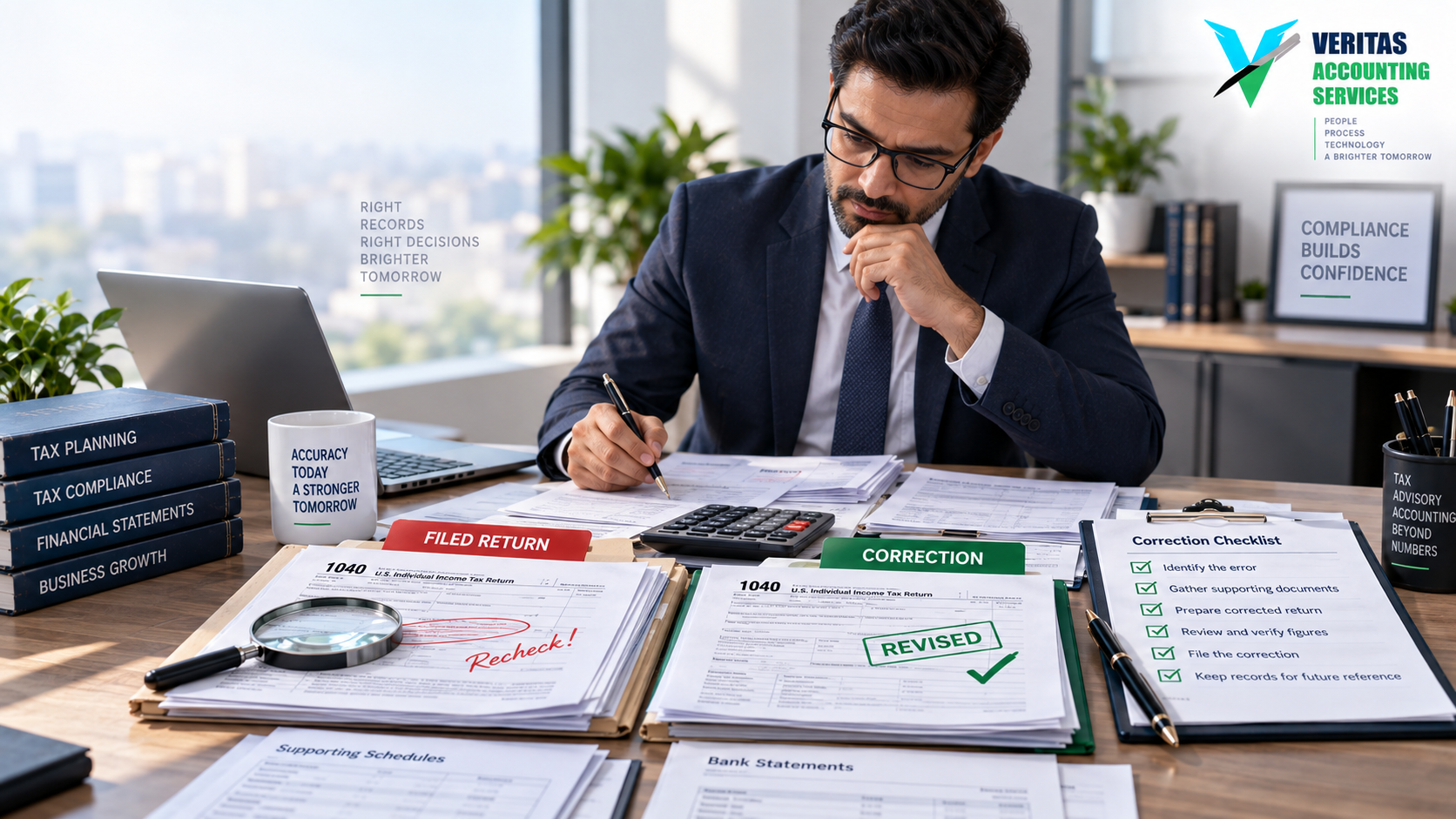

How to Correct a Mistake on an Already Filed Tax Return
Discovering an error on a tax return after it has already been filed can be stressful. A business owner or individual may immediately worry about penalties, interest, an IRS notice, or the possibility of having to prepare the entire return again.
The good news is that many tax filing mistakes can be corrected. The appropriate process depends on the nature of the error, the type of tax return, whether the original return has already been processed, and whether the correction changes the amount of tax owed or the refund due.
A mistake on a filed return should not automatically be ignored. At the same time, not every error requires an amended tax return. Some mathematical or processing errors may be corrected during return processing. In other situations, the tax authority may request additional information without requiring a complete amendment.
The correct response is to assess the issue carefully, gather the relevant records, determine the proper correction procedure, and act within the applicable deadline.
For businesses, the process may involve more than correcting a single figure. An accounting error may affect revenue, expenses, depreciation, payroll, inventory, partner or shareholder information, state filings, and future financial statements. That is why a tax filing error should be reviewed from both an accounting and tax perspective.
What Is an Amended Tax Return?
An amended tax return is a corrected tax filing submitted after the original return has already been filed. It is generally used to change information that was reported incorrectly or omitted from the original filing.
Depending on the taxpayer and the type of return, an amendment may be needed to correct:
- Filing status.
- Business or personal income.
- Deductible expenses.
- Tax credits.
- Dependent information.
- Tax liability.
- Withholding information.
- Depreciation details.
- Fixed-asset information.
- Business deductions.
- Partner or shareholder information.
- Supporting schedules.
- Other information affecting the tax calculation.
For individual federal income tax returns, Form 1040-X is generally used to correct a previously filed individual income tax return. The form requires the taxpayer to show the original amounts, the changes being made, and the corrected amounts.
Businesses may need different forms or procedures depending on their entity type. A corporation, S corporation, partnership, or other business entity may need to amend its federal return, related schedules, state filings, or information returns.
An amended tax return is not simply a second copy of the original return. It should clearly explain what changed, why the change is necessary, and how the corrected figures were calculated.
Common Mistakes That May Require a Correction
Tax return errors can occur for many reasons. Sometimes information was unavailable when the return was prepared. In other cases, the taxpayer or preparer may have misunderstood a transaction, omitted a document, or entered an incorrect figure.
Incorrect Income
A taxpayer may discover that income from a bank account, investment, rental property, payment platform, or business activity was omitted or reported incorrectly.
For a business, income may be missed because records from a payment processor, e-commerce platform, or separate bank account were not included in the accounting records.
Missed Deductions
A taxpayer may discover that an eligible business expense, charitable contribution, retirement contribution, or other deduction was not included in the original return.
However, the expense must be reviewed carefully. A payment appearing on a bank statement does not automatically qualify as a tax deduction. The taxpayer should be able to establish the nature, purpose, and eligibility of the expense through appropriate documentation.
Incorrect Tax Credits
A credit may have been omitted, calculated incorrectly, or claimed without satisfying all applicable requirements. Corrections involving credits should be reviewed carefully because some credits have specific eligibility rules, limitations, and documentation requirements.
Incorrect Filing Status or Personal Information
An incorrect filing status, dependent claim, or taxpayer classification may affect the tax calculation. Certain changes may require additional documentation or coordination with another taxpayer.
Business Accounting Errors
For business taxpayers, errors may arise from:
- Incorrect revenue totals.
- Duplicate expenses.
- Unrecorded liabilities.
- Incorrect depreciation.
- Misclassified loan payments.
- Improper treatment of owner distributions.
- Incorrect inventory balances.
- Missing payroll expenses.
- Incorrect partner or shareholder allocations.
- Incomplete state tax information.
Not every bookkeeping adjustment automatically requires an amended tax return. The tax preparer should first determine whether the error affected the filed return and whether the correction changes taxable income, tax liability, credits, or other reported information.
The first step is to identify exactly what went wrong.
Avoid making a quick correction based only on a general suspicion. Instead, review the original tax return, supporting schedules, accounting records, and source documents.
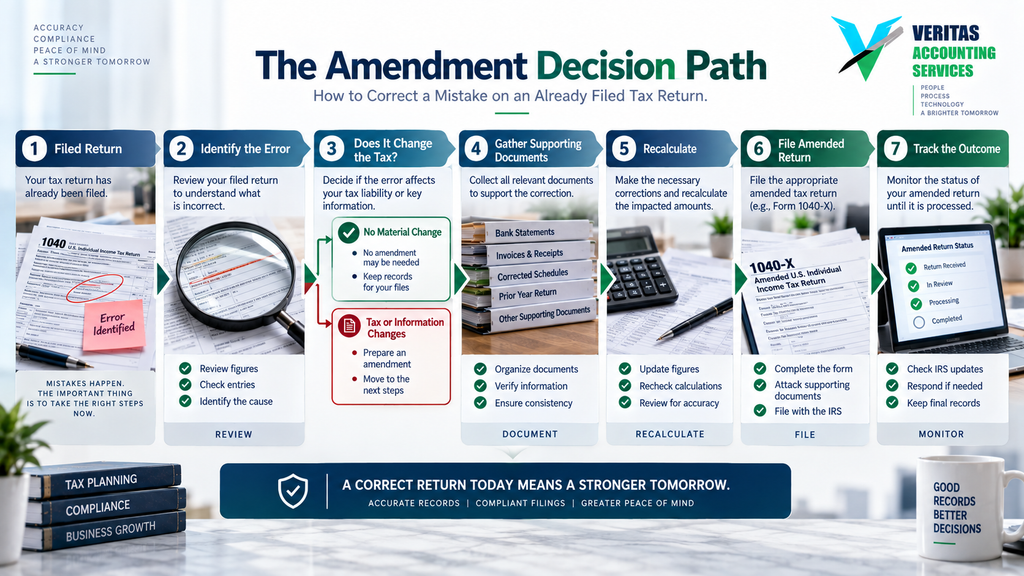
Step 1: Identify and Understand the Error
For example, if a business owner believes that an expense was omitted, the review should determine:
- Whether the expense was actually incurred.
- Whether it was recorded in the accounting system.
- Whether it was included elsewhere on the return.
- Whether it is deductible under the applicable tax rules.
- Whether it belongs to the tax year being amended.
- Whether it was already included in a book-to-tax adjustment.
- Whether supporting documentation is available.
If income appears to be missing, compare the filed return with bank statements, sales reports, payment-platform statements, invoices, and third-party reporting forms.
The purpose of this step is to distinguish a genuine tax return error from an accounting presentation issue, a timing difference, or an item that was already correctly reported elsewhere.
A business should also determine whether the error is isolated or part of a wider bookkeeping problem. For example, an omitted expense may indicate that an entire credit card account was never reconciled.
Step 2: Determine Whether an Amendment Is Necessary
Not every mistake requires an amended tax return.
Some mathematical or processing errors may be identified and corrected during return processing. An amendment may also be unnecessary when the tax authority simply requests a missing form, schedule, or supporting document.
Before preparing an amended tax return, ask the following questions:
- Does the error change taxable income?
- Does it change the amount of tax owed?
- Does it affect a deduction or credit?
- Does it change filing status or dependent information?
- Does it affect information reported on a business schedule?
- Has the tax authority already adjusted the return?
- Has a notice been issued?
- Is the original return within the applicable amendment period?
- Does the correction affect a state or local filing?
- Is another correction procedure more appropriate?
For example, a minor typographical error that does not affect the tax calculation may not require an amendment. However, omitted business income, an incorrect filing status, or an unsupported credit may require a formal correction.
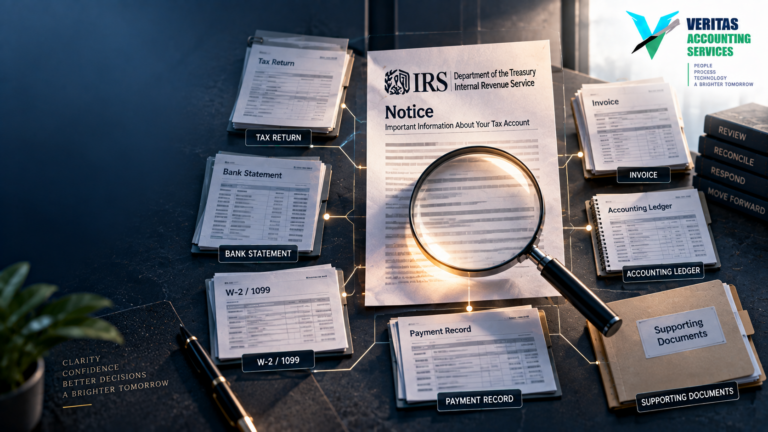
If a tax authority has already issued a notice, review the notice carefully and follow its instructions. Filing an amendment without considering the notice may create confusion or duplicate work.
Step 3: Gather Supporting Documents
Once it is determined that a correction may be necessary, collect all documents related to the affected item.
Supporting records may include:
- The originally filed tax return.
- Previously filed schedules and forms.
- Tax notices.
- Bank statements.
- Credit card statements.
- Invoices and receipts.
- Payroll reports.
- Loan statements.
- Depreciation schedules.
- Inventory records.
- Payment-platform reports.
- Brokerage statements.
- Rental property records.
- Partnership or shareholder schedules.
- State tax filings.
- Proof of tax payments.
- Relevant contracts or agreements.
Do not simply change one figure without reviewing the related sections of the return. A single correction may affect several forms or schedules.
For example, an adjustment to business income may also affect:
- Self-employment tax.
- Qualified business income calculations.
- Estimated tax payments.
- State taxable income.
- Partner or shareholder information.
- Related credits.
- Loss carryforwards.
- Tax basis or capital account information.
The supporting documents should show the original position, the corrected position, and the reason for the change. Good documentation makes the amendment easier to prepare and helps demonstrate that the correction is accurate.
Step 4: Recalculate the Correct Tax Position
After gathering the records, recalculate the return using the corrected information.
This step requires care because one change may affect several parts of the tax calculation.
For example, suppose a business discovers that it omitted $12,000 of legitimate deductible expenses. The correction may reduce taxable income, but the final tax impact could depend on:
- The taxpayer’s entity type.
- The applicable tax rules.
- Other deductions.
- Tax credits.
- State tax requirements.
- Self-employment tax.
- Loss limitations.
- Carryforward amounts.
- Other income reported on the return.
If the business omitted $12,000 of revenue, the additional tax may be affected by other expenses, ownership structure, estimated tax payments, and other tax attributes.
For business taxpayers, the correction should generally begin with the accounting records. The books may need to be updated, reconciled, or adjusted before the amended tax return is prepared.
However, an accounting correction and a tax correction are separate steps. A bookkeeping entry does not automatically determine the correct tax treatment.
The recalculation should identify:
- Original taxable income.
- Corrected taxable income.
- Original tax liability.
- Corrected tax liability.
- Original payments and credits.
- Corrected refund or balance due.
- Related forms and schedules that must be updated.
Step 5: Select the Correct Amendment Form
The appropriate form depends on the type of return being corrected.
Individual Federal Returns
For most individual federal income tax corrections, Form 1040-X is generally used to amend a previously filed individual return.
The taxpayer must report the original amounts, the changes, the corrected amounts, and an explanation of the correction. Relevant forms and schedules should be attached or submitted as required.
Corporate Returns
Corporations may need a specific amended-return form or an applicable electronic filing procedure, depending on the type of corporate return and the tax year involved.
A corrected corporate return generally needs the appropriate amended-return designation, revised forms, changed schedules, supporting information, and an explanation of the changes.
Partnership and S Corporation Returns
Partnerships and S corporations require additional consideration because changes may affect partners, shareholders, allocations, capital accounts, ownership percentages, and information reported to owners.
An amendment to a business return may require updated schedules, corrected owner information, and additional reporting to partners or shareholders. The applicable procedure depends on the tax year, entity type, filing status, and relevant tax rules.
State and Local Returns
A federal correction may affect state or local tax filings. State procedures are separate and may involve different forms, deadlines, payment rules, and documentation requirements.
A taxpayer should not assume that correcting the federal return automatically corrects the state return.
Step 6: Explain the Changes Clearly
A well-prepared amended tax return should explain what was wrong, what has been corrected, and why the corrected information is accurate.
A clear explanation should include:
- The tax year being amended.
- The original item reported.
- The corrected item.
- The reason for the correction.
- The supporting documents included.
- Any related forms or schedules being updated.
- The effect on tax liability or refund.
For example, an explanation might state that a business expense was omitted from the original return because a credit card statement was received after filing. The explanation should identify the expense, describe its business purpose, state the corrected amount, and refer to the supporting documentation.
Avoid vague statements such as “mistake corrected” or “updated figures.” The tax authority should be able to understand the issue without reconstructing the entire history of the return.
The explanation should be factual and concise. It should not include unnecessary speculation, emotional language, or unsupported conclusions.
Step 7: File the Amended Return and Pay Any Additional Tax
Once the corrected return has been prepared and reviewed, file it using the appropriate method.
Eligible individual amended returns may generally be filed electronically through approved tax software. Some tax years, return types, and circumstances may require paper filing.
If the correction results in additional tax, the taxpayer should pay the amount due as soon as possible. Filing an amended tax return does not generally eliminate interest or penalties that may apply to an unpaid tax balance.
The taxpayer should also review whether the correction affects estimated tax payments, payroll tax obligations, state filings, or future tax returns.
After filing, retain:
- A complete copy of the amended return.
- Electronic filing confirmation, if applicable.
- Proof of mailing, if filed on paper.
- Payment confirmation.
- Supporting documents.
- Tax authority acknowledgments.
- Related correspondence.
An amended return may take longer to process than an original return. Processing times can vary depending on the type of return, the filing method, the complexity of the correction, and whether additional review is required.
Federal and State Amended Returns
One of the most common mistakes is assuming that a federal amendment automatically updates every other tax filing.
A federal correction may affect:
- State income tax returns.
- Local income tax returns.
- Franchise tax filings.
- Sales tax reports.
- Payroll tax filings.
- Partnership or shareholder reporting.
- Estimated tax calculations.
For example, if a business reports additional federal income, the state may require a corresponding amendment. If the correction relates to sales tax or payroll tax, a separate filing process may be necessary.
State tax agencies have their own rules regarding amended returns, deadlines, payment requirements, and documentation. The taxpayer should review the relevant state requirements or consult a qualified tax professional.
When preparing an amendment, create a checklist of all potentially affected filings. This helps prevent a federal correction from creating an inconsistent state or local tax position.
What If the Error Results in a Refund?
An amended tax return may result in a refund when the taxpayer paid more tax than was ultimately due or becomes eligible for an additional deduction or credit.
Examples include:
- An omitted deductible expense.
- An overlooked tax credit.
- Incorrectly reported income.
- An overstatement of taxable income.
- An incorrect withholding amount.
- A correction to filing status.
- A business adjustment that reduces taxable income.
A refund claim must generally be filed within the applicable statutory period. The relevant deadline can depend on when the original return was filed, when the tax was paid, the type of claim, and special rules that may apply.
Taxpayers should not delay a refund claim unnecessarily. Before filing, confirm that the correction is fully supported and that all related schedules have been updated.
A refund is not guaranteed merely because an amendment is filed. The tax authority may review the correction and request additional information.
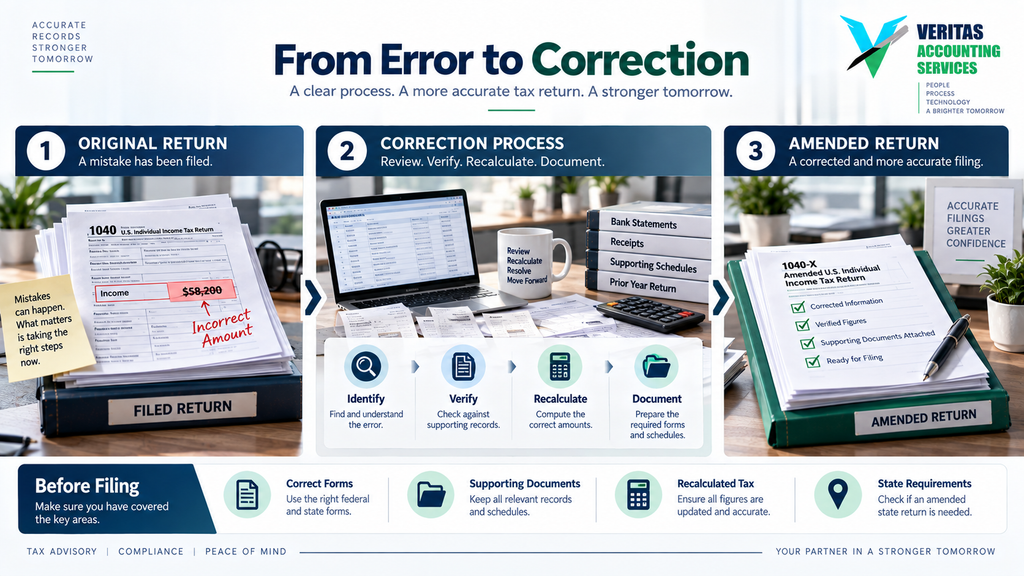
What If the Error Results in Additional Tax?
If the correction increases taxable income or reduces deductions or credits, the amended tax return may show additional tax due.
Examples include:
- Omitted business income.
- Incorrectly claimed deductions.
- Excessive tax credits.
- Incorrect depreciation.
- Unreported investment income.
- Incorrect filing status.
- Previously omitted rental income.
- Reclassification of a personal expense as nondeductible.
When additional tax is due, the taxpayer should consider making payment promptly. Interest and applicable penalties may continue to apply according to the relevant rules.
The taxpayer should also review whether the error affects estimated tax payments, payroll tax obligations, state filings, or future tax returns.
If the amount is substantial, professional advice may be appropriate before filing. A tax professional can help determine the correct treatment, evaluate potential penalty exposure, and coordinate federal and state corrections.
Common Mistakes to Avoid When Filing an Amendment
Filing an Amendment for Every Minor Error
Not every typographical or mathematical mistake requires an amendment. First determine whether the error affects the tax return and whether the tax authority has already corrected it.
Amending Before the Original Return Is Filed
An amended return is generally used after the original return has been filed. In certain circumstances before the original filing deadline, a superseding return may be more appropriate.
Ignoring Tax Notices
If a tax authority has issued a notice, review it carefully. The notice may contain specific instructions for responding or submitting documents.
Correcting Only One Related Form
A change to income, deductions, depreciation, or ownership information may affect multiple schedules. All related forms should be reviewed.
Failing to Update the Accounting Records
For a business, the books should generally reflect the corrected transaction or adjustment. Otherwise, future financial statements and tax returns may continue to contain the same problem.
Claiming an Unsupported Deduction
A taxpayer should not use an amendment as an opportunity to claim an expense without adequate documentation or eligibility.
Forgetting the State Return
A federal correction may require a state or local amendment. This should be evaluated before the correction process is completed.
Failing to Pay Additional Tax
Filing the amended return does not necessarily satisfy the payment obligation. If additional tax is due, payment arrangements or other options may need to be considered.
Submitting Inconsistent Information
The amended return should be consistent with financial statements, payroll reports, information returns, accounting records, and other filings. Inconsistencies can lead to additional questions or delays.
When Professional Tax Assistance Is Advisable
Some corrections are straightforward, but professional assistance is often appropriate when the error is complex or involves a material amount.
Consider consulting a tax professional when:
- The error affects business income.
- Multiple tax years are involved.
- The amendment changes a partnership or S corporation return.
- The correction affects partner or shareholder allocations.
- Payroll or employment taxes are involved.
- Sales tax or multi-state obligations are affected.
- A tax notice has been issued.
- The correction may involve penalties.
- The original return was prepared using incomplete books.
- The taxpayer is uncertain whether an item is deductible.
- The correction involves foreign income or international reporting.
- The refund claim is substantial.
- The business has already been selected for examination.
A qualified professional can help review the original return, reconcile accounting records, calculate the corrected tax position, prepare the necessary forms, explain the changes, and identify related filing obligations.
For business owners, the process should include both tax review and accounting review. Correcting the tax return without addressing the underlying bookkeeping issue may lead to repeated errors in future periods.
Frequently Asked Questions
Does every tax return mistake require an amended tax return?
No. Some mathematical or processing errors may be corrected during tax return processing. An amendment may also be unnecessary when the tax authority simply requests a missing form or supporting document. The need for an amendment depends on the type and effect of the error.
What form is used to amend an individual federal tax return?
Form 1040-X is generally used to correct a previously filed individual federal income tax return. The taxpayer must report the original amounts, the changes, the corrected amounts, and an explanation of the correction.
Can an amended tax return be filed electronically?
Eligible individual amended returns may generally be filed electronically through approved tax software. Some tax years, return types, and circumstances may require paper filing.
How long do I have to file an amended tax return?
The deadline depends on the type of correction, the taxpayer, the tax year, and whether the amendment results in a refund or additional tax. Refund claims may be subject to specific statutory time limits, so the applicable rules should be reviewed before filing.
What happens if the amendment shows additional tax?
The taxpayer should file the correction and pay the additional tax as soon as possible. Interest and applicable penalties may apply to unpaid tax. Filing an amended return does not automatically remove those amounts.
Will an amended tax return trigger an audit?
Filing an amendment does not automatically mean that the taxpayer will be audited. However, the amended return may be reviewed, and the tax authority may request supporting documents or additional information.
Do I need to amend my state tax return?
Possibly. If the federal correction affects state taxable income, deductions, credits, or other state reporting items, a state amendment may be required. State procedures are separate from the federal process.
Can I amend a business tax return?
Yes, but the process depends on the business structure and the type of return. Corporations, partnerships, S corporations, and other entities may have different forms, schedules, and filing procedures.
Should I correct the bookkeeping before amending the tax return?
For a business, the accounting records should generally be reviewed and corrected before the amended tax return is finalized. This helps ensure that the financial statements and tax filings are consistent.
How long does it take to process an amended return?
Processing times can vary. Amended returns may require additional review, especially when they involve multiple schedules, substantial changes, or supporting documents. Taxpayers should retain filing confirmations and monitor any correspondence after submission.
Conclusion
Discovering an error on an already filed tax return can be uncomfortable, but it does not mean that the situation cannot be corrected. The appropriate response is to review the original filing, identify the precise error, determine whether an amendment is required, gather supporting records, recalculate the correct tax position, and file the appropriate correction.
An amended tax return should be prepared carefully because one change may affect several forms, schedules, tax calculations, and state filing obligations. Business owners should also review their accounting records to ensure that the underlying issue does not continue into future periods.
The most important principles are simple: do not ignore a material error, do not assume that every minor mistake requires an amendment, do not claim unsupported deductions, and do not overlook payment or state filing obligations.
With timely action, accurate documentation, and professional guidance where necessary, taxpayers can correct filing mistakes and improve the reliability of their future tax and financial reporting.
How Veritas Accounting Services Can Help
At Veritas Accounting Services, we help businesses review financial records, identify accounting discrepancies, reconcile accounts, prepare tax-ready information, and support corrections arising from bookkeeping or reporting errors.
Our team can assist with bookkeeping cleanup, financial statement review, transaction classification, bank reconciliations, fixed-asset records, loan accounts, payroll records, and year-end tax preparation support. We also help business owners organize the documentation needed for discussions with their tax advisers.
If you have discovered an error in your financial records or are preparing to correct a previously filed business tax return, visit Veritas Accounting Services or explore our virtual bookkeeping services.
GET IN TOUCH
Schedule a FREE Call






Connect on our Socials!
