






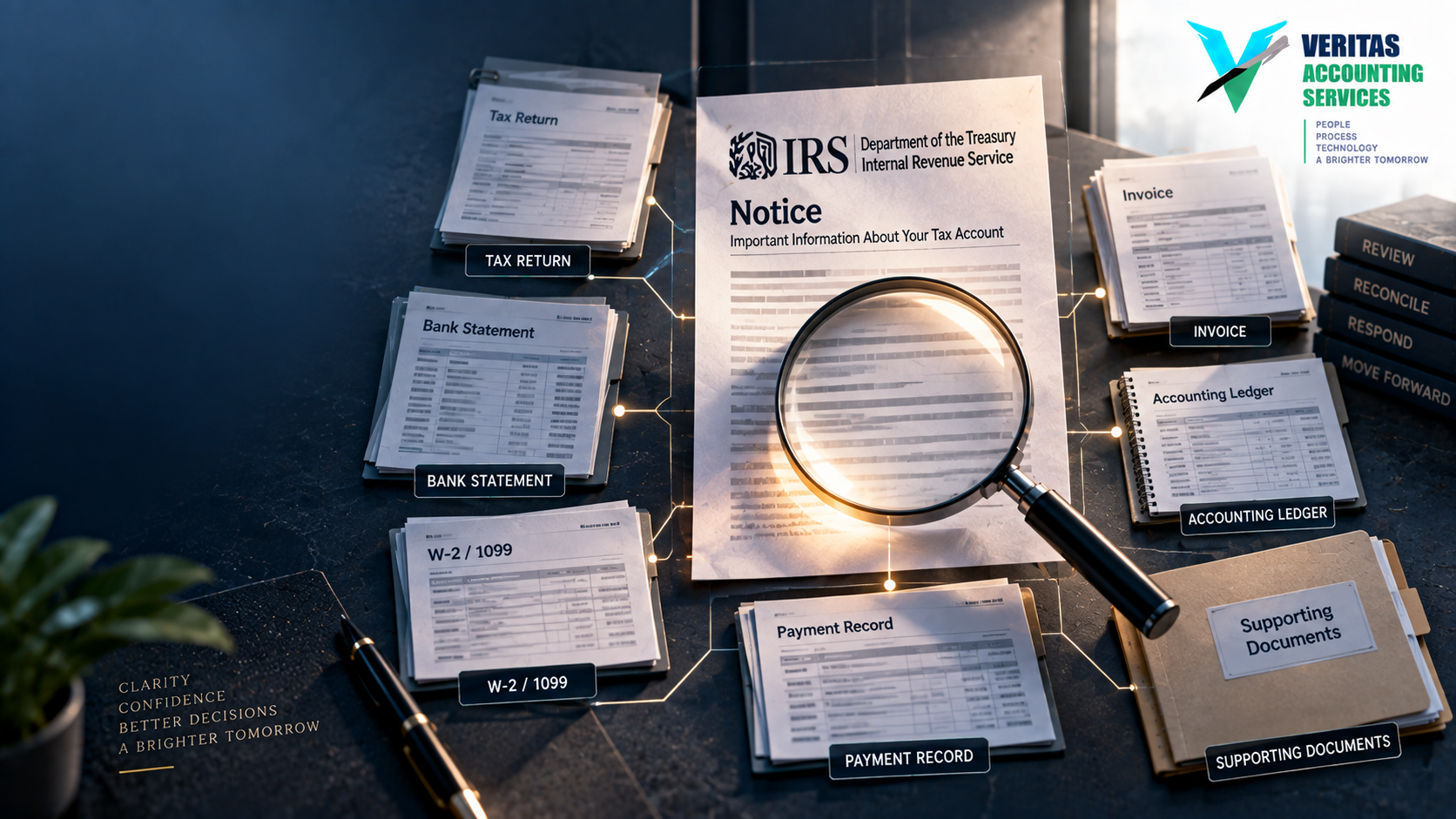

How to Respond to an IRS Notice Without Making Costly Mistakes
Receiving an IRS notice can be stressful, especially when it mentions a balance due, proposed adjustment, missing information, or a response deadline. But receiving an IRS notice does not automatically mean that you made a serious mistake or that you owe the amount stated.
The IRS sends notices for many reasons, including questions about a tax return, changes to an account, verification requests, balance due notices, and processing issues. The correct response depends on the specific notice and the action it requests.
The first rule is simple: do not ignore an IRS notice. Read it carefully, identify the deadline, understand the issue, and gather the relevant records before deciding how to respond.
This article explains the practical steps taxpayers and business owners should take when an IRS notice arrives and the common mistakes that can make the situation more complicated.
1. Read the Entire IRS Notice Carefully
The first step is to read the complete IRS notice, not just the amount shown on the first page.
Look for the notice or letter number, tax year, taxpayer identification information, reason for the notice, proposed changes, amount due or refund adjustment, response deadline, and instructions for responding.
The notice number is especially important because different notices have different procedures. For example, a CP2000 generally concerns information reported by third parties that does not match what was reported on a tax return. The IRS states that a CP2000 is a proposed adjustment and is not itself a bill.
Do not assume that every IRS notice requires the same response. Some notices require payment, some request documents, some ask you to correct an issue, and others may not require a response unless you disagree with the IRS.
2. Verify That the Notice Is Genuine
Before providing sensitive information or making a payment, confirm that the communication is legitimate.
The IRS generally contacts taxpayers by mail first and warns taxpayers about fraudulent contacts through channels such as social media and text messages. Taxpayers can also review certain notices and account information through their IRS online account.
Check the taxpayer name, address, tax year, notice number, and other identifying details.
If something appears unusual, do not use a phone number or payment instruction obtained from an unrelated message. Use the contact information and instructions contained in the notice or verify the matter through an official IRS account.
A genuine IRS notice should be treated seriously, but an unexpected message claiming to be from the IRS should also be evaluated for potential fraud.
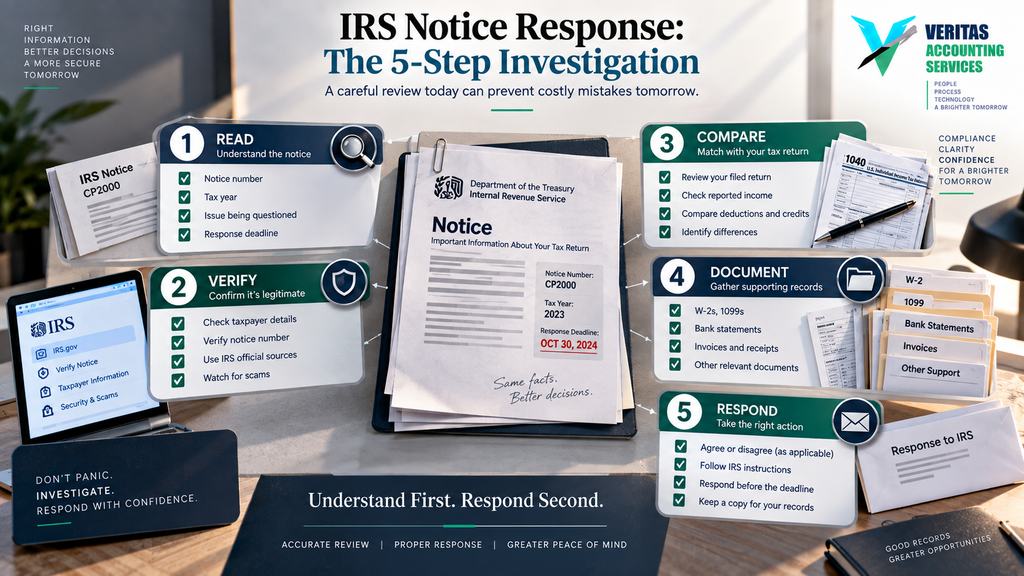
3. Identify Exactly What the IRS Is Questioning
Once the notice is verified, determine exactly what the IRS is asking about.
The issue could relate to:
- Income reported by a third party
- A missing tax return
- A payment that was not credited
- A deduction or credit
- A mathematical or clerical correction
- Identity verification
- A balance due
- A proposed change to taxable income
- Missing supporting documentation
Do not respond to an IRS notice based only on the amount shown. Understand the underlying transaction first.
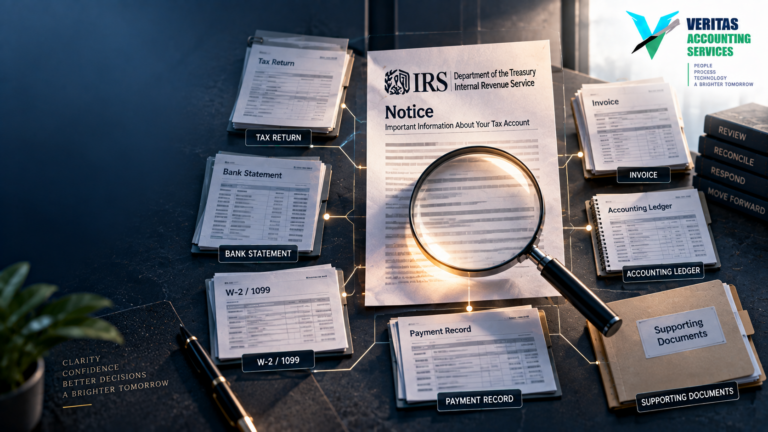
If the notice relates to a specific income item, compare that item with your tax return, accounting records, bank records, Forms W-2 or 1099, and other supporting documents.
The goal is to determine whether the IRS information is correct, incomplete, or inconsistent with your records.
4. Compare the Notice With the Original Tax Return
One of the most important steps is to compare the IRS notice with the tax return that was actually filed.
Do not rely on memory.
Pull the filed return and locate the line, schedule, form, or transaction mentioned in the notice. Then compare the information with your workpapers and supporting documentation.
For example, suppose an IRS notice says that $80,000 of income was reported by a financial institution but only $60,000 appeared on the return. You need to determine why the difference exists.
Possible explanations may include an incorrect Form 1099, income already included elsewhere, a timing difference, a transaction that is not fully taxable, or an actual omission from the return.
A careful comparison can prevent you from agreeing to a correction that is not actually required.
5. Decide Whether You Agree or Disagree
After reviewing the records, determine whether you agree with the IRS position.
If you agree, follow the instructions in the notice. Depending on the notice, you may need to make a payment, provide information, sign a response form, or take another specified action. The IRS states that taxpayers generally do not need to respond when they agree unless the notice specifically asks for a response or payment is required.
If you disagree, do not simply ignore the IRS notice.
Follow the instructions for disputing the proposed change and provide supporting information. The IRS advises taxpayers to respond by the deadline when they disagree, both to have their position considered and to protect applicable appeal rights.
This decision should be based on documentation, not on whether the proposed tax amount seems large or small.
6. Gather Supporting Documents Before Responding
A strong response is usually easier to prepare when the supporting evidence is organized first.
Depending on the issue, documents may include:
- Filed tax return
- W-2s and 1099s
- Bank statements
- Invoices
- Receipts
- General ledger reports
- Payroll records
- Loan statements
- Depreciation schedules
- Contracts
- Brokerage statements
- Proof of tax payments
- Prior correspondence
For business taxpayers, accounting records can be particularly important.
If the notice concerns revenue, for example, the response may require sales reports, invoices, bank deposits, payment processor statements, and general ledger details.
Do not send original documents unless the notice specifically requires them. Keep copies of everything submitted.
7. Do Not Automatically File an Amended Return
One common mistake is assuming that every IRS notice requires an amended tax return.
That is not necessarily the case.
For example, the IRS explains that taxpayers receiving a CP2000 generally do not need to amend the return merely because the notice was received. The appropriate response depends on the information in the notice and the taxpayer’s circumstances.
An amended return may sometimes be appropriate, but it should be considered only after the underlying issue has been analyzed.
Filing an amended return without understanding the original issue can create additional inconsistencies or complicate the correspondence.
If you believe the original return was correct, the appropriate response may instead be to explain the difference and provide supporting documentation.
8. Respond by the Deadline
Deadlines matter.
An IRS notice normally tells you when a response is due. If the notice requires action, do not wait until the final day.
The IRS advises taxpayers to respond by the date stated in the notice. Timely action can help minimize additional interest or penalties and may preserve applicable rights to challenge the IRS position.
Some notices have particularly important deadlines. Certain IRS appeal letters provide a 30-day period, while a statutory notice of deficiency can involve a 90-day period for petitioning the U.S. Tax Court. The exact deadline depends on the notice received.
This is why the notice itself should always be reviewed carefully rather than relying on a general assumption about response periods.
9. Keep Proof of Your Response
After responding, keep a complete record.
Your file should include:
- Original IRS notice
- Copy of your response
- Supporting documents
- Proof of mailing or electronic submission
- Payment confirmation, if applicable
- Any subsequent IRS correspondence
If you mail a response, consider using a delivery method that provides evidence of mailing or delivery when appropriate.
For electronic submissions, save confirmation details and copies of the documents submitted.
The IRS advises taxpayers to keep copies of notices and correspondence for their tax records.
Good documentation can become extremely valuable if the IRS sends another notice about the same issue.
10. What If You Cannot Pay the Amount?
Receiving an IRS notice showing a balance due does not necessarily mean you should ignore it because you cannot pay the full amount.
If you agree that the amount is due but cannot pay in full, review the payment options available to you and consider paying as much as reasonably possible while addressing the remaining balance through an appropriate arrangement. The IRS provides payment options for taxpayers who cannot immediately pay their full balance.
The important point is to separate two questions:
Do I agree that the tax is due?
Can I pay the amount immediately?
These are different issues.
If the amount is incorrect, focus first on resolving the underlying tax issue. If the amount is correct but affordability is the problem, focus on available payment options.
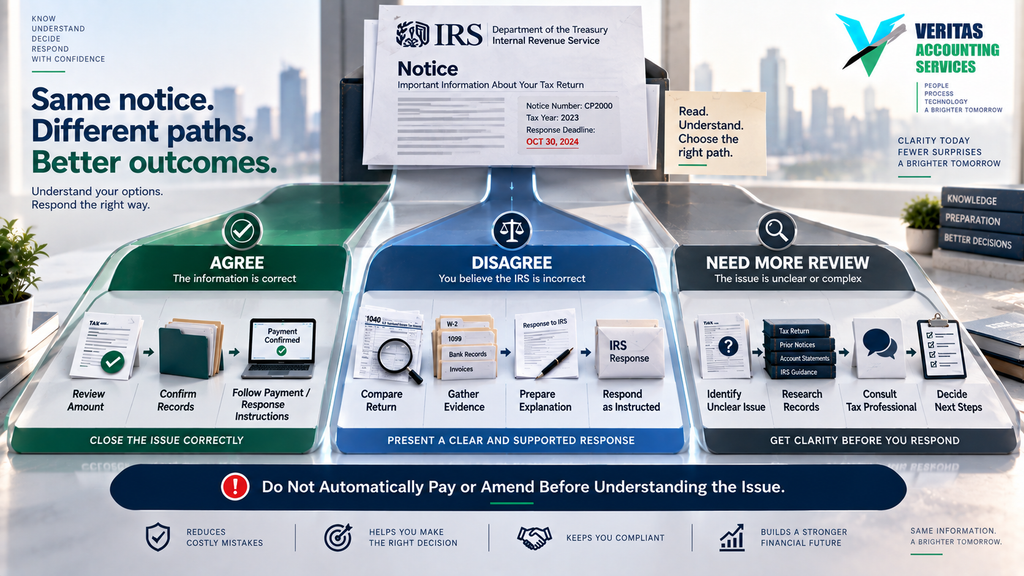
11. Know When to Involve a Tax Professional
Not every IRS notice requires professional representation.
A simple notice confirming a payment or making a straightforward correction may be manageable by the taxpayer.
Professional assistance becomes more valuable when the notice involves substantial amounts, complicated transactions, business tax returns, multiple tax years, penalties, an examination, potential identity theft, or disagreement over taxable income.
A tax professional can review the notice against the filed return, analyze supporting records, prepare a written response, and, when properly authorized, communicate with the IRS on your behalf.
For taxpayers who want someone to represent them before the IRS, the appropriate authorization depends on the situation. Form 2848 can authorize an eligible representative to act on a taxpayer’s behalf in specified tax matters.
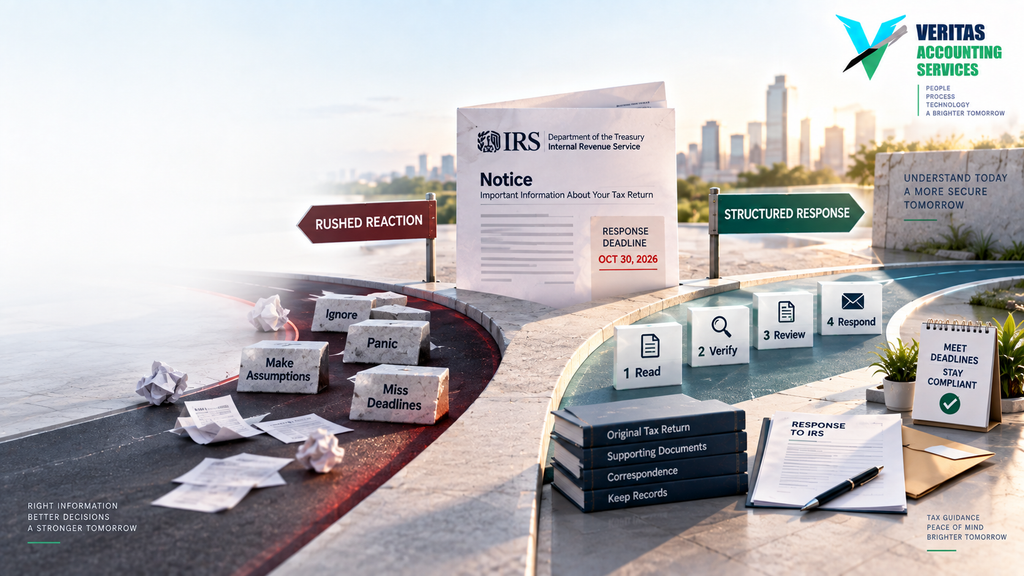
Common Mistakes to Avoid
Several mistakes can make an IRS notice more difficult to resolve.
The first is ignoring the notice because the taxpayer believes it is probably a mistake.
The second is paying immediately without first checking whether the proposed amount is correct.
The third is contacting the IRS without having the tax return and supporting records available.
The fourth is sending incomplete documentation.
Another common mistake is submitting an amended return before determining whether an amendment is actually necessary.
Finally, some taxpayers respond emotionally and provide lengthy explanations without clearly addressing the specific issue identified by the IRS.
A better response is factual, organized, and supported by records.
Frequently Asked Questions
Does receiving an IRS notice mean I am being audited?
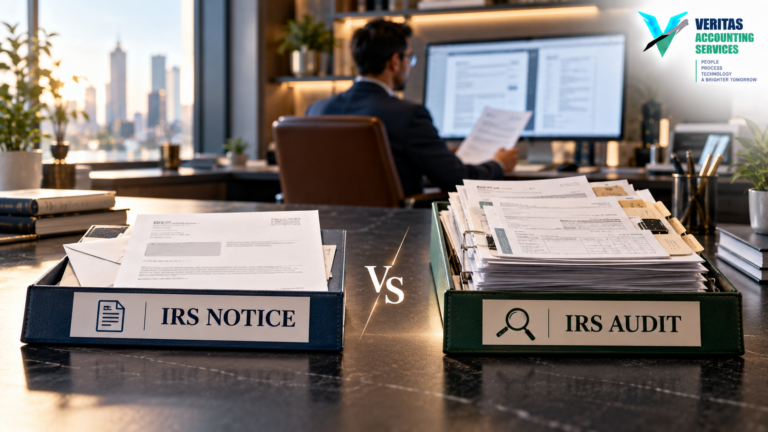
Not necessarily. The IRS sends notices for many reasons, including account changes, payment requests, information mismatches, verification, and questions about returns. A particular notice should be reviewed to determine what process applies.
Do I have to respond to every IRS notice?
No. The required action depends on the notice. If the notice requires a response, follow its instructions and deadline. If you agree with a change and the notice does not request a response, you may not need to reply.
What happens if I disagree with an IRS notice?
Follow the dispute instructions in the notice and provide relevant supporting documents. Respond by the stated deadline because applicable appeal rights can depend on timely action.
Should I amend my tax return after receiving an IRS notice?
Not automatically. First determine why the IRS sent the notice and compare its information with your original return and records. An amendment may be appropriate in some circumstances but is not automatically required.
Can my accountant respond to the IRS for me?
A tax professional may be able to communicate or represent you when properly authorized. The type of authorization and scope of representation depend on the matter.
Conclusion
An IRS notice should never be ignored, but it also should not automatically cause panic.
The best response starts with understanding the notice, verifying the information, checking the original return, gathering supporting documents, determining whether you agree or disagree, and following the instructions by the stated deadline.
Most importantly, avoid making a quick payment, filing an amended return, or sending an unsupported explanation before understanding the underlying issue.
When an IRS notice involves significant tax amounts or complicated matters, professional review can help ensure that your response is based on the actual records and the specific requirements of the notice.
At Veritas Accounting Services, we help businesses and taxpayers review tax notices, reconcile IRS questions with accounting records, organize supporting documentation, and prepare appropriate responses. The sooner an IRS notice is reviewed, the more time there may be to resolve the issue properly.
When an IRS notice arrives, the right first step is not to panic or ignore it. It is to read, verify, analyze, document, and respond.
GET IN TOUCH
Schedule a FREE Call








Connect on our Socials!
