






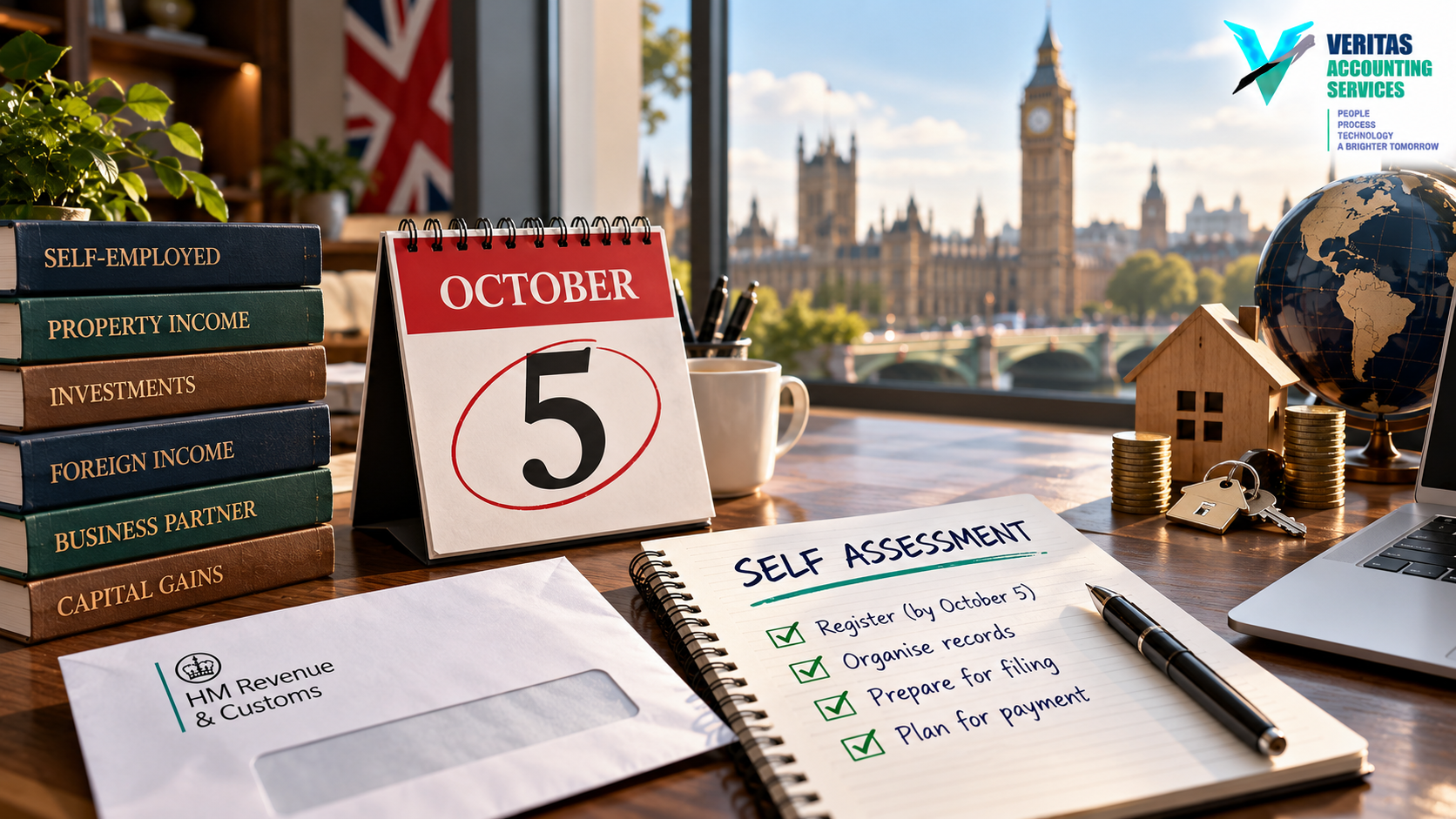

October 5 HMRC Deadline: Who Needs to Register for Self Assessment?
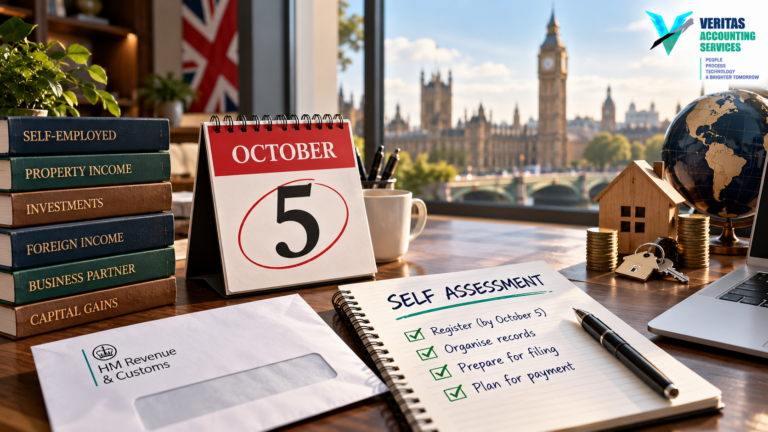
October 5 is an important date for UK taxpayers who need to file a Self Assessment tax return for the first time. For the 2025/26 tax year, HM Revenue and Customs requires individuals who need to file a return and are not already registered, or who previously registered but did not need to file for 2024/25, to notify HMRC by 5 October 2026.
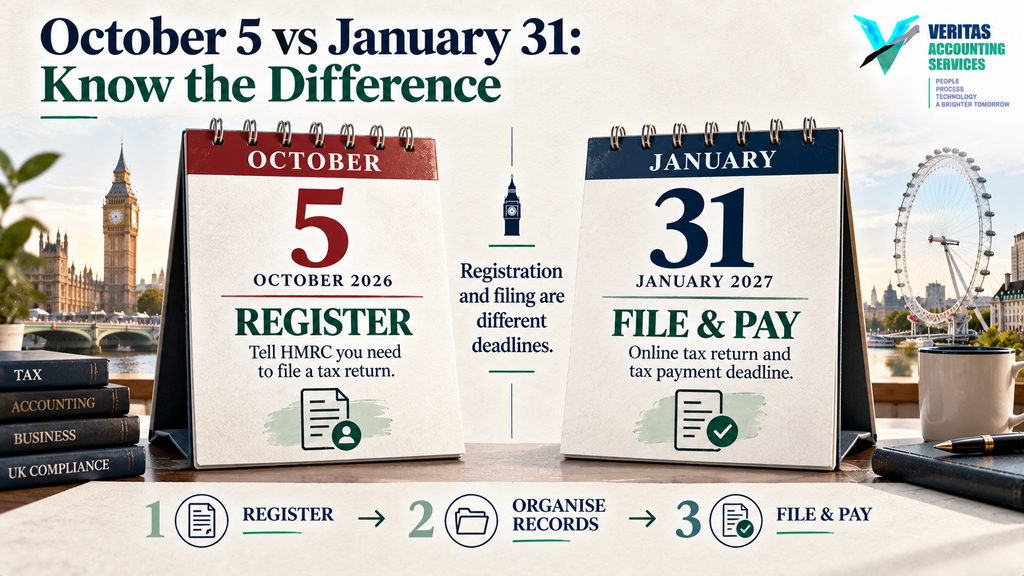
This deadline is often misunderstood. October 5 is generally not the deadline for filing the tax return or paying the tax. It is the deadline for notifying HMRC that you need to complete a return and, where applicable, registering for Self Assessment.
For the 2025/26 tax year, the online tax return deadline is 31 January 2027, and any tax due for that year is also generally payable by 31 January 2027.
Understanding the difference between registration, filing and payment can help taxpayers avoid unnecessary penalties and last-minute pressure.
What Is Self Assessment?
Self Assessment is the HMRC system used to collect Income Tax from individuals whose tax is not fully collected through PAYE or whose circumstances require them to report additional income or gains.
Employees whose tax is fully dealt with through PAYE may not need to file a return. However, self-employed individuals, business partners, landlords and people with certain other types of untaxed income may have reporting obligations.
The key question is therefore not simply whether you earn income. It is whether your circumstances mean that HMRC requires you to report that income through Self Assessment.
Why Is October 5, 2026 Important?
For taxpayers who need to file a return for the 2025/26 tax year and have not filed a tax return before, HMRC says they must tell the department by 5 October 2026. The same deadline can apply where someone registered previously but did not need to submit a return for 2024/25.
The 2025/26 tax year ran from 6 April 2025 to 5 April 2026.
This means that someone who started a new self-employed business during 2025/26 and meets the relevant reporting requirements should not wait until January 2027 to think about registration.
The October deadline concerns notification and registration. It should therefore be treated as an early compliance deadline rather than the final tax-return deadline.

Who May Need to Register?
There are several situations in which an individual may need to register for Self Assessment.
1. You Were Self-Employed and Your Gross Trading Income Was Over £1,000
One of the most common reasons is starting or operating as a sole trader.
HMRC states that a sole trader generally needs to submit a tax return where gross trading income exceeds £1,000 in the tax year, before deducting expenses or other tax reliefs.
This threshold is important because it refers to gross income, not profit.
For example, suppose an individual generated £1,400 of sales from freelance consulting but incurred £500 of allowable business expenses. The gross income is £1,400, so the £1,000 trading-income threshold has been exceeded.
The individual should consider their Self Assessment obligations rather than looking only at the final profit figure.
2. You Are a Partner in a Business Partnership
Being a partner in a business partnership can also create a personal tax-return requirement.
The partnership itself has separate filing obligations, but individual partners generally report their share of partnership income through their own tax affairs.
If someone became a partner during the 2025/26 tax year and has not previously been required to file, the October 5 deadline may therefore be relevant.
3. You Have Rental or Property Income
Property income can also create a reporting obligation.
HMRC provides a property allowance of up to £1,000 in certain circumstances. Where gross property income exceeds £1,000, the taxpayer may need to report it, although the exact treatment depends on the individual’s circumstances and whether an allowance or actual expenses are being used.
For example, someone who began receiving rental income during 2025/26 should review their gross rental income and other tax circumstances rather than assuming that PAYE employment means there is nothing else to report.
Property income can become particularly complicated where there are mortgage finance costs, jointly owned properties, multiple properties or overseas property.
4. You Had Untaxed Investment Income
Savings interest, dividends and other investment income can sometimes create additional tax-reporting obligations.
Not every amount of investment income automatically means that a tax return is required. The individual’s total income, tax position and applicable allowances need to be considered.
If you have significant investment income that is not fully dealt with through PAYE or another tax mechanism, it is worth checking whether Self Assessment applies.
5. You Had Foreign Income
UK taxpayers with foreign income may also have reporting obligations.
Examples can include overseas rental income, foreign investment income or other taxable overseas income.
The rules can be particularly important because the treatment of foreign income depends on the individual’s circumstances, residence position and the applicable UK tax rules.
A taxpayer should not assume that foreign income is outside the UK tax system simply because it was received into a foreign bank account.
6. You Had a Capital Gain That Creates a Tax Liability
Selling an asset that has increased in value can potentially create a Capital Gains Tax liability.
HMRC identifies situations where an individual has to pay Capital Gains Tax after disposing of an asset as one reason they may need to submit a tax return.
This could involve certain shares, investment property or other assets.
The reporting requirements can depend on the type of asset, the gain, available exemptions and whether the gain has already been reported through another HMRC process.
7. You Are Subject to the High Income Child Benefit Charge
Individuals affected by the High Income Child Benefit Charge may also have a Self Assessment obligation if the charge is not dealt with through PAYE.
This is particularly relevant for higher-income households receiving Child Benefit.
The tax position should be reviewed based on the individual’s income and circumstances rather than assuming that receiving Child Benefit automatically means a return is required.
What About the £1,000 Trading Allowance?
The £1,000 trading allowance is one area that frequently causes confusion.
If your gross trading income is £1,000 or less, you may not need to tell HMRC about that income in certain circumstances.
However, there are exceptions.
For example, HMRC states that someone may still need to register for Self Assessment where they have made a loss and want to claim relief, want to pay voluntary National Insurance contributions in relevant circumstances, or want to claim certain benefits connected with self-employment.
Therefore, the £1,000 threshold should not be treated as a universal rule that applies to every self-employed person.
What If You Were Already Registered?
Not everyone approaching the October 5 deadline needs to complete a new registration.
If you were previously registered for Self Assessment but did not submit a return for the 2024/25 tax year, HMRC says you may need to reactivate your Self Assessment account rather than register again.
This distinction matters because registering again when an existing account needs to be reactivated could create unnecessary administrative complications.
Before taking action, check your previous HMRC status and determine whether you already have a Unique Taxpayer Reference.
What Happens After You Register?
Once your Self Assessment registration is processed, HMRC will provide the information needed to access your tax account and file the return. HMRC explains that new taxpayers receive a Unique Taxpayer Reference, commonly called a UTR, after registration.
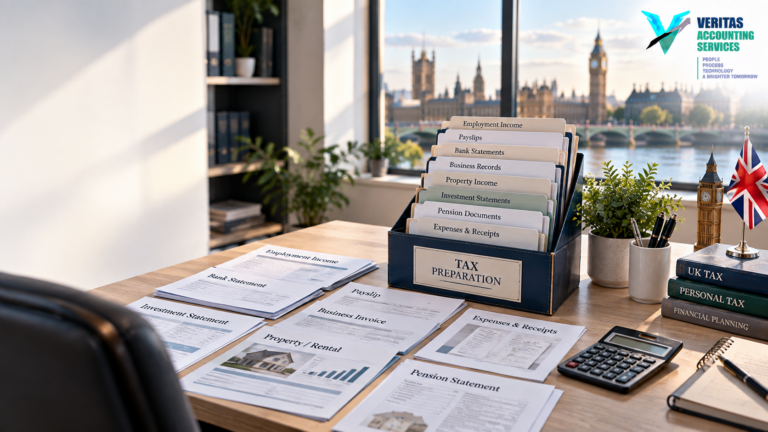
You should then begin organizing your records for the 2025/26 tax year.
Depending on your circumstances, these records could include:
Business income and sales records, bank statements, invoices, allowable expense records, property income and expenses, investment statements, pension information, employment income and other relevant tax documents.
Good records make the eventual tax-return process significantly easier.
October 5 Is Not the Tax Payment Deadline
This is one of the most important points to understand.
For the 2025/26 tax year, the 5 October 2026 date relates to telling HMRC that you need to complete a tax return if you meet the relevant conditions and have not already been registered as required.
The online tax return deadline is generally 31 January 2027, and tax due for 2025/26 is generally payable by 31 January 2027.
There is also a 31 July payment-on-account deadline where payments on account apply.
This distinction gives taxpayers an opportunity to register early, organize records and estimate their tax liability rather than waiting until January.
What If You Register After October 5?
Missing the registration deadline does not mean the taxpayer should simply wait until January.
HMRC states that registering after 5 October 2026 can result in a different deadline for submitting the tax return. In that situation, HMRC will send a letter or email with the applicable filing deadline, which will generally be three months from the date of that communication. The tax owed for 2025/26 still has to be paid by 31 January 2027 to avoid the relevant consequences.
HMRC also warns that failing to tell it by the required deadline can result in a penalty.
Therefore, discovering the issue after October 5 is not a reason to delay further. The appropriate response is to assess the position and notify HMRC as soon as possible.
A Practical Checklist Before October 5
If you are unsure whether you need Self Assessment, start with your income sources for the 2025/26 tax year.
Ask yourself:
Did I operate as a sole trader?
Was my gross trading income above £1,000?
Was I a partner in a business partnership?
Did I receive rental or property income?
Did I receive significant untaxed investment income?
Did I have foreign income?
Did I dispose of assets that created a potential Capital Gains Tax liability?
Was I affected by the High Income Child Benefit Charge?
If any of these situations apply, review your position carefully.
HMRC also provides an online checker to help individuals determine whether they need to submit a tax return.
Why Businesses Should Start Earlier
For a newly self-employed individual, registering is only the first step.
The next challenge is making sure the underlying records are complete and accurate. This includes separating business and personal transactions, recording income properly, retaining receipts, reconciling bank accounts and understanding which expenses may be allowable.
Starting early also gives you time to estimate the eventual tax bill.
HMRC specifically recommends planning ahead for the tax bill, and taxpayers can estimate what they may owe before submitting their return.
For business owners, this can make a meaningful difference to cash-flow planning. A January tax bill should not come as a surprise simply because the return was filed late in the process.
Frequently Asked Questions
Is October 5 the deadline for filing my Self Assessment tax return?
No. For the 2025/26 tax year, October 5, 2026 is generally the deadline for notifying HMRC if you need to complete a return and have not previously filed or need to re-enter the system. The online filing deadline is generally January 31, 2027.
Do all self-employed people have to register?
Not necessarily. HMRC’s £1,000 trading allowance means some individuals with gross trading income of £1,000 or less may not need to register, although exceptions can apply.
What if I have a full-time job and also freelance?
Having employment income through PAYE does not necessarily remove the need to report additional self-employed income. If your freelance activity meets the relevant conditions, you may need to register for Self Assessment.
What if I registered before?
If you previously registered but did not need to submit a return for 2024/25, HMRC says you may need to reactivate your existing account rather than register again.
What records should I keep?
You should keep records that allow you to accurately calculate and support the figures reported on your tax return. Depending on your circumstances, these may include bank statements, invoices, receipts, income records and investment or property records.
What happens if I miss the October 5 deadline?
You should not wait until the January filing deadline. Register or notify HMRC as soon as you realize you have an obligation. HMRC may issue a penalty for late notification, and registering after October 5 can result in a different tax-return filing deadline.
Conclusion
The October 5 deadline is an important compliance date for individuals who need to file a Self Assessment tax return for the 2025/26 tax year and are new to the system or need to re-enter it.
The key is to understand that registration and filing are two different steps. If you became self-employed, received rental or foreign income, had certain investment income, became a business partner, had a relevant Capital Gains Tax liability or fell into another category requiring a tax return, you should review your position before October 5.
Registering early also gives you more time to organize records, estimate your tax liability and prepare for the January 31 filing and payment deadline.
For taxpayers who are unsure whether they need to register, checking the rules now is much better than discovering the requirement after the deadline has passed.
If you have new business, property, investment or overseas income, October 5 is a good date to put on your compliance calendar and review your UK tax position before the deadline.
GET IN TOUCH
Schedule a FREE Call




Connect on our Socials!
