







Still Haven’t Filed Your Extended Tax Return? Here’s What to Do Before October 15
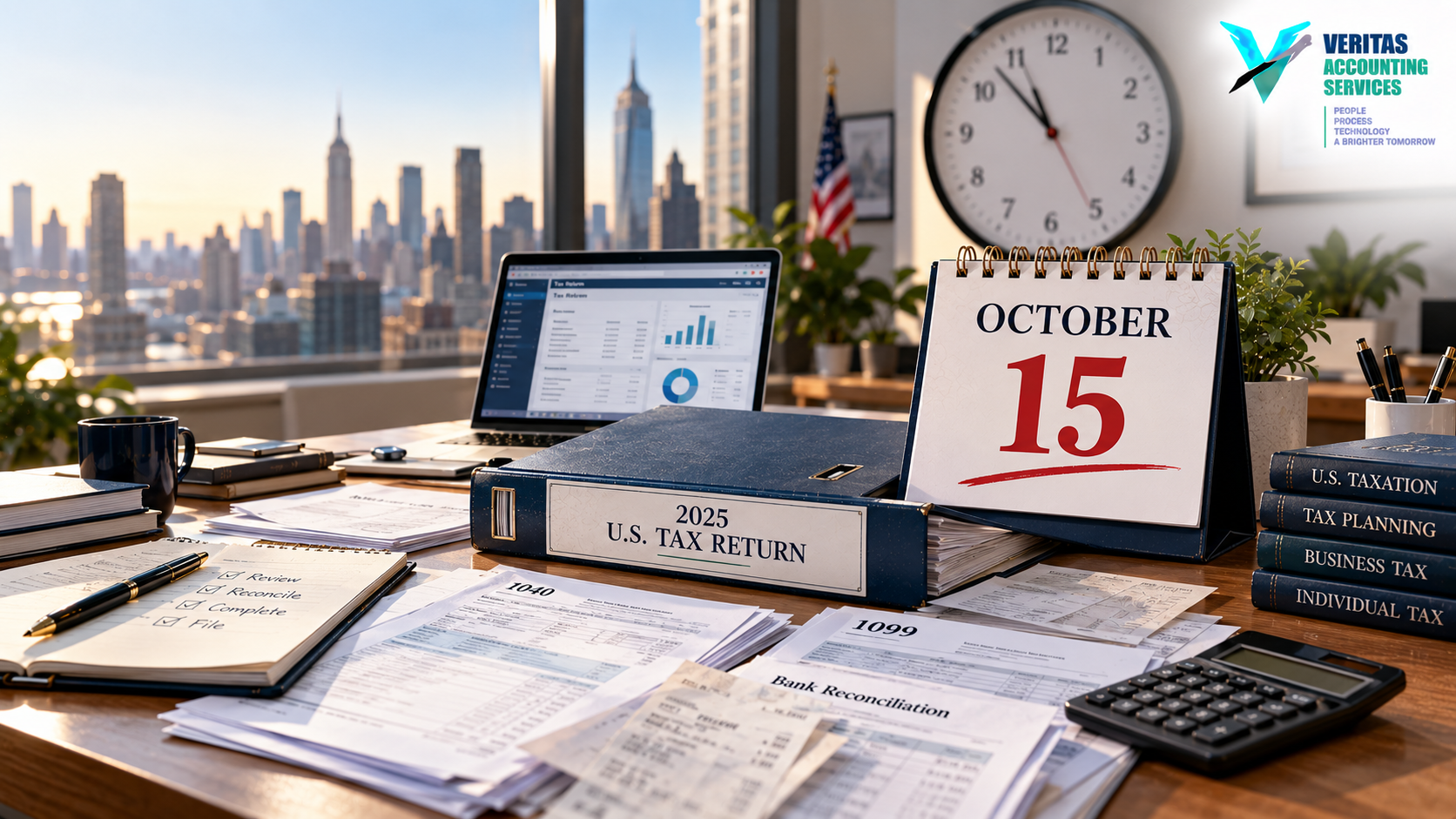
Still haven’t filed your extended tax return? If you requested an extension for your 2025 U.S. federal income tax return, the October 15, 2026 deadline is approaching quickly.
For most calendar-year individual taxpayers who timely requested an extension, October 15 is the extended federal filing deadline. The IRS also lists October 15 as the filing deadline for certain calendar-year corporations, including Form 1120 filers that properly obtained a six-month extension.
An extension can provide valuable additional time to organize records, complete bookkeeping, review deductions, and prepare an accurate return. But it does not eliminate the responsibility to file, and it generally does not extend the original deadline for paying taxes owed.
If your return is still sitting unfinished, now is the time to move from “I have an extension” to “My return is ready to file.”
Here is what you should do before October 15.
1. Confirm That Your Tax Extension Was Properly Filed
Before focusing on the return itself, confirm that you actually requested the extension on time.
For individual taxpayers, Form 4868 is the standard application for an automatic extension of time to file. An extension generally had to be requested by the original April 15, 2026 filing deadline. The IRS states that a timely extension generally provides until October 15 to file the federal return.
Do not assume that because you intended to request an extension, the IRS automatically granted one.
Keep documentation showing that the extension was submitted and accepted. If the extension was filed electronically through a tax professional or IRS-supported electronic process, retain the confirmation or acknowledgement.
This is especially important if your return has not yet been submitted and you are working close to the deadline.
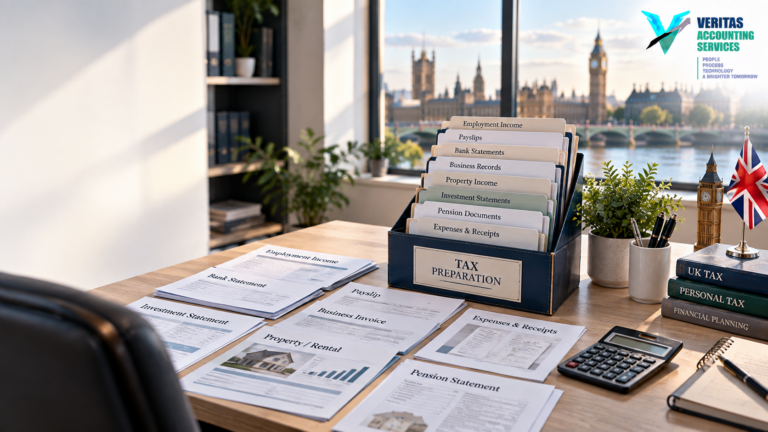
2. Make Sure Your Books and Records Are Complete
One of the biggest reasons tax returns remain unfinished is incomplete bookkeeping.
Before preparing the final return, review your accounting records for the entire tax year.
At a minimum, check:
- Bank and credit-card accounts
- Accounts receivable
- Accounts payable
- Payroll records
- Loan balances
- Fixed assets
- Business expenses
- Owner distributions
- Business credit cards
- Sales and revenue records
- Inventory, where applicable
- Payment processor activity
- 1099 information
- E-commerce platform reports
If transactions are missing or incorrectly categorized, the tax return may be based on incomplete information.
The IRS specifically recommends gathering and reviewing tax documents because complete and accurate records can help reduce errors and delays.
For business owners, this is where tax preparation and bookkeeping become closely connected. A tax professional can prepare the return, but the quality of the return depends heavily on the quality of the underlying records.
3. Reconcile Your Bank and Credit-Card Accounts
If your books have not been reconciled through year-end, this should be addressed before the return is finalized.
A bank balance in accounting software is not necessarily the same as the actual bank balance.
Outstanding checks, deposits in transit, duplicated transactions, missing transactions, incorrectly recorded transfers, and personal expenses can all affect the accuracy of your books.
Before filing, reconcile:
- Business checking accounts
- Savings accounts
- Credit cards
- Business loans
- Payment processor accounts
- Merchant accounts
This process can uncover errors that would otherwise flow into the tax return.
For businesses that have experienced rapid growth, multiple bank accounts, e-commerce transactions, or international payments, a detailed reconciliation becomes even more important.
4. Review Your Income From Every Source
Do not rely only on the revenue figure shown in your accounting software.
Compare your books with external records.
Depending on the business, this may include:
- 1099 forms
- Merchant processor statements
- Stripe or PayPal reports
- Amazon reports
- Shopify reports
- Client payment records
- Interest statements
- Investment income
- Rental income
- Foreign income
- Partnership or S corporation K-1 information
Differences do not automatically mean something is wrong. Timing differences, fees, refunds, chargebacks, and reporting methods can create differences between accounting records and tax documents.
The important point is that unexplained differences should be investigated before filing.
5. Review Business Expenses Carefully
An extended tax return should not simply be a rushed collection of expenses.
Review major expense categories and supporting documentation.
Pay particular attention to:
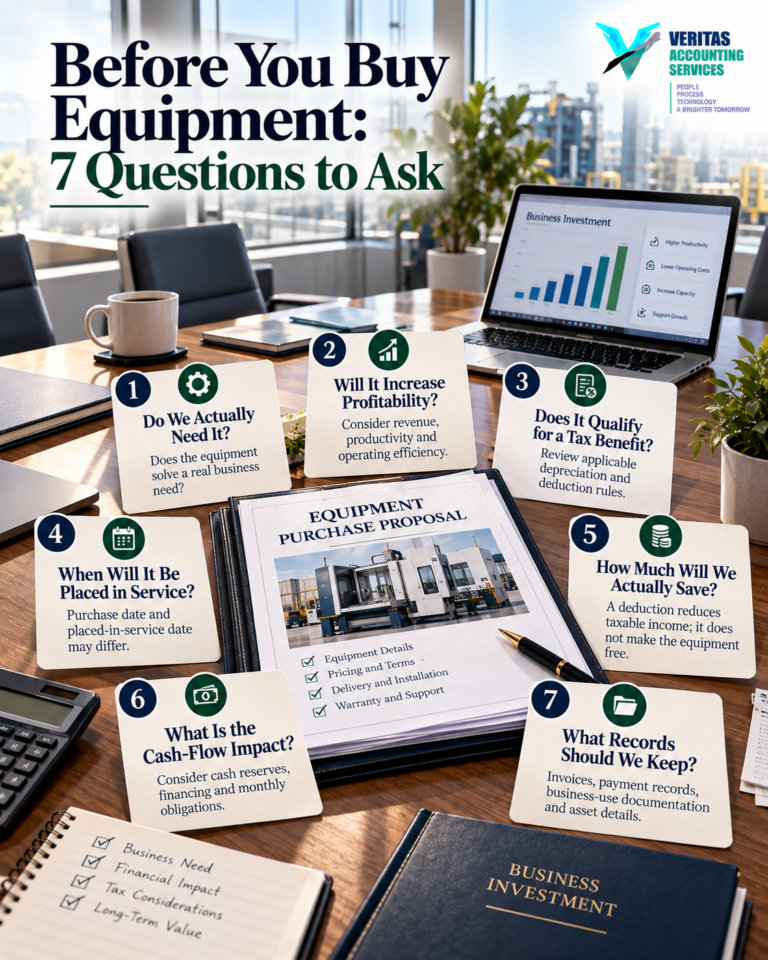
- Large equipment purchases
- Vehicles
- Travel
- Meals
- Contractor payments
- Professional fees
- Insurance
- Advertising
- Software subscriptions
- Rent
- Repairs
- Home-office-related expenses where applicable
- Interest expense
The objective is not simply to maximize deductions. The objective is to report legitimate business expenses accurately and maintain appropriate supporting records.
A tax deduction should be supported by the facts and applicable tax rules.
If an expense is unusual, unusually large, personal in nature, or poorly documented, it deserves additional review before the return is filed.
6. Check for Missing Tax Forms
Missing information can delay the preparation of an extended tax return.
Depending on your circumstances, review whether you have received all relevant forms and statements.
These may include:
- W-2
- 1099-NEC
- 1099-MISC
- 1099-K
- 1099-INT
- 1099-DIV
- K-1
- Mortgage interest statements
- Brokerage statements
- Retirement account information
- Health insurance information
- Charitable contribution records
- Foreign financial account information
Business owners should also make sure their tax preparer has the necessary business information, including entity ownership details and relevant state or international information.
Do not wait until the last few days before October 15 to discover that an important document is missing.
7. Review State Tax Obligations Separately
Filing the federal return is only one part of tax compliance.
Depending on where you live and where your business operates, you may also have state or local filing requirements.
For businesses operating in multiple states, review whether there are obligations related to:
- Income tax
- Franchise tax
- Sales tax
- Gross receipts taxes
- Local business taxes
- Employer taxes
- State information returns
A federal tax extension does not necessarily mean that every state deadline has also been extended in the same way.
Business owners operating across multiple states should therefore confirm each applicable state’s filing and payment requirements separately.
8. Don’t Forget International Tax Reporting
International transactions can create additional reporting requirements that are easy to overlook during tax preparation.
This can be particularly important for:
- Foreign-owned U.S. companies
- U.S. citizens living overseas
- U.S. residents with foreign financial interests
- Businesses paying foreign contractors
- Companies with foreign subsidiaries
- Businesses receiving foreign income
- International e-commerce businesses
Depending on the facts, additional information returns or international reporting requirements may apply.
For example, certain foreign-owned U.S. corporations may have Form 5472 reporting obligations. Other taxpayers may have reporting requirements involving foreign accounts, foreign assets, foreign entities, or payments to foreign persons.
These requirements are fact-specific, so they should be reviewed before filing rather than after the return has already been submitted.
9. Remember: An Extension Gives More Time to File, Not More Time to Pay
This is one of the most important points taxpayers need to understand.
An extension of time to file is not generally an extension of time to pay.
The IRS states that taxes owed were still due by the original April 15 deadline. Interest and potentially penalties can apply to unpaid tax after the original payment deadline.
Therefore, if you requested an extension but did not pay the full amount you owed by April 15, you may still have a balance due when you file.
That does not mean you should avoid filing because you cannot pay the entire amount.
The IRS provides payment options for taxpayers who cannot immediately pay the full balance. The important step is to address the filing and payment obligations rather than allowing the situation to remain unresolved.
10. Don’t Wait Until October 15 to Start the Filing Process
October 15 is a deadline, not a recommended starting date.
The IRS has specifically encouraged extension filers not to wait until October 15 and recommends gathering and reviewing records early to help prepare accurate returns.
This matters because the final stages of a return can uncover issues such as:
- Missing documents
- Unreconciled accounts
- Incorrect income reporting
- Unusual expenses
- Missing depreciation information
- Prior-year discrepancies
- State filing obligations
- International reporting requirements
- Ownership changes
- Estimated tax differences
If these issues appear on October 14, there may be very little time to resolve them properly.
Starting now gives you time to investigate questions rather than simply rushing to submit the return.
What If Your Books Are Not Ready Yet?
This is one of the most common situations businesses face before the October deadline.
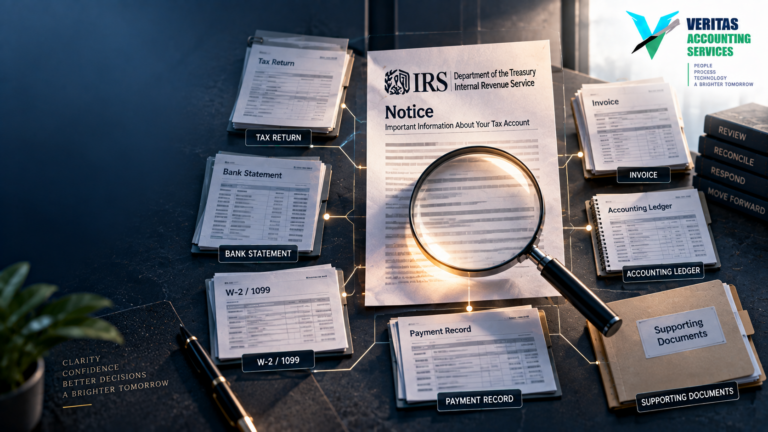
If your bookkeeping is incomplete, do not simply give your tax preparer an unorganized collection of bank statements and receipts and expect the return to be accurate.
Start with a structured cleanup.
Step 1: Complete transaction entry
Make sure all business transactions for the relevant year have been recorded.
Step 2: Reconcile accounts
Reconcile bank accounts, credit cards and other financial accounts.
Step 3: Review unusual transactions
Investigate large, duplicate, personal or incorrectly categorized transactions.
Step 4: Review balance-sheet accounts
Check loans, fixed assets, accounts receivable, accounts payable and other significant balances.
Step 5: Finalize the profit and loss statement
Review revenue and expenses for completeness and accuracy.
Step 6: Prepare tax information
Once the books are reasonably complete, provide the required tax documents and supporting information to the tax preparer.
This workflow can make the final tax preparation process much more efficient.

What If You Cannot Finish by October 15?
For taxpayers who already received the standard extension to October 15, it is important not to assume that another routine extension is automatically available.
The applicable rules depend on the taxpayer, return and circumstances.
If you are approaching October 15 and your return is still incomplete, speak with a qualified tax professional as soon as possible.
Special circumstances, disaster-related relief and other provisions can sometimes affect deadlines, but these should be evaluated based on the taxpayer’s specific situation. The IRS also notes that certain taxpayers may receive additional time under special rules.
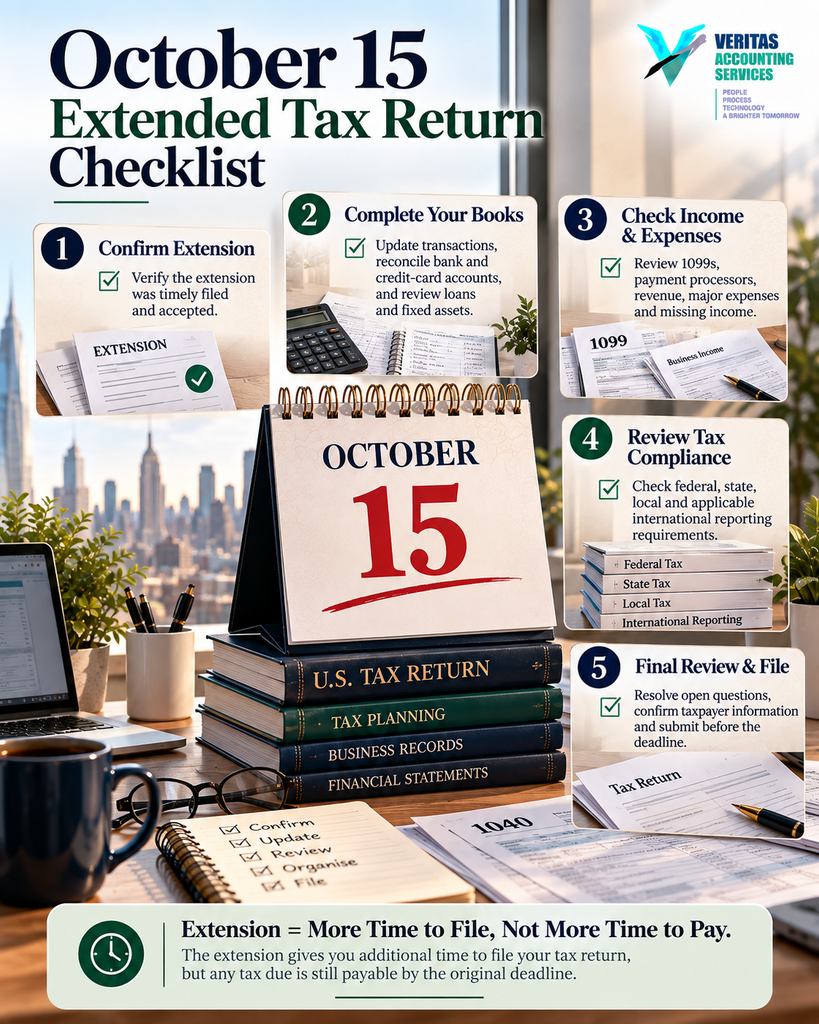
October 15 Tax Filing Checklist
Before submitting your return, use this final checklist:
Extension
- Confirm your extension was timely filed and accepted.
- Keep the confirmation with your tax records.
Books
- Complete bookkeeping.
- Reconcile bank and credit-card accounts.
- Review accounts receivable and accounts payable.
- Review loans and fixed assets.
Income
- Reconcile business revenue to supporting records.
- Review 1099s and payment processor statements.
- Check for omitted income.
Expenses
- Review significant expenses.
- Confirm business purpose and documentation.
- Review equipment and other major purchases.
Tax Compliance
- Review federal filing requirements.
- Review state requirements.
- Review international reporting requirements where applicable.
- Check prior-year issues.
Payment
- Determine the expected tax balance.
- Confirm payments already made.
- Understand that the extension did not extend the original payment deadline.
Final Review
- Review the completed return.
- Resolve open questions.
- Confirm taxpayer and business information.
- File before the applicable deadline.
Final Thoughts
An extension should give you additional time to prepare an accurate return — not an excuse to postpone the process until the last few days.
If you still haven’t filed your extended tax return, September is the time to take action.
Start with your books and records. Reconcile your accounts. Gather missing documents. Review income and expenses. Check state and international requirements. Then work with your tax professional to finalize and file the return.
Most importantly, do not confuse the October 15 filing deadline with an extension of the tax payment deadline. The IRS makes clear that an extension generally provides additional time to file, not additional time to pay.
For business owners, the best approach is to treat tax filing as part of an ongoing financial process rather than a once-a-year emergency.
If your books are incomplete, your business operates across multiple states or countries, or you are unsure whether your tax return is ready for filing, getting professional assistance before the deadline can help identify issues while there is still time to address them.
Need help getting your books and tax return ready before October 15? Veritas Accounting Services provides bookkeeping, accounting and U.S. tax support for businesses and international clients. Contact our team to discuss your requirements.
GET IN TOUCH
Schedule a FREE Call






Connect on our Socials!
