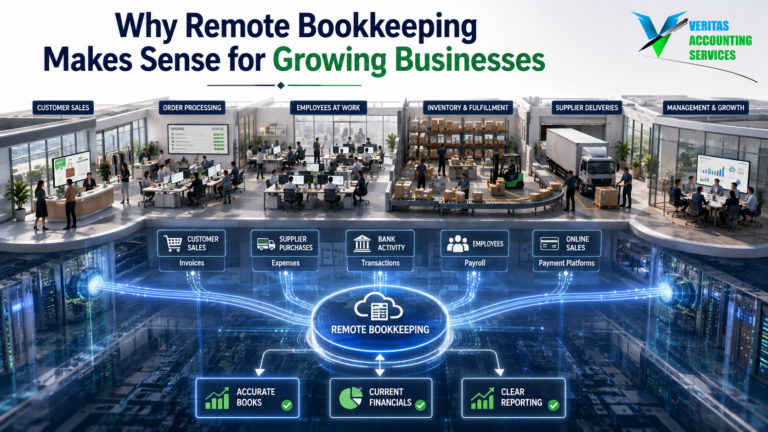



US bookkeeping and taxation are the foundation of every compliant and financially stable business operating in the United States. Regardless of size or industry, businesses are expected to maintain accurate financial records and meet federal, state, and local tax obligations on time. When bookkeeping systems are weak or tax rules are misunderstood, the consequences can include penalties, audits, cash flow disruptions, and poor financial decisions.
Understanding how US bookkeeping and taxationwork together allows business owners to stay compliant, plan effectively, and make informed decisions throughout the year—not just at tax time.
Why US Bookkeeping and Taxation Are Closely Connected
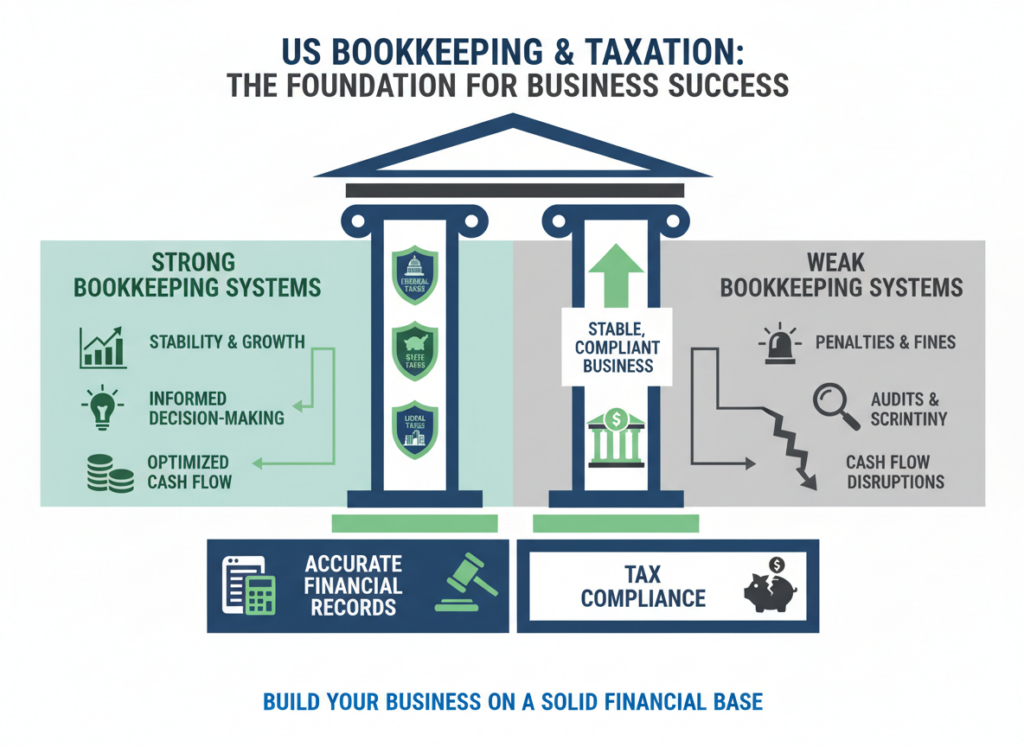
Bookkeeping and taxation are often discussed separately, but in practice they are inseparable. Every tax return filed with the IRS is built on bookkeeping data. If transactions are recorded incorrectly or not supported with documentation, tax filings will also be inaccurate.
Strong US bookkeeping and taxation practices ensure that income is reported correctly, deductions are supported, and tax liabilities are calculated accurately. Businesses that invest in clean bookkeeping experience fewer surprises and smoother interactions with tax authorities.
Core Bookkeeping Requirements for US Businesses
Accurate recordkeeping is the backbone of US bookkeeping and taxation. At a minimum, businesses must maintain:
A structured chart of accounts
Detailed records of income and expenses
Bank and credit card reconciliations
Accounts receivable and payable tracking
Supporting documents such as invoices and receipts
These records support financial statements and form the basis for all tax filings. Without disciplined bookkeeping, even well-intentioned businesses can fall out of compliance.
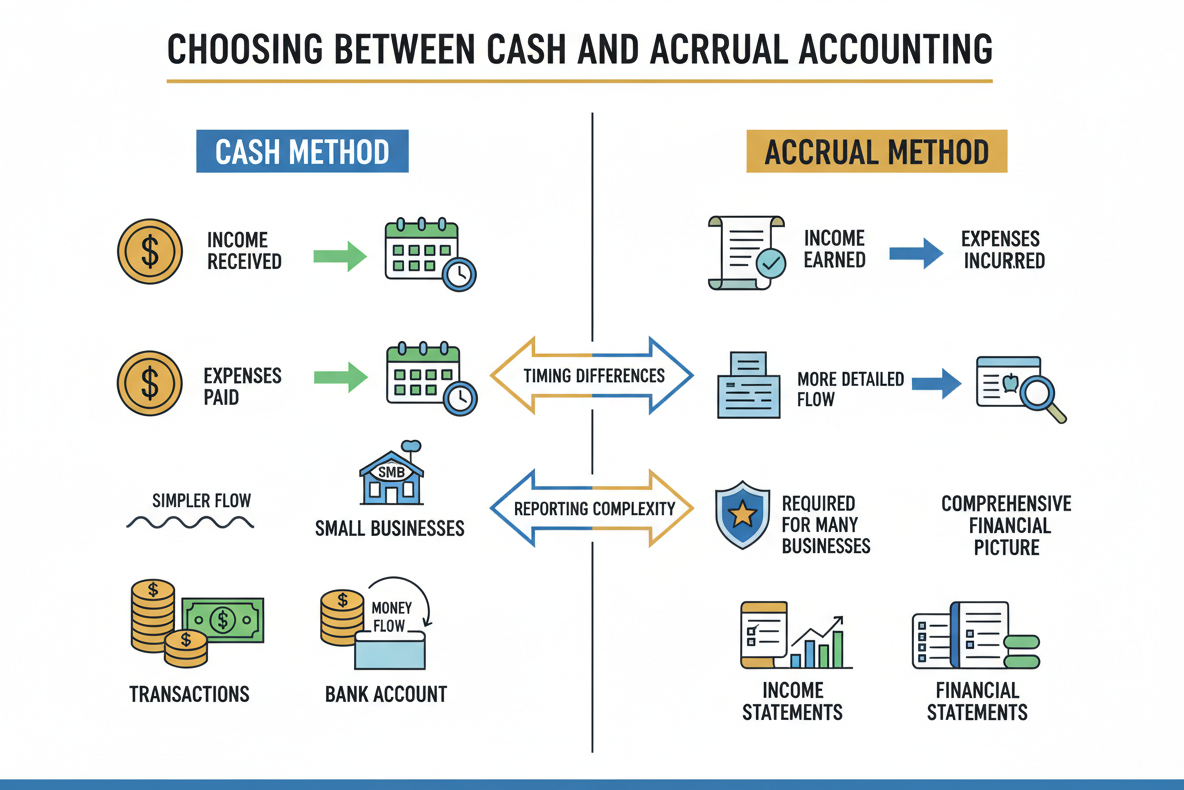
The accounting method used directly impacts US bookkeeping and taxation. Most small businesses choose between cash and accrual accounting.
Cash method: Income is recorded when received, and expenses when paid. This method is simpler and often used by small businesses.
Accrual method: Income and expenses are recorded when earned or incurred, regardless of cash movement. This method provides a more accurate financial picture and is required for many businesses.
Once selected, the accounting method must be applied consistently and may require IRS approval to change.
Federal Tax Responsibilities Businesses Must Manage
Federal tax compliance is a critical component of US bookkeeping and taxation. Depending on the business structure, obligations may include:
Income tax (corporate or pass-through)
Self-employment tax
Payroll taxes (Social Security and Medicare)
Federal unemployment tax (FUTA)
Accurate bookkeeping ensures these taxes are calculated correctly and paid on time. Missed or underpaid federal taxes can quickly lead to penalties and interest.
In addition to federal obligations, US bookkeeping and taxation include state and local requirements that vary by jurisdiction. These may involve:
State income or franchise taxes
Sales and use tax
State payroll taxes
Local business taxes or licenses
Businesses operating in multiple states must monitor nexus rules and ensure proper registration and filing in each applicable state.
Sales Tax Tracking and Reporting
Sales tax compliance has become more complex due to economic nexus rules. Businesses must track where they have sales tax obligations and accurately record taxable and exempt transactions.
Proper US bookkeeping and taxation practices include:
Separating taxable and non-taxable sales
Tracking collected sales tax separately
Reconciling sales tax payable accounts
Errors in sales tax reporting can result in assessments, penalties, and costly audits.
Payroll Bookkeeping and Tax Compliance
Payroll is one of the highest-risk areas in US bookkeeping and taxation. Employers must calculate wages accurately, withhold the correct taxes, and remit payments to federal and state agencies.
Key payroll tax obligations include:
Federal income tax withholding
Social Security and Medicare taxes
State income tax withholding
Quarterly and annual payroll filings
Worker misclassification is a common compliance issue that can trigger audits and penalties.
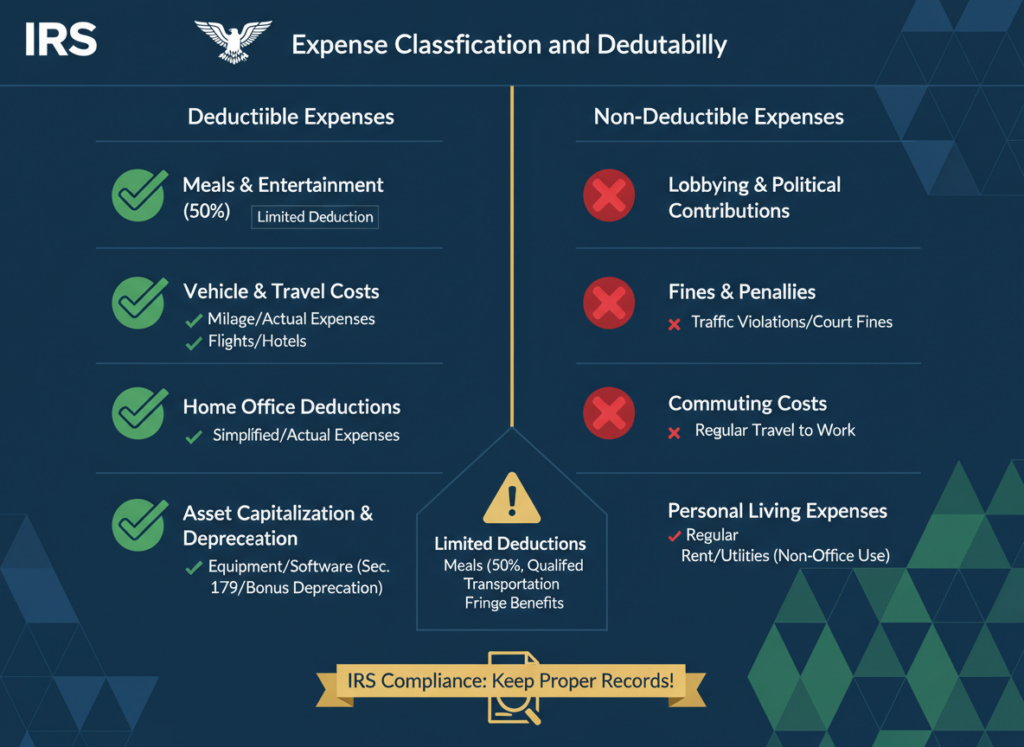
Expense Classification and Deductibility
Correct expense categorization plays a major role in US bookkeeping and taxation. While many business expenses are deductible, some are subject to limits or special rules.
Common areas requiring attention include:
Meals and entertainment expenses
Vehicle and travel costs
Home office deductions
Asset capitalization and depreciation
Well-maintained books allow businesses to claim legitimate deductions while avoiding aggressive positions that could raise red flags.
Record Retention and IRS Documentation Standards
The IRS requires businesses to retain financial records for several years. Strong US bookkeeping and taxation practices include maintaining:
Bank statements and reconciliations
Receipts and invoices
Payroll records
Tax returns and supporting schedules
Proper documentation supports tax positions and simplifies responses to IRS inquiries or audits.
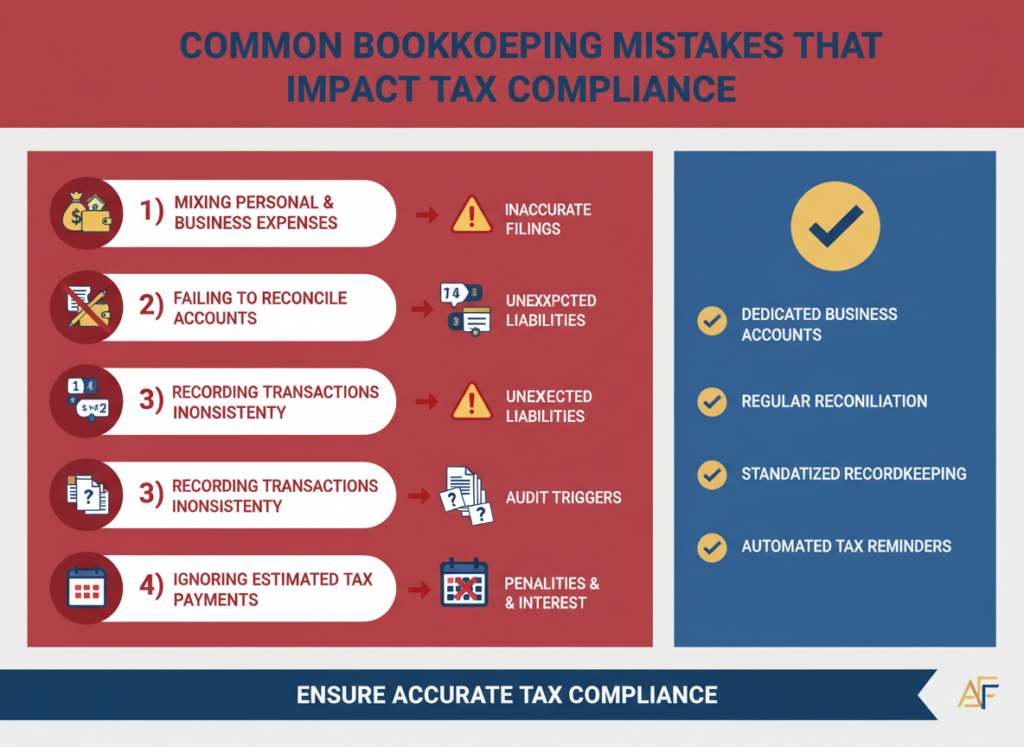
Common Bookkeeping Mistakes That Impact Tax Compliance
Several recurring errors undermine US bookkeeping and taxation, including:
Mixing personal and business expenses
Failing to reconcile accounts regularly
Recording transactions inconsistently
Ignoring estimated tax payments
These mistakes often result in inaccurate tax filings and unexpected liabilities.
The Value of Professional Bookkeeping and Tax Support
Many businesses rely on professional services to manage US bookkeeping and taxation effectively. Experienced professionals help ensure accuracy, consistency, and compliance while identifying opportunities for tax efficiency.
Outsourcing or hiring qualified support allows business owners to focus on growth while reducing compliance risks.
Year-End Bookkeeping and Tax Preparation
Year-end is a critical period for US bookkeeping and taxation. Closing the books properly ensures that financial statements are accurate before tax returns are prepared.
Key year-end tasks include:
Reconciling all accounts
Reviewing income and expense classifications
Confirming depreciation and asset records
Preparing tax-ready financial statements
Strong year-end processes reduce stress and improve tax outcomes.
Final Takeaway
US bookkeeping and taxation are not just compliance requirements—they are essential tools for financial clarity and business success. Accurate bookkeeping supports reliable tax reporting, while proactive tax planning depends on clean financial data.
Businesses that get the fundamentals right reduce risk, improve decision-making, and stay compliant with IRS and state regulations. By prioritizing strong bookkeeping systems and understanding tax obligations, companies can operate with confidence and build a solid foundation for long-term growth.
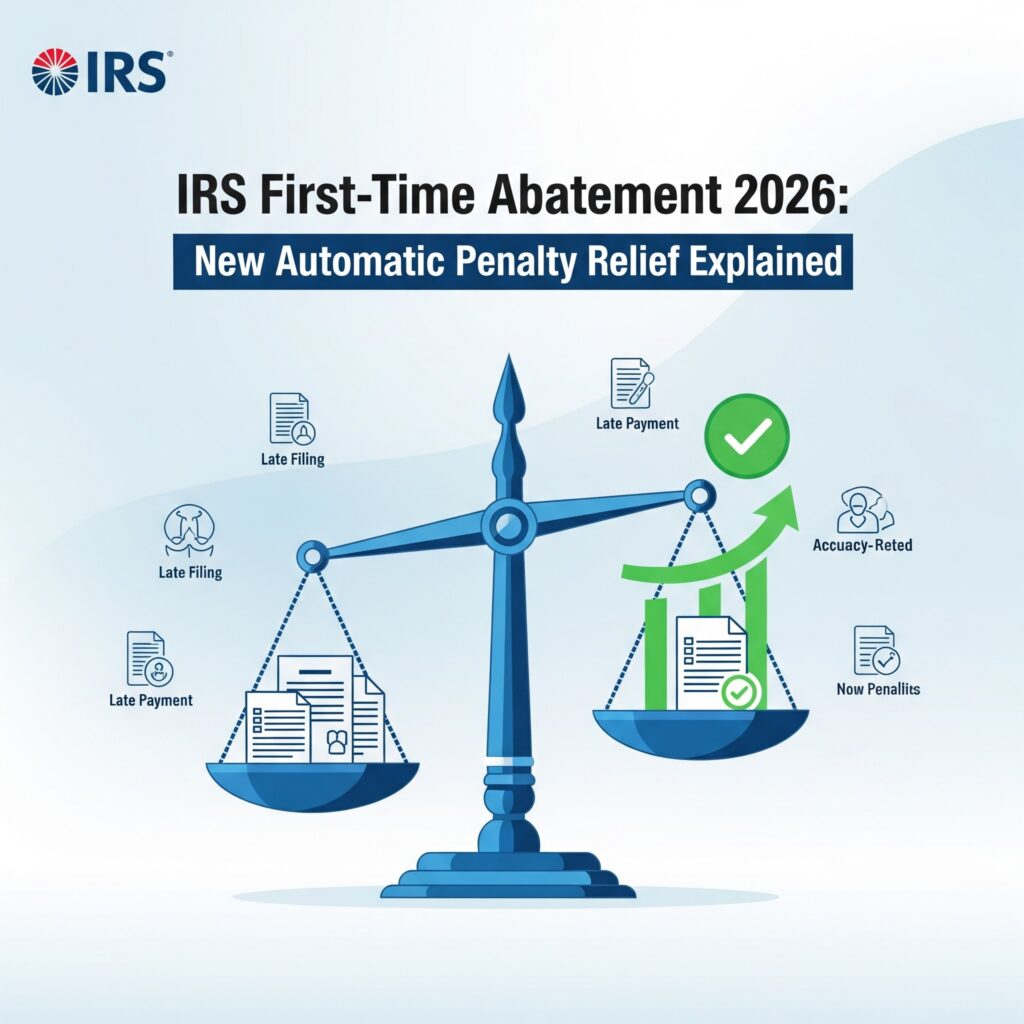
The first-time abatement 2026 update marks a major shift in how the IRS administers penalty relief for taxpayers. For years, taxpayers struggled with penalty notices—many not knowing that the IRS offered a First-Time Abatement (FTA) program at all. The IRS required taxpayers or tax professionals to call, write, or file a request to receive the penalty waiver.
Starting in 2026, the IRS will automatically apply first-time abatement 2026 relief when a taxpayer qualifies. This is one of the most significant modernization steps in recent IRS history.
This blog breaks down what first-time abatement 2026 means, who qualifies, how the automatic waiver works, and what tax professionals must do to prepare.
⭐ What Is First-Time Abatement (FTA)?
First-Time Abatement (FTA) has existed since 2001 and is one of the most widely applicable forms of IRS penalty relief. FTA is available for taxpayers who have a good compliance history and need relief from certain penalties.
Under first-time abatement 2026, the IRS will shift from a request-based model to an automatic system—helping millions of taxpayers who previously missed out due to lack of awareness.
FTA applies only to penalties related to:
Failure to file
Failure to pay
Failure to deposit (for payroll taxes)
These penalties can be substantial, and first-time abatement 2026 may prevent financially strained taxpayers from paying unnecessary penalties.
📌 Penalties Eligible Under First-Time Abatement 2026
FTA continues to apply to only three penalty categories. Under the first-time abatement 2026 system, these penalties will be reviewed automatically:
✔ Failure to File Penalty
Assessed when a taxpayer submits a return after the due date.
✔ Failure to Pay Penalty
Applied when taxes remain unpaid by the deadline.
✔ Failure to Deposit Penalty
Relevant to employers who do not deposit payroll taxes on time.
Under first-time abatement 2026, these penalties may no longer require taxpayers to call the IRS or file Form 843 to request relief.
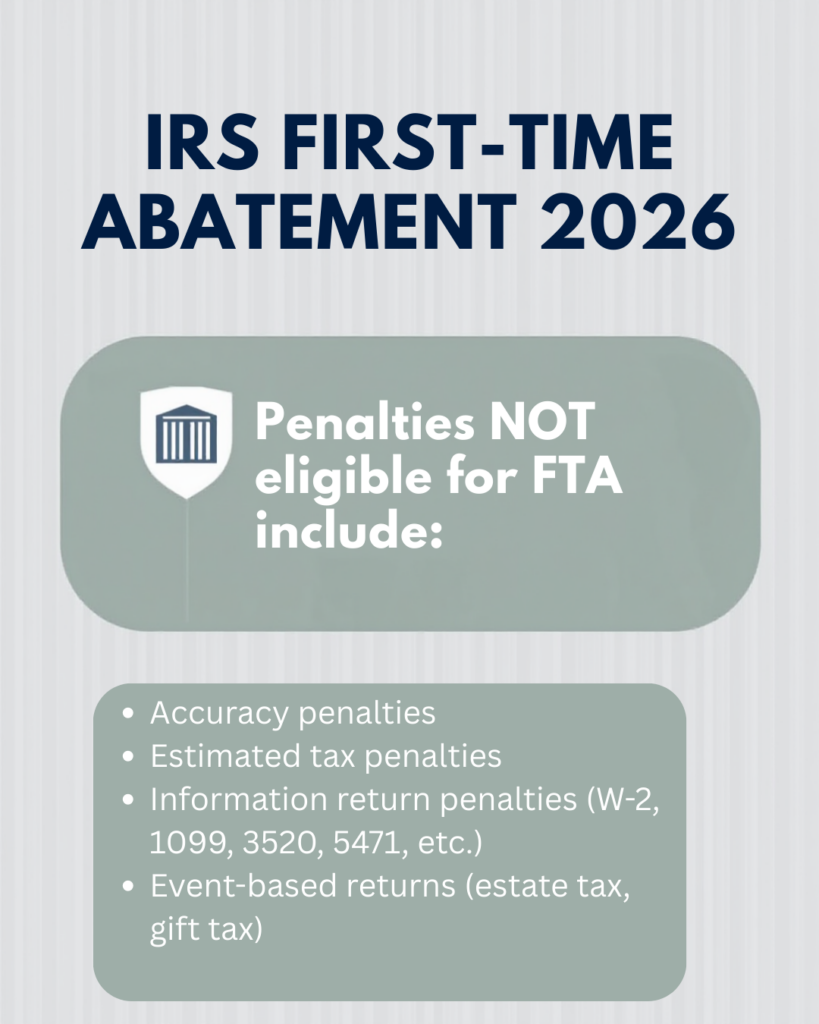
❌ Penalties NOT eligible for FTA include:
Accuracy penalties
Estimated tax penalties
Information return penalties (W-2, 1099, 3520, 5471, etc.)
Event-based returns (estate tax, gift tax)
🧾 Who Qualifies for First-Time Abatement 2026?
To qualify for first-time abatement 2026, taxpayers must meet existing FTA rules. These requirements remain unchanged.
🔹 1. Eligible Return Types
FTA applies only to:
Individual: Form 1040 series
Business: Form 1120, Form 1065
Payroll: Form 940, 941, 944, 945
Not eligible under first-time abatement 2026: Form 990 series, gift tax returns, estate tax returns, international forms.
🔹 2. Clean Compliance History
Taxpayer must have:
No disqualifying penalties in the three years prior to the penalty year
Estimated tax penalties do NOT disqualify
For joint returns: BOTH spouses must meet the criteria
For payroll taxes: must not have more than three prior Failure to Deposit waivers
Even under first-time abatement 2026, the IRS will evaluate compliance history before applying automatic relief.
🔹 3. Filing Compliance
All required tax returns for the previous three years must be filed.
This rule is unchanged under the first-time abatement 2026 automatic system.
🔹 4. Good Standing on Balances
Taxpayers must be current with IRS agreements or payment plans.
Automatic FTA in first-time abatement 2026 will be blocked if a taxpayer is not in good standing.
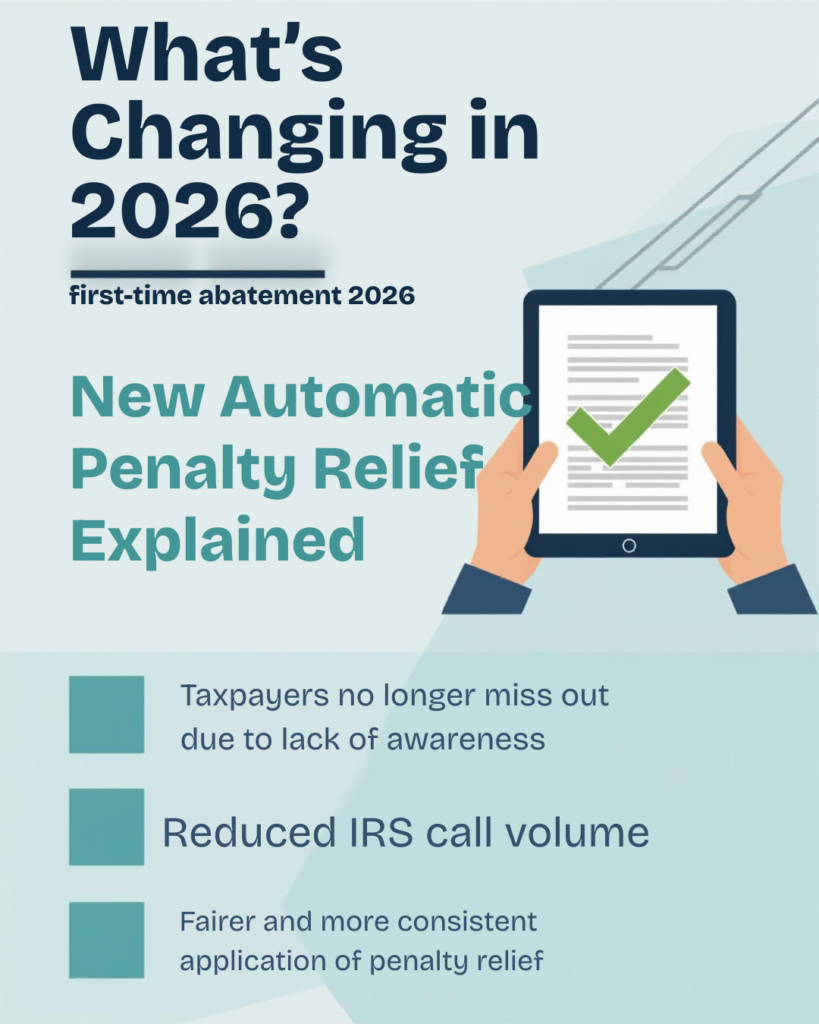
🚀 What’s Changing in 2026?
Currently, taxpayers must manually request FTA by:
Calling the IRS
Writing a letter
Filing Form 843
Beginning in first-time abatement 2026, the IRS will automatically issue the waiver when all criteria are met.
This modernization comes after years of recommendations from:
Treasury Inspector General for Tax Administration (TIGTA)
National Taxpayer Advocate (NTA)
Industry tax associations
In November 2025, Erin Collins (NTA) confirmed that the IRS will be implementing the automatic first-time abatement 2026 capability.
🌟 Benefits of Automatic FTA:
Taxpayers no longer miss out due to lack of awareness
Reduced IRS call volume
Faster processing
Fairer and more consistent application of penalty relief
🧠 Why First-Time Abatement 2026 Matters
Millions of taxpayers qualify for FTA every year, but only a small percentage receive the waiver. Reasons include:
Not knowing the program existed
Difficulty contacting the IRS
Confusion about eligibility
Filing delays that complicate penalty removal
With first-time abatement 2026, the IRS aims to eliminate these barriers.
This change especially benefits:
First-time filers
Taxpayers facing temporary financial hardship
Small businesses with payroll deposit issues
Tax professionals who handle high call volumes during tax season
🛠️ Action Steps for Tax Professionals
Even though first-time abatement 2026 becomes automatic, tax professionals must remain vigilant.
🔍 1. Review Client Accounts for Missed Past FTA Opportunities
Clients may still qualify for relief for earlier years (before 2026). Tax pros can:
Obtain Form 2848
Call the IRS Practitioner Priority Service
File Form 843 when appropriate
📅 2. Watch for IRS Implementation Guidance
Key details will be published as the IRS finalizes:
System automation rules
Exception-handling processes
How to address cases where automatic FTA is not applied
Employer deposit penalty workflows
📝 3. Ensure Clients Maintain Filing Compliance
Missing returns automatically disqualify taxpayers from first-time abatement 2026.
Encourage clients to catch up before penalties hit.
The IRS provided administrative penalty waivers for:
2019–2020 late filing
2020–2021 failure to pay
These do NOT disqualify taxpayers from first-time abatement 2026, but IRS coding inconsistencies may require manual intervention.
🔚 Final Thoughts
The introduction of first-time abatement 2026 represents a major IRS modernization that brings more fairness and access to penalty relief. Millions of taxpayers will benefit from automatic evaluations rather than needing to request relief through complex processes.
Tax professionals should stay informed, monitor IRS publications, and proactively review client accounts to ensure no qualified taxpayer misses out on penalty relief.
📞 Need Help Navigating IRS Penalties or Compliance?
Veritas Accounting Services is here to support you.
In an increasingly volatile business environment, the ability to maintain operations during unexpected disruptions has become a critical competitive advantage. With over a decade of professional excellence and 1000+ completed projects across 6+ countries, Veritas Accounting has guided businesses through numerous crises, from economic downturns to global pandemics. Our experience has shown that businesses with robust financial continuity plans are not only more likely to survive disruptions but often emerge stronger than their competitors.
Understanding Business Continuity in the Financial Context
Business continuity planning extends far beyond operational procedures—it requires comprehensive financial strategies that ensure your business can weather any storm. Financial uncertainty and compliance issues can quickly escalate during disruptions, making timely and strategic financial management absolutely critical for survival.
At Veritas, we’ve observed that businesses operating across multiple countries face unique continuity challenges. Currency fluctuations, varying regulatory responses, and different market conditions during crises require sophisticated financial planning that accounts for global complexities. Our presence in the USA, UK, Australia, and other markets provides us with firsthand experience in managing these multi-jurisdictional challenges.
The Financial Foundation of Business Continuity
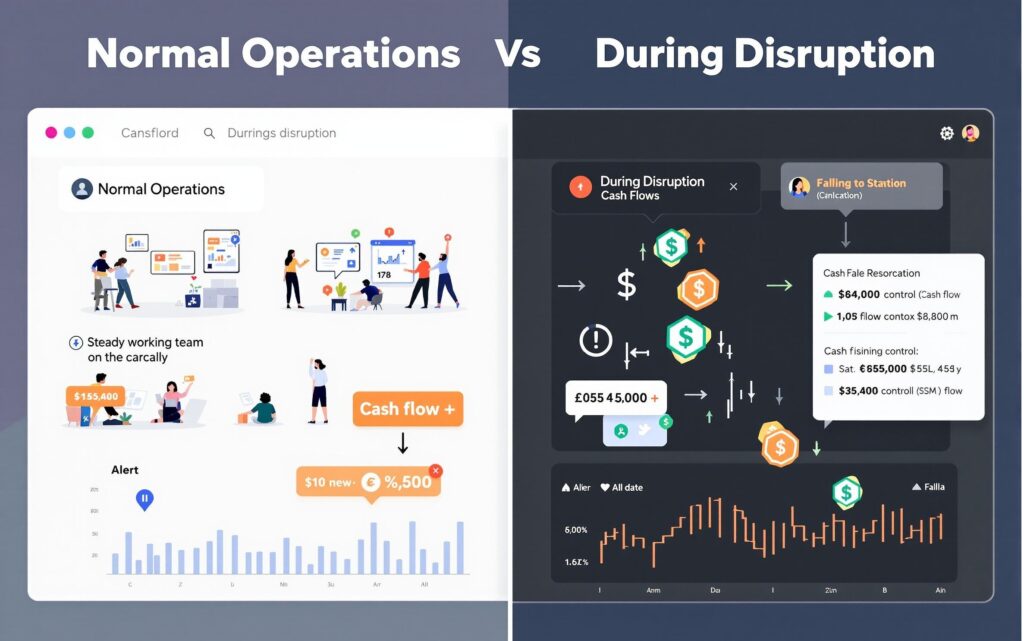
Emergency Cash Flow Management The cornerstone of any business continuity plan is maintaining adequate cash flow during disruptions. This goes beyond simply having cash reserves—it requires understanding your cash conversion cycle, identifying potential cash flow bottlenecks, and creating multiple scenarios for different disruption levels.
Our Virtual CFO services help businesses develop comprehensive cash flow forecasting models that account for various disruption scenarios. Using our expertise with QuickBooks, Xero, Wave, and Zoho Books, we create real-time cash flow monitoring systems that provide early warning signals when financial stress begins to emerge.
Strategic Reserve Management While traditional advice suggests maintaining 3-6 months of operating expenses in reserves, our experience shows that businesses need more sophisticated reserve strategies. This includes diversifying reserve locations, maintaining multi-currency reserves for international operations, and establishing credit facilities before they’re needed.
We help businesses optimize their reserve strategies by analyzing historical cash flow patterns, identifying seasonal variations, and stress-testing financial models against various disruption scenarios. This approach ensures reserves are adequate without tying up excessive capital during normal operations.
Crisis-Proofing Your Financial Systems
Technology Resilience and Remote Access The shift to remote work during recent global disruptions highlighted the critical importance of cloud-based financial systems. Businesses with outdated, location-dependent accounting systems faced significant operational challenges when physical offices became inaccessible.
Our seamless integration expertise with top accounting software ensures businesses can maintain full financial operations regardless of physical location. Cloud-based solutions like QuickBooks Online and Xero provide the accessibility and security needed for continuous financial management during disruptions.
Financial Process Automation Manual financial processes become major vulnerabilities during disruptions when key personnel may be unavailable. Automation not only improves efficiency during normal operations but provides critical continuity capabilities during crises.
We help businesses identify and automate key financial processes, from invoice generation to payment processing, ensuring essential financial functions continue even when staffing is disrupted. This automation also reduces the risk of errors during high-stress periods when manual oversight may be limited.
Multi-Country Continuity Strategies
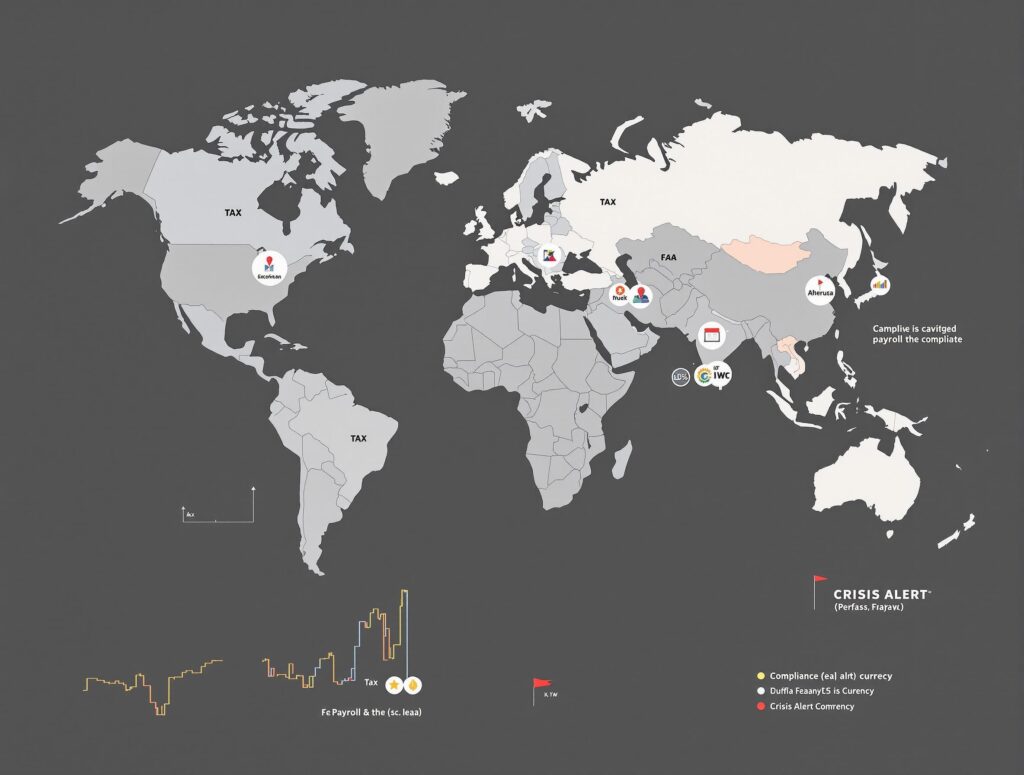
Regulatory Compliance During Disruptions Businesses operating in multiple countries must navigate varying regulatory responses during crises. Some jurisdictions may offer tax relief or compliance extensions, while others maintain strict deadlines regardless of circumstances.
Our global expertise across 6+ countries enables us to help businesses understand and leverage available regulatory relief while maintaining compliance where flexibility isn’t available. This includes managing tax obligations, employment law requirements, and financial reporting standards across different jurisdictions.
Currency Risk Management in Crisis Situations Economic disruptions often trigger significant currency volatility, which can severely impact businesses with international operations. Companies that don’t actively manage currency risk may find their financial position deteriorating rapidly during crises.
We provide comprehensive currency risk management strategies that include hedging techniques, natural hedging through operational adjustments, and scenario planning for different currency movement patterns. These strategies help businesses maintain financial stability even when currency markets become highly volatile.
Stress Testing and Scenario Planning
Financial Stress Testing Methodologies Effective business continuity planning requires understanding how your business would perform under various stress scenarios. This goes beyond simple “what if” discussions to include quantitative analysis of different disruption levels and durations.
Our ratio analysis expertise helps businesses identify key financial vulnerabilities and stress test their business models against various scenarios. This includes analyzing debt service capabilities, working capital requirements, and profitability thresholds under different operating conditions.
Dynamic Scenario Planning Static business continuity plans quickly become obsolete as conditions change. Effective continuity planning requires dynamic scenario modeling that can be updated as new information becomes available during a crisis.
We help businesses develop flexible scenario planning frameworks that can be quickly adjusted as disruptions evolve. This includes creating decision trees for different response options and establishing trigger points for implementing various contingency measures.
Financial Communication During Crises
Stakeholder Communication Strategies During disruptions, clear and timely communication with financial stakeholders becomes critical. This includes investors, lenders, suppliers, and customers who all need to understand how the business is managing through the crisis.
Our financial reporting expertise helps businesses develop crisis communication protocols that provide transparency while maintaining confidence. This includes preparing standardized reports that can be quickly updated and distributed to different stakeholder groups.
Investor Relations During Disruptions Businesses with external investors face additional communication challenges during crises. Investors need regular updates on financial performance, cash flow projections, and management actions being taken to address the disruption.
We help businesses develop investor communication frameworks that provide appropriate transparency while managing expectations. This includes preparing financial projections that account for uncertainty and clearly communicating the assumptions underlying these projections.
Post-Crisis Financial Recovery Planning Business continuity planning must extend beyond simply surviving the crisis to include strategies for recovery and growth. Businesses that plan for recovery during the crisis often emerge in stronger competitive positions.
Our strategic financial planning services help businesses identify recovery opportunities and develop financial strategies to capitalize on them. This includes assessing acquisition opportunities, planning for market share gains, and optimizing capital structure for post-crisis growth.
Building Resilience for Future Disruptions Each crisis provides valuable lessons that can be incorporated into improved continuity planning. Businesses that learn from each disruption become increasingly resilient over time.
We help businesses conduct post-crisis financial reviews that identify areas for improvement in their continuity planning. This includes analyzing what worked well, what could be improved, and how financial systems and processes can be strengthened for future disruptions.
Technology and Innovation in Continuity Planning
AI and Predictive Analytics Advanced technologies are increasingly being used to improve business continuity planning. AI-powered analytics can identify early warning signals and predict potential disruptions before they fully materialize.
We help businesses leverage technology to enhance their continuity planning capabilities. This includes implementing predictive analytics for cash flow forecasting and using AI to identify potential risk factors that might not be apparent through traditional analysis.
Blockchain and Financial Security Emerging technologies like blockchain offer new possibilities for maintaining financial security and continuity during disruptions. These technologies can provide enhanced security and transparency for financial transactions even when traditional systems are compromised.
Industry-Specific Continuity Considerations
Manufacturing and Supply Chain Finance Manufacturing businesses face unique continuity challenges related to inventory management, supplier financing, and production scheduling. Financial continuity planning must account for these operational complexities.
Professional Services Continuity Professional services firms must balance client service continuity with financial management during disruptions. This often requires flexible billing arrangements and modified service delivery models.
Technology and Software Companies Tech companies may face different continuity challenges related to subscription revenue models, development costs, and rapid scaling requirements during and after disruptions.
Measuring Continuity Plan Effectiveness
Key Performance Indicators for Continuity Effective continuity planning requires measurable objectives and regular assessment of plan effectiveness. This includes financial metrics like cash flow stability, operational metrics like service delivery continuity, and strategic metrics like market position maintenance.
Regular Plan Testing and Updates Business continuity plans must be regularly tested and updated to remain effective. This includes conducting financial stress tests, reviewing scenario assumptions, and updating response procedures based on changing business conditions.
The Veritas Advantage in Continuity Planning
Our decade of experience with 1000+ successful projects provides unique insights into what works in business continuity planning. We’ve helped businesses navigate various types of disruptions, from economic downturns to regulatory changes to global pandemics.
Our global presence across multiple countries gives us firsthand experience in managing continuity challenges across different regulatory environments and market conditions. This experience enables us to help businesses develop truly comprehensive continuity strategies that account for global complexities.
Implementation Framework
Phase 1: Risk Assessment and Gap Analysis We begin by conducting comprehensive risk assessments that identify potential disruption sources and evaluate current continuity preparedness. This includes analyzing financial vulnerabilities, operational dependencies, and regulatory requirements.
Phase 2: Strategy Development Based on the risk assessment, we develop customized continuity strategies that address identified vulnerabilities while maintaining operational efficiency during normal conditions.
Phase 3: Implementation and Testing We provide hands-on support during strategy implementation and help businesses conduct regular testing to ensure plans remain effective.
Phase 4: Ongoing Monitoring and Improvement Continuity planning is an ongoing process that requires regular review and updates. We provide continuous monitoring and improvement services to ensure plans evolve with changing business conditions.
Conclusion: Building Unshakeable Financial Resilience
In today’s uncertain business environment, robust financial continuity planning isn’t optional—it’s essential for long-term success. Businesses that invest in comprehensive continuity strategies not only survive disruptions but often emerge stronger and more competitive.
At Veritas Accounting, we combine global expertise with local market knowledge to help businesses build unshakeable financial resilience. Our comprehensive approach addresses all aspects of financial continuity, from emergency cash flow management to post-crisis recovery planning.
Don’t wait for the next disruption to test your business’s resilience. Contact Veritas Accounting today to develop a comprehensive financial continuity plan that protects your business and positions it for long-term success.
Contact Veritas Accounting:
Headquarters: C-305, The Imperial Heights, 150ft Ring Road, Rajkot
US Office: 8735 Dunwoody Place – 4549, Atlanta, GA
Real Estate Accounting, The international real estate market has evolved significantly in 2025, presenting both lucrative opportunities and operational challenges. Investors are no longer confined by borders, with properties in the UK, UAE, US, Singapore, and other dynamic markets becoming part of diverse global portfolios. But while the potential for returns is greater, so too are the complexities—currency volatility, tax compliance, and operational inefficiencies can quickly erode profits. This is precisely where Veritas Accounting steps in as a trusted guide, helping investors successfully navigate this intricate terrain with expert knowledge and tailored financial solutions.
Managing Properties Across Multiple Currencies
One of the foremost challenges of global property ownership is dealing with multiple currencies. With frequent exchange rate fluctuations and differences in local banking systems, investors can easily lose track of profitability. Moreover, unhedged currency exposure can severely impact returns. Veritas Accounting brings clarity and control to multi-currency accounting by implementing systems that provide real-time visibility into currency positions, automating exchange rate conversions, and integrating cross-border payment solutions into your financial workflows. These tools not only help in protecting income from unfavorable fluctuations but also in ensuring every transaction is accounted for accurately and efficiently.
Staying Ahead of International Tax Obligations
Tax compliance is perhaps the most daunting aspect of cross-border property investments. Each jurisdiction has its own property tax rules, income tax rates, and VAT structures—often subject to sudden changes or highly specific regulations. Missteps can lead to penalties, audits, or reputational harm. Veritas acts as a cross-border compliance partner, offering localised tax knowledge and ensuring that your global property income, expenses, and obligations are correctly reported. We assess international tax treaties for their relevance and advantages, support with transfer pricing compliance for multinational structures, and help align your tax strategy across all operating regions. By staying updated with country-specific laws and regulations, Veritas helps investors remain fully compliant while identifying legal opportunities for tax optimisation.
Embracing Technology in International Property Accounting
The digital transformation of accounting has made it easier to manage international portfolios—if approached with the right tools. Many investors struggle with disconnected systems, manual entries, or lack of oversight when it comes to their overseas assets. Veritas helps bridge this gap by designing an integrated technology environment tailored to international property management. We leverage cloud-based solutions like QuickBooks Online and Xero, automate data consolidation across currencies and regions, and implement dashboards for real-time financial reporting. These systems are not just about convenience—they provide the visibility and accuracy necessary for data-driven decision-making, while streamlining operations and minimising human error.
Building a Strong Foundation for Global Property Management
A successful international property portfolio is grounded in solid accounting processes and disciplined financial management. Standardising these processes across entities can be challenging, but it’s essential for clear reporting and efficient consolidation. Veritas helps create this foundation by designing unified charts of accounts, establishing consistent financial reporting templates, and ensuring timely reconciliation procedures across markets. This level of consistency enables better bench marking, improved visibility, and faster decision-making.
Beyond operations, risk management also plays a central role. Currency hedging strategies, global insurance coordination, regular compliance audits, and exposure analysis are crucial in reducing volatility and safeguarding investments. With Veritas, clients gain access to systems and insights that not only flag potential risks but actively mitigate them before they impact financial performance.
Strategic Oversight Through Virtual CFO Services
As property portfolios expand internationally, the need for high-level financial strategy becomes more urgent. However, hiring a full-time CFO for every region is neither practical nor cost-effective. That’s why Veritas offers Virtual CFO services—a flexible and powerful solution for global investors seeking experienced financial leadership. Our virtual CFOs assist with long-term financial planning, performance benchmarking, and investment evaluation. They help forecast cash flow requirements, identify underperforming assets, and align financial operations with strategic growth goals. This allows investors to focus on expansion and acquisition, knowing their financial road map is in expert hands.
Preparing for the Future of International Property Accounting
The landscape of real estate accounting is evolving with the rise of automation, AI, blockchain, and integrated data systems. These innovations are redefining how global portfolios are managed, reported, and optimised. Veritas stays at the forefront of these changes, guiding clients through emerging trends and helping them integrate future-ready solutions. Whether it’s automating repetitive accounting tasks, utilizing AI for rental yield analysis, or exploring blockchain-based lease contracts, we ensure our clients are prepared for what’s next—not just what’s now.
Implementing a Scalable Financial Framework
Implementing an effective international accounting system starts with understanding where you are today. Veritas begins every engagement with a detailed assessment of your current processes, identifying gaps in compliance, technology, and reporting. We then work closely with you to design a tailored accounting strategy, complete with a roadmap for implementation, timelines, and training. But we don’t stop there. Our team remains an active partner in your success, offering ongoing system improvements, monitoring compliance, and adapting strategies as your portfolio grows and evolves. This dynamic support model ensures that your operations remain efficient, future-proof, and aligned with your broader investment goals.
Turning Financial Accuracy into Investment Success
Strong accounting doesn’t just keep the books in order—it directly impacts profitability. Investors working with Veritas consistently benefit from lower compliance costs, enhanced tax positioning, and clearer visibility into their global cash flow. This, in turn, enables smarter acquisition decisions, timely reinvestment, and better capital allocation across markets. By turning financial clarity into a competitive advantage, Veritas helps its clients achieve stronger, more sustainable returns.
Why Veritas Is the Right Partner for International Investors
With over a decade of experience working with clients in the US, UK, UAE, Singapore, and other major markets, Veritas has become a trusted partner for cross-border real estate investors. Our team brings expertise in real estate accounting, global compliance, and financial strategy—supported by certifications in leading platforms like QuickBooks and Xero. Whether you’re managing one overseas property or a multi-country portfolio, Veritas provides the insights, systems, and strategic support needed to thrive in a complex and competitive global environment.
Let Veritas Guide Your Next Move
If you’re expanding your property investments internationally or struggling to manage your existing global portfolio, now is the time to take control of your financial operations. Veritas Accounting is here to help guide the way. With customised accounting solutions, compliance expertise, and strategic financial leadership, we help you minimise risk, maximise returns, and grow with confidence.
Contact Us
📍 US Office: 8735 Dunwoody Place – 4549, Atlanta, GA 📧 Email: hello@veritasaccountingservices.com 📞 Phone: +1 (678) 723-6003 (US) | +91 9725552243 (India)
The accounting landscape is evolving rapidly. Driven by technology, regulatory changes, and shifting client expectations, accountants and financial professionals must stay ahead of emerging trends to remain competitive.
As we have entered 2025, several key developments will shape the future of accounting, impacting small businesses, CPA firms, and accounting service providers worldwide. Whether you’re a business owner looking to streamline your financial management or an accounting firm aiming to enhance efficiency, these trends will define the industry’s direction.
1. AI and Automation: Reshaping Accounting Workflows
Artificial Intelligence (AI) and automation are transforming accounting by handling repetitive and time-consuming tasks with precision. From bookkeeping to tax preparation, AI-powered software can process vast amounts of data, minimizing human error and increasing efficiency.
Key Impacts
AI-driven accounting tools can categorize transactions, reconcile bank statements, and flag anomalies in real time.
Chatbots and AI assistants will provide instant responses to common financial queries.
Automated invoicing and expense tracking will reduce manual entry and enhance accuracy.
What It Means for Businesses & Firms
Adopting AI-powered tools will free up accountants to focus on high-value tasks like financial advising, forecasting, and strategic planning. CPA firms that leverage automation will gain a competitive edge by offering faster, more efficient services.
2. Cloud Accounting Becomes the Standard
Cloud-based accounting solutions are no longer optional—they’re essential. Platforms like QuickBooks Online, Xero, and FreshBooks enable real-time collaboration, remote access, and seamless data sharing between accountants and clients.
Why It Matters
Businesses can access their financial data from anywhere, ensuring greater flexibility.
Automatic software updates eliminate the need for costly installations and maintenance.
Cloud-based platforms improve data security with encrypted backups and multi-factor authentication.
How to Adapt
If your business or firm hasn’t transitioned to cloud accounting yet, 2025 is the year to do it. Clients expect real-time access to financial data, and cloud solutions make it easier to collaborate across locations.
3. Blockchain and Digital Ledger Technology (DLT) in accounting
Blockchain, once associated primarily with cryptocurrency, is making waves in accounting. This decentralized ledger system offers unparalleled security, transparency, and efficiency in financial transactions.
Benefits of Blockchain in Accounting
Fraud Prevention: Transactions recorded on a blockchain are immutable, reducing the risk of manipulation.
Smart Contracts: Automated agreements ensure compliance and faster processing of transactions.
Audit Efficiency: Auditors can verify transactions instantly, reducing the time spent on compliance checks.
Who Should Pay Attention
Accounting firms handling large-scale transactions or audits should explore blockchain’s potential for secure record-keeping. Businesses looking to streamline contracts, payments, and compliance may also benefit.
4. Real-Time Data Analytics for Smarter Decision-Making
Traditional accounting often relied on past data, but real-time analytics are changing the game. Businesses now demand instant insights to make proactive financial decisions.
Custom dashboards will provide at-a-glance financial performance metrics.
AI-powered insights will help firms tailor financial strategies for clients
How Businesses Can Benefit
Small businesses can use real-time analytics to adjust pricing, optimize expenses, and plan investments with greater accuracy. Accounting firms offering data-driven insights will attract more clients.
5.The Globalization of Accounting Services
With businesses expanding across borders, the demand for international accounting services is growing. Firms must navigate complex tax regulations, currency exchange challenges, and cross-border compliance requirements.
Global Trends in Accounting
More businesses are outsourcing accounting tasks to firms specializing in international finance.
Cloud platforms enable firms to serve clients worldwide without geographical constraints.
AI-driven tools simplify multi-currency transactions and tax calculations.
How Firms Can Stay Competitive
Stay updated on international tax laws and compliance requirements.
Offer multilingual support and currency conversion services.
Partner with firms in different countries to provide seamless cross-border solutions.
6. Cybersecurity: A Top Priority for Financial Data Protection
With the rise of digital accounting, cybersecurity threats are increasing. Cybercriminals target financial data, making robust security measures essential.
Major Risks
Phishing attacks that steal sensitive financial information.
Ransomware that locks accounting systems until a ransom is paid.
Data breaches that expose confidential client details.
Best Practices for Cybersecurity in Accounting
Implement two-factor authentication (2FA) for all financial systems.
Regularly update software to patch security vulnerabilities.
Educate employees and clients on recognizing phishing scams.
Accounting firms must prioritize cybersecurity to build trust with clients and safeguard sensitive data.
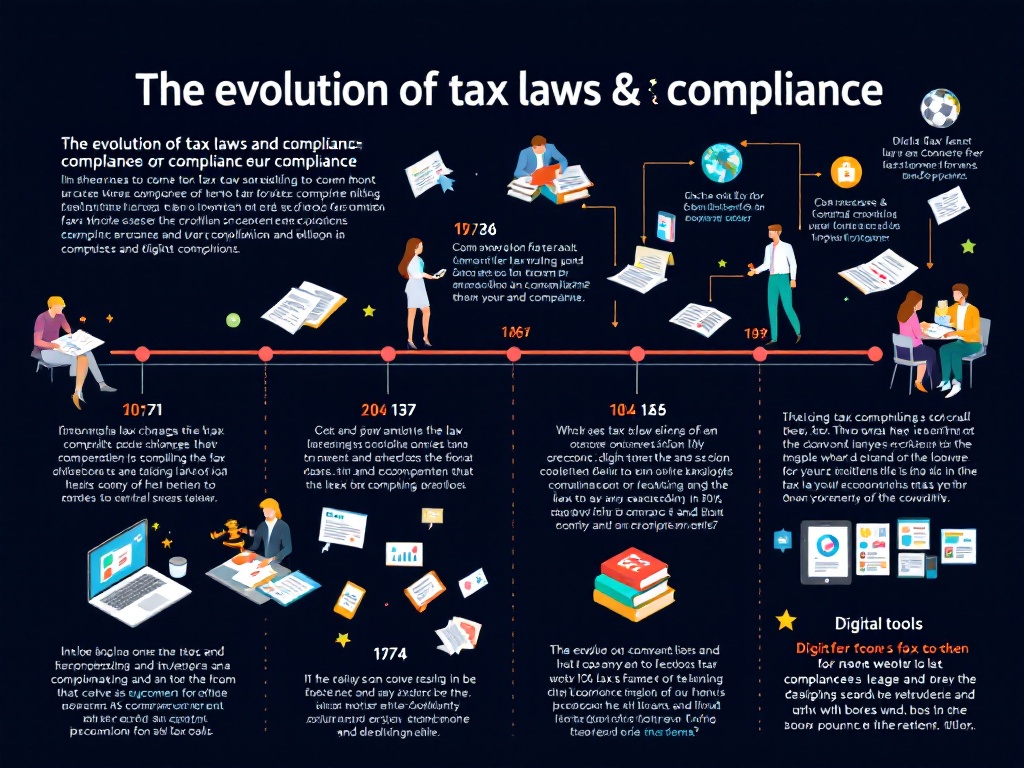
7. The Evolution of Tax Laws & Compliance
Tax regulations are becoming more complex, requiring businesses and accounting firms to stay informed about frequent changes.
Upcoming Tax Trends in 2025
More governments are introducing digital tax reporting systems.
AI-driven tax compliance software is simplifying filing processes.
Increased scrutiny on global tax avoidance and corporate transparency.
How to Stay Compliant
Use tax software that updates automatically with new regulations.
Attend industry webinars and training on changing tax laws.
Offer compliance consulting as a value-added service to clients.
8. Expansion of Outsourced Accounting Services
Outsourcing accounting functions is becoming a strategic move for businesses looking to cut costs and focus on growth. More companies are turning to third-party providers for bookkeeping, payroll processing, and tax preparation.
Why Outsourcing Is Gaining Popularity
Small businesses can access professional accounting expertise without hiring a full-time team.
CPA firms can scale their services by outsourcing routine tasks while focusing on advisory roles.
Cloud technology enables seamless collaboration between businesses and outsourced accounting firms
How to Leverage This Trend
Businesses should evaluate their accounting needs and explore outsourcing options to improve efficiency.
Accounting firms can expand their client base by offering flexible, outsourced accounting packages.
Leveraging automation in outsourced services can enhance service delivery and accuracy.
9. The Changing Role of Accountants: From Number Crunchers to Advisors
Technology is handling routine tasks, shifting the role of accountants from data entry to strategic advising. Businesses now seek accountants who can provide insights, risk assessments, and financial growth strategies.
Use analytics tools to provide in-depth financial forecasts.
Offer training or financial literacy programs for small businesses.
The firms that embrace this evolution will strengthen client relationships and increase profitability.
Conclusion: Preparing for the Future of Accounting
The accounting industry in 2025 will be shaped by AI, automation, real-time analytics, cybersecurity, outsourcing, and evolving tax laws. Firms that stay ahead of these trends will gain a competitive advantage, offering more value to clients while improving operational efficiency.
For small businesses, embracing cloud accounting, AI-driven insights, and cybersecurity measures will ensure financial stability and growth. CPA firms and accounting service providers must position themselves as advisors rather than just number crunchers, leveraging technology to deliver smarter, faster, and more efficient services.
Are you ready for the future of accounting? At Veritas Accounting Services, we help businesses and accounting firms navigate these changes with cutting-edge solutions and expert guidance. Contact us today to future-proof your financial success!