






Beyond Zoom: How to Build a Strong Remote Company Culture
Remote work has changed where people work, but it has not changed what people expect from a good workplace.
Employees still want to feel trusted, supported, recognized, and connected to their team. The challenge is that remote companies cannot depend on office conversations, shared lunches, or quick chats at someone’s desk to create those connections.
That is why building a strong remote company culture requires more than scheduling regular video meetings.
A healthy remote company culture is created through everyday actions: how managers communicate, how employees are recognized, how decisions are made, how new people are welcomed, and how teams stay connected when they work from different locations.
What Is Remote Company Culture?
Remote company culture is the way people communicate, collaborate, make decisions, solve problems, and work together when they are not physically in the same workplace.
It is not simply a remote work policy.
A company’s culture shows up in questions such as:
- Can employees ask questions comfortably?
- Do managers trust their teams?
- Are expectations clear?
- Do people feel comfortable sharing ideas?
- Is good work recognized?
- Can employees easily find the information they need?
- Do people understand what the company stands for?
A strong remote company culture makes employees feel like part of a team even when everyone is working from different places.
Remote Company Culture Doesn’t Happen Automatically
One of the biggest mistakes companies make is assuming that culture will naturally develop after hiring a remote team.
It usually doesn’t.
In a traditional office, employees have countless informal interactions throughout the day. They talk before meetings, walk over to a colleague’s desk, have lunch together, or simply exchange a few words while getting coffee.
Remote employees don’t have those same opportunities.
If a company doesn’t intentionally create opportunities for communication and connection, employees can gradually become disconnected from the wider team.
Building remote company culture therefore requires deliberate effort.
Start With Trust
A strong remote company culture starts with trust.
Remote employees don’t need someone constantly checking whether they are online. They need clear expectations and the freedom to complete their work.
Instead of focusing on:
“Are you online?”
managers should focus on:
“Are we on track to achieve the expected result?”
Trust becomes easier when employees clearly understand:
- Their responsibilities
- Deadlines
- Expected outcomes
- Communication standards
- Availability requirements
- Decision-making authority
When expectations are clear, employees can work independently without feeling constantly monitored.
That independence can become one of the biggest advantages of remote work.
Create Clear Communication Rules
Communication is one of the most important parts of remote company culture.
Without clear communication, employees may either receive too little information or become overwhelmed by messages and meetings.
Neither situation is productive.
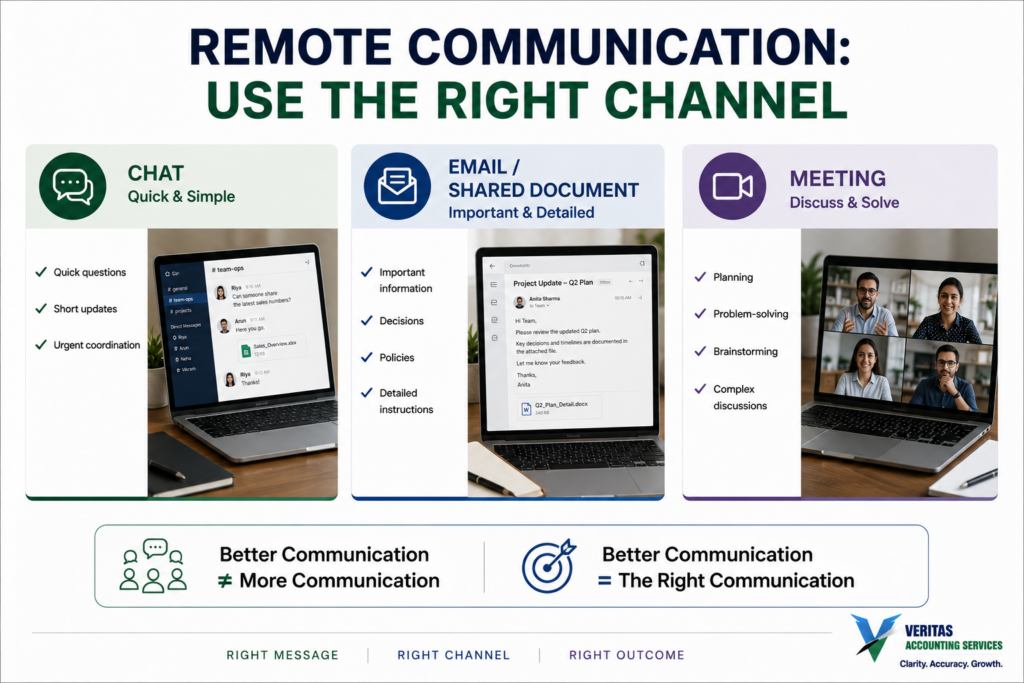
Create simple rules for different types of communication.
Use Chat For:
- Quick questions
- Short updates
- Urgent matters
- Simple coordination
Use Email or Shared Documents For:
- Important information
- Formal communication
- Decisions
- Detailed instructions
Use Meetings For:
- Discussions
- Planning
- Problem-solving
- Topics that require real-time collaboration
The objective isn’t more communication.
The objective is better communication.
Don’t Make Every Meeting Mandatory
Video calls can help strengthen remote company culture, but too many meetings can have the opposite effect.
Employees can spend much of their day moving from one call to another while struggling to complete their actual work.
Before scheduling a meeting, ask:
“Does this really need to be a meeting?”
If not, consider using:
- A written update
- A shared document
- A project management comment
- A recorded video
- A quick message
When meetings are necessary, give them a clear purpose and agenda.
A good remote company culture gives employees both opportunities for connection and enough uninterrupted time to work.
Create Space for Informal Conversations
Not every interaction should be about deadlines, projects, and performance.
People also need opportunities to talk about things that aren’t directly related to work.
Companies can create informal opportunities through:
- Virtual coffee chats
- Team celebrations
- Informal group discussions
- Birthday messages
- Interest-based chat groups
- Short team catch-ups
- Online social activities
These activities should not feel forced.
The purpose is simply to give people opportunities to know the individuals behind the job titles.
Small conversations can make a remote company culture feel much more human.
Make New Employees Feel Included
Joining a remote company can feel very different from joining an office.
A new employee cannot simply look around and figure out who does what.
That makes onboarding especially important.
New employees should understand:
- Who their manager is
- Who they can approach with questions
- How communication works
- Which meetings they should attend
- Where important information is stored
- What their first priorities are
- How their performance will be evaluated
Assigning an experienced team member as a point of contact can also help.
It gives new employees someone they can approach with smaller questions without feeling uncomfortable.
A thoughtful onboarding process is one of the first building blocks of a strong remote company culture.
Recognize Good Work
When employees work remotely, their contributions can sometimes become less visible.
A person who consistently solves problems or helps customers may not receive the same recognition they would naturally receive in an office.
Managers should therefore make recognition intentional.
For example:
- Mention achievements during team meetings
- Share wins in the team communication channel
- Thank employees for solving difficult problems
- Celebrate milestones
- Recognize people who help colleagues
Recognition doesn’t always need to involve money.
A genuine and specific thank-you can have a meaningful impact.
Instead of saying:
“Great job.”
say:
“Thank you for identifying that reporting issue before it affected the client. That saved the team a lot of time.”
Specific recognition makes people feel seen.
Give Employees a Voice
A healthy remote company culture should not be created entirely from the top down.
Employees should have opportunities to share:
- Ideas
- Concerns
- Suggestions
- Process improvements
- Feedback
Managers can use regular one-on-one meetings, surveys, or team discussions to collect feedback.
But asking for feedback is only useful when the company is willing to act on it.
If employees repeatedly share suggestions and never see any change, they may eventually stop speaking up.
Listening matters.
Acting on useful feedback matters even more.
Document How the Company Works
Remote teams depend heavily on shared information.
If important knowledge exists only in someone’s memory, private messages, or individual files, employees may struggle to find what they need.
Create a central place for important information such as:
- SOPs
- Policies
- Training materials
- Project information
- Client procedures
- Team responsibilities
- Frequently asked questions
This becomes even more important as the company grows.
Good documentation supports remote company culture because employees don’t have to depend on one particular person for every answer.
It also protects valuable knowledge when employees leave.
Focus on Outcomes, Not Online Activity
One common mistake in remote management is confusing activity with productivity.
An employee can be online all day without producing meaningful results.
Another employee may complete important work efficiently while spending less time visibly online.
Managers should therefore focus on outcomes.
Set clear goals and measure whether expected work is being completed.
Ask:
- What needs to be completed?
- Who owns it?
- When is it due?
- What does success look like?
- Are there obstacles?
- What support is required?
This creates accountability without unnecessary micromanagement.
A remote company culture becomes healthier when employees know they are trusted to deliver results.
Build Culture Around Shared Values
Company values should be more than words on a website.
They should influence everyday decisions.
If a company says it values accountability, managers should take responsibility when something goes wrong.
If it values customer service, employees should see that reflected in decisions.
If it values learning, employees should receive opportunities to improve their skills.
If it values transparency, important information should not be unnecessarily hidden.
This is how remote company culture becomes real.
Values become meaningful when employees see them in action.
Don’t Forget the Human Side
Remote work can be flexible and productive, but it can also become isolating.
Some employees may spend most of their working day alone.
Managers should therefore create an environment where employees feel comfortable saying:
“I’m having trouble with this.”
without worrying that asking for help will be viewed negatively.
Managers should also pay attention to workload, communication problems, and signs of disengagement.
This does not mean constantly monitoring employees.
It means creating an environment where people know support is available when they need it.
Give Teams Opportunities to Meet
Remote doesn’t necessarily have to mean never meeting in person.
When practical, companies can organize:
- Annual team events
- Planning sessions
- Training days
- Department meetings
- Company retreats
These gatherings aren’t essential for every remote business, but when possible, meeting face-to-face can strengthen relationships.
The purpose shouldn’t be to recreate the office.
It should be to create meaningful connections that make future remote collaboration easier.
Measure Your Culture
Company culture can seem difficult to measure, but employee feedback can provide useful signals.
Ask employees questions such as:
- Do you understand what is expected from you?
- Do you feel comfortable asking for help?
- Do you feel connected to your team?
- Do you receive useful feedback?
- Do you feel recognized?
- Do you have the information needed to do your job?
- Do you trust your manager?
- What is one thing we could improve?
You don’t need a complicated survey.
A few honest questions can reveal problems before they become bigger issues.
Regular feedback also shows employees that their experience matters.
Common Remote Culture Mistakes
Even companies with good intentions can make mistakes when building remote company culture.
Too Many Meetings
More meetings don’t automatically create stronger relationships.
Constant Monitoring
Tracking every online activity can reduce trust and increase stress.
Forced Social Activities
Not everyone enjoys virtual games or informal calls. Give employees choices.
Poor Documentation
If information is scattered across emails, chats, and individual files, employees will struggle to find answers.
Inconsistent Communication
If some employees receive important information while others don’t, teams can quickly become disconnected.
Ignoring Remote Employees
Remote employees should not feel like outsiders simply because they aren’t physically present.
A Simple Framework for Remote Company Culture
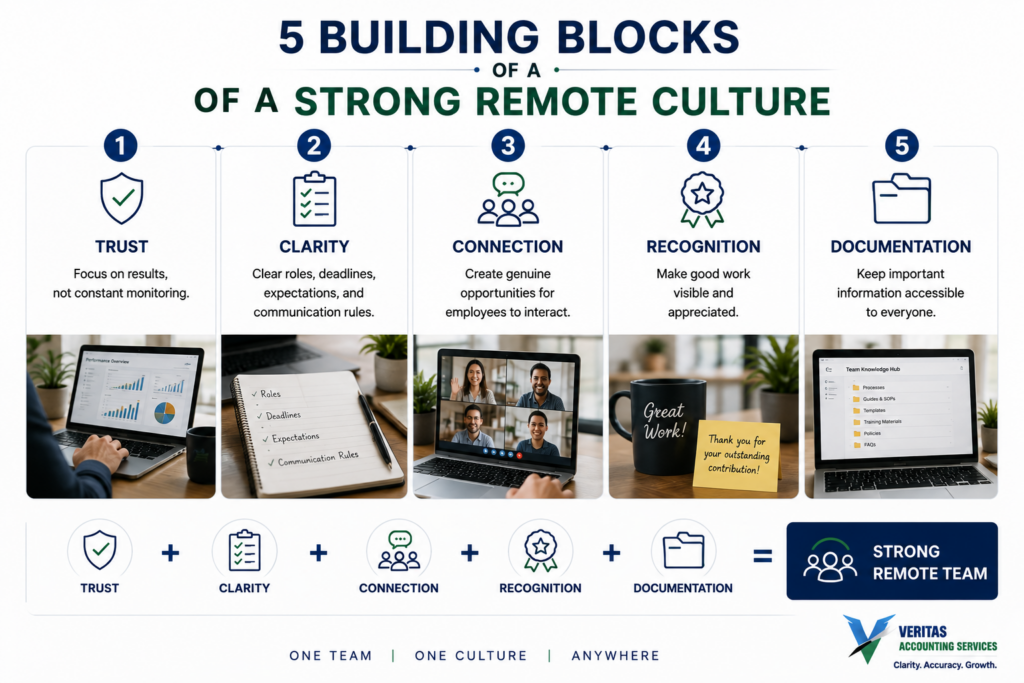
If you’re building a remote team, start with five areas.
1. Trust
Give employees responsibility and judge performance based on results.
2. Clarity
Make roles, deadlines, expectations, and communication standards clear.
3. Connection
Create genuine opportunities for employees to interact beyond daily tasks.
4. Recognition
Make good work visible and appreciated.
5. Documentation
Make important information easy for everyone to find.
These five areas provide a practical foundation for remote company culture.
Culture Is Built Every Day
There is no single activity that creates a great remote workplace.
Culture is built through hundreds of small decisions.
How does a manager respond to a mistake?
How quickly does a new employee receive help?
Does someone’s contribution get recognized?
Do employees feel trusted?
Can people ask questions without hesitation?
Can everyone access important information?
These everyday experiences become the culture.
Technology can make remote work possible, but technology alone cannot create connection.
Video calls, chat platforms, project management software, and shared documents are simply tools.
The culture comes from how people use them.
Final Thoughts
Building a remote company culture isn’t about trying to recreate an office through video calls.
It is about creating an environment where people can communicate clearly, work independently, collaborate effectively, and feel connected to the organization.
Trust your employees.
Set clear expectations.
Document important processes.
Create space for human connection.
Recognize good work.
Listen to your team.
And make culture part of everyday management rather than treating it as a once-a-year initiative.
A strong remote company culture doesn’t happen because everyone attends the same Zoom meeting.
It happens when employees feel that they are part of something, even when they are working from different places.
That is the real goal of building remote company culture.
Schedule a FREE Call
GET IN TOUCH