








How to Read an Accounts Receivable Aging Report
If customers owe your business money, an accounts receivable aging report helps you see which invoices need attention. It separates unpaid amounts by how long they have been overdue, so you can build a follow-up list instead of chasing every customer at once.
You do not need an accounting background to use it. Start by checking the numbers, identifying the overdue balances, and deciding what action each account needs.
1. Set Up Your Accounts Receivable Aging Report
Accounts receivable means money customers owe your business for sales made on credit. An accounts receivable aging report organizes those unpaid amounts into time periods.
For example, you might see columns labeled Current, 1–30 days, 31–60 days, 61–90 days, and 91 days or more. In a report that ages invoices by their due dates, these periods show how late the payments are—not how long ago you made the sale.
That distinction matters. An invoice issued 20 days ago with 30-day payment terms is not overdue yet. Intuit’s explanation of aging columns confirms that QuickBooks separates amounts not yet due from amounts past their due dates.
Before reviewing your own report, check its date and aging settings. Different settings can change where an invoice appears.
2. Read the Aging Buckets and Outstanding Balances
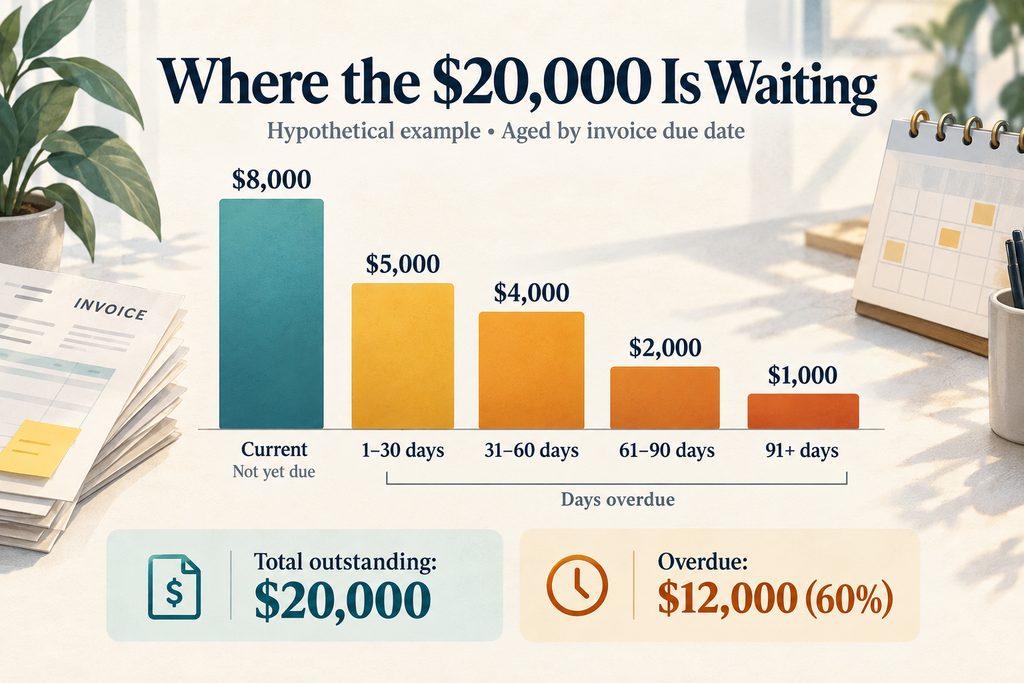
Suppose you run a small US design agency that invoices customers after completing projects. The accounts receivable aging report below uses hypothetical figures. It groups invoices by due date and assumes all payments and credits have been recorded correctly.
| Invoice status | Unpaid amount |
|---|---|
| Current: not yet due | $8,000 |
| 1–30 days overdue | $5,000 |
| 31–60 days overdue | $4,000 |
| 61–90 days overdue | $2,000 |
| 91 days or more overdue | $1,000 |
| Total outstanding | $20,000 |
The total on your accounts receivable aging report tells you how much customers owe. The breakdown tells you where to look next.
Here, $12,000 is overdue: $5,000 + $4,000 + $2,000 + $1,000. That is 60% of the outstanding balance. Of that total, $3,000 is more than 60 days overdue.
Neither percentage proves that the money is uncollectible. But the older balances deserve investigation, and the $5,000 in recently overdue invoices should also have a clear follow-up plan.
For planning purposes, keep outstanding invoices separate from cash already in the bank. You cannot pay a bill with an invoice that a customer has not paid.
3. Check the Records Before Contacting Customers
A customer should not receive a payment reminder for an invoice they have already settled. Before acting on your accounts receivable aging report, ask your bookkeeper to check for:
- Payments received but not applied to the correct invoice.
- Credit notes or agreed adjustments that have not been recorded.
- Incorrect due dates or payment terms.
- Duplicate invoices or balances the customer has disputed.
If a balance looks wrong, inspect the individual transactions. Intuit’s guide to accounts receivable aging reports distinguishes the summary report, which shows outstanding balances, from the detail report, which lets you examine the overdue transactions.
4. Turn Overdue Invoices Into a Follow-Up List
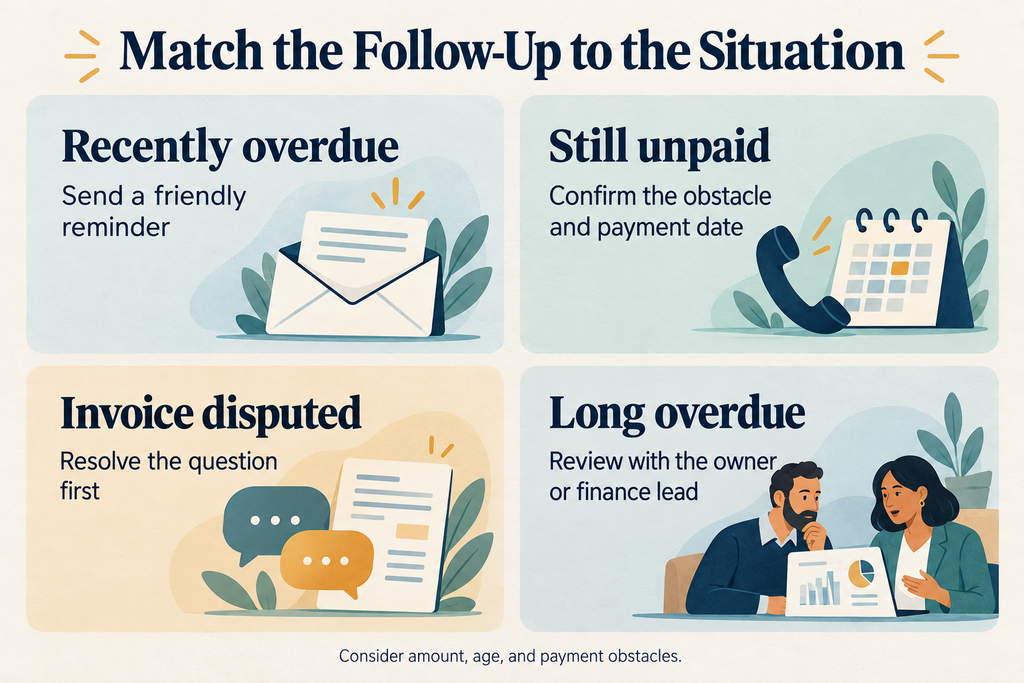
Use your accounts receivable aging report to consider the amount owed, how late it is, and whether anything is preventing payment. The oldest invoice does not automatically need the same response as the largest invoice.
For a recently overdue invoice: send a friendly reminder with the invoice number, outstanding balance, due date, and payment instructions. Ask whether the customer needs any missing information.
For an invoice that remains unpaid after reminders: contact the person responsible for payments. Find out whether there is an approval delay, an invoice query, or another obstacle. Record the expected payment date and who will follow up.
For a disputed invoice: clarify the disagreement before sending repeated reminders. A missing purchase order or a question about the work needs resolution, not simply another copy of the invoice.
For a long-overdue balance: involve the owner or finance lead. Review the account history and decide whether professional advice is needed about recovery or accounting treatment. The age of an invoice alone should not determine a write-off.
Keep a short note against each account: the issue, the next action, the responsible person, and the agreed follow-up date.
Use the accounts receivable aging report as a starting point, then record payment promises separately so your team can check whether customers actually pay on the dates they have agreed.
5. Build a Weekly Review Routine
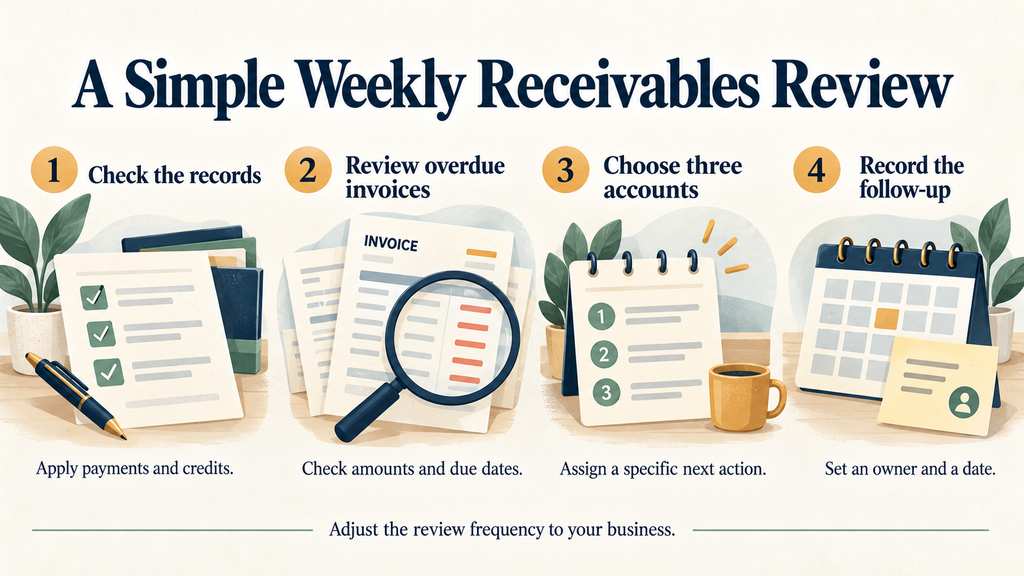
For a business with regular credit sales, a weekly review is a practical starting point. Adjust the frequency to your invoice volume and payment cycle.
Compare this week’s accounts receivable aging report with the previous one. Are older balances being paid, or are invoices moving into later overdue periods? Have customers met the payment dates they agreed to?
If several invoices are delayed for the same reason, fix that part of the process. For example, confirm purchase-order requirements before invoicing, or check that invoices reach the correct billing contact.
Why Regular Receivables Reviews Matter for Cash Flow
An accounts receivable aging report is more than a list of unpaid invoices. It helps business owners understand how customer payment delays affect everyday cash flow. Even when sales are growing, slow collections can make it difficult to pay suppliers, meet payroll, or invest in new opportunities. Reviewing overdue balances regularly allows you to identify collection problems early, improve payment follow-ups, and make better financial decisions. The goal is not just to collect outstanding invoices but to maintain a healthier and more predictable cash flow.
Your next step can be small: review the report, choose three overdue accounts, and assign a specific action to each. That gives you a manageable starting point for collecting money already owed to your business.
If you would like help understanding your receivables and keeping your records organized, contact Veritas Accounting Services to discuss your bookkeeping needs.
GET IN TOUCH
Schedule a FREE Call









Connect on our Socials!
