








The Hidden Bookkeeping Crisis Facing U.S. CPA Firms: 10 Cleanup Chaos Draining Time and Profit
Behind every successful tax return, audit, or financial report is one critical foundation: clean bookkeeping.
Yet across the United States, CPA firms are quietly fighting a growing operational problem — bookkeeping cleanup chaos.
Most firms are no longer spending their time on advisory services or strategic accounting. Instead, they are stuck fixing incomplete books, correcting reconciliations, chasing client documents, and cleaning years of financial errors before deadlines hit.
The issue is not a lack of accounting knowledge. The real problem is operational breakdowns, inconsistent systems, and increasingly messy bookkeeping environments.
Today, modern CPA firms face far more than traditional bookkeeping. They deal with multi-state tax complexity, e-commerce reconciliations, payroll corrections, offshore coordination, and AI-driven data quality issues — all while clients expect faster turnaround times.
Below are the 10 biggest bookkeeping cleanup problems draining time, margins, and productivity inside U.S. CPA firms today.
1. Client Document Delays
One of the biggest drivers of bookkeeping cleanup chaos is delayed client communication.

CPA firms constantly struggle with:
- Missing bank statements
- Delayed payroll reports
- Incomplete expense documentation
- Unorganized receipts
When documents arrive late, month-end closings fall behind, reconciliations remain incomplete, and cleanup work piles up near tax deadlines.
The result:
- Staff burnout
- Rushed reviews
- Reduced profitability
Many firms spend more time chasing clients than performing actual accounting work.
2. Payroll Reconciliation Errors
Payroll errors create serious cleanup problems because they affect:
- Financial statements
- Payroll tax filings
- W-2 accuracy
- Employee liabilities
Common issues include:
- Duplicate payroll entries
- Incorrect payroll mapping
- Tax payment mismatches
- Uncleared payroll liabilities
Fixing payroll reconciliations often requires tracing transactions across payroll platforms, bank feeds, and accounting software.
This type of bookkeeping cleanup chaos becomes even more dangerous during audits or year-end reporting.
3. Sales Tax Nexus Confusion
Sales tax compliance has become one of the most difficult bookkeeping areas for CPA firms.
Businesses operating across multiple states often trigger:
- Economic nexus
- Marketplace facilitator rules
- State-specific filing obligations
Many clients:
- Do not understand nexus rules
- Fail to register correctly
- Collect incorrect sales tax
- Miss filing deadlines
CPA firms then inherit massive cleanup work involving:
- Historical transaction reviews
- State-by-state corrections
- Late filing calculations
Sales tax errors are no longer small compliance issues — they are major financial risks.
4. Multi-State Bookkeeping Complexity
Modern businesses rarely operate in just one state.
Remote work, e-commerce, and digital services have created:
- Multi-state payroll exposure
- State tax allocation challenges
- Apportionment complications
For CPA firms, this creates bookkeeping complexity far beyond simple transaction categorization.
Without standardized systems, firms face:
- Incorrect state coding
- Missing allocations
- Duplicate reporting errors
Multi-state bookkeeping has become a major source of operational inefficiency.
5. QuickBooks Cleanup Chaos
QuickBooks remains one of the most widely used accounting platforms — but poorly maintained QuickBooks files create enormous cleanup problems. Why Bookkeeping Cleanup Chaos Is Growing ?
Common issues include:
- Duplicate transactions
- Broken chart of accounts
- Misclassified expenses
- Negative balances
- Reconciliation discrepancies
Many firms inherit books that have not been reviewed for months or even years.
Instead of performing strategic accounting, teams spend hours repairing damaged bookkeeping files before real work can begin.
This is one of the most visible forms of bookkeeping cleanup chaos affecting CPA firms today.
6. E-Commerce Reconciliation Problems
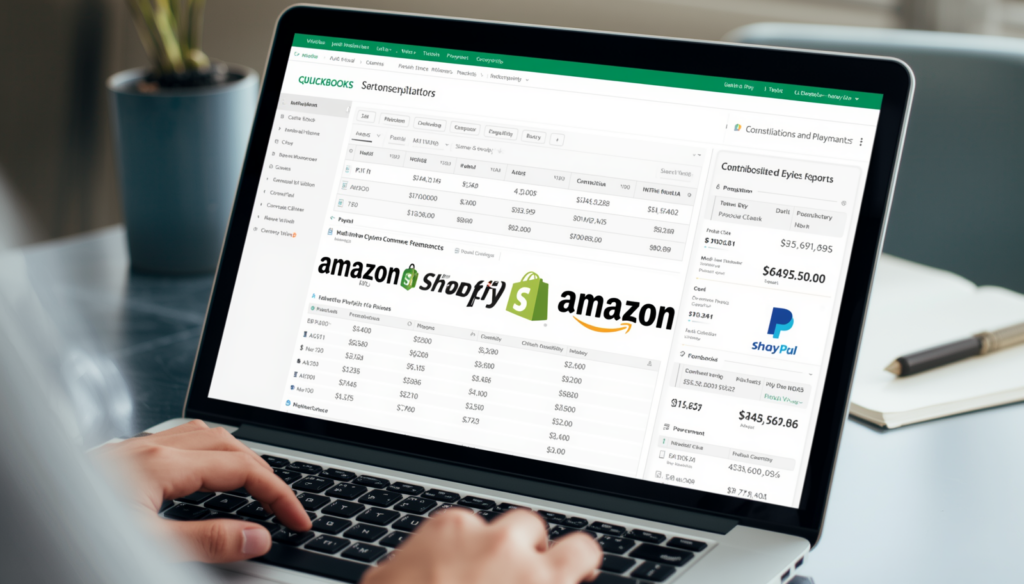
E-commerce bookkeeping is no longer simple.
Businesses selling through:
- Shopify
- Amazon
- Stripe
- PayPal
- Walmart Marketplace
generate thousands of transactions with:
- Fees
- Refunds
- Chargebacks
- Multi-channel deposits
Many businesses record only bank deposits without understanding platform-level reconciliation.
CPA firms must then untangle:
- Gross sales
- Merchant fees
- Inventory adjustments
- Sales tax liabilities
E-commerce cleanup projects have become one of the most time-consuming bookkeeping areas in modern accounting.
7. Lack of Month-End Closing Systems
Many businesses operate without a structured month-end close process.
This creates:
- Unreconciled accounts
- Missing accruals
- Incomplete financials
- Reporting delays
Without monthly review systems, bookkeeping errors accumulate quietly throughout the year.
Then during tax season or audits, CPA firms face:
- Massive catch-up work
- Time pressure
- Increased risk of mistakes
A strong month-end close system is one of the most effective ways to reduce bookkeeping cleanup chaos.
8. AI + Bookkeeping Quality Control Problems
Automation and AI tools are transforming bookkeeping — but they are also creating new risks.

AI-powered systems can:
- Auto-categorize transactions
- Sync bank feeds
- Generate reports quickly
However, automation without review creates:
- Incorrect categorizations
- Duplicate entries
- Hidden reconciliation problems
Many firms now spend significant time reviewing AI-generated bookkeeping errors instead of preventing them proactively.
Technology improves efficiency only when quality control systems exist.
9. Offshore Bookkeeping Management Challenges

Many CPA firms rely on offshore bookkeeping teams to manage workload and improve scalability. Why Bookkeeping Cleanup Chaos Is Growing ?
While outsourcing creates efficiency, it also introduces:
- Communication gaps
- Process inconsistencies
- Review bottlenecks
- Time zone delays
Without proper SOPs and review systems, offshore workflows can contribute to bookkeeping cleanup chaos instead of solving it.
Successful firms build:
- Standardized procedures
- Clear documentation systems
- Layered review processes
Offshore bookkeeping succeeds only when operational control remains strong.
10. Revenue Recognition Mistakes
Revenue recognition remains one of the most misunderstood bookkeeping areas that grows Bookkeeping Cleanup Chaos.
Common issues include:
- Incorrect accrual timing
- Deferred revenue errors
- Subscription revenue misstatements
- Partial project recognition mistakes
These problems are especially common in:
- SaaS businesses
- Service industries
- Construction companies
- Subscription models
Incorrect revenue recognition affects:
- Financial statements
- Profitability analysis
- Tax reporting
- Investor reporting
CPA firms often discover these issues only during cleanup reviews.
Why Bookkeeping Cleanup Chaos Is Growing
The bookkeeping environment has fundamentally changed.
CPA firms now manage:
- More software platforms
- More compliance rules
- Faster client expectations
- Larger transaction volumes
At the same time, many businesses still treat bookkeeping as simple data entry.
The result is operational overload.
Firms are spending valuable hours fixing preventable bookkeeping problems instead of focusing on:
- Advisory services
- Strategic growth
- Client relationships
How CPA Firms Can Reduce Cleanup Chaos
The solution is not simply hiring more staff.
Modern firms need:
- Standardized bookkeeping systems
- Monthly closing procedures
- Automated workflows with human review
- Clear client communication processes
- Quality control checkpoints
The firms that scale successfully are the ones that build operational discipline around bookkeeping.
Final Thoughts
The real accounting crisis today is not tax law complexity — it is bookkeeping cleanup chaos.
From payroll errors and sales tax nexus issues to QuickBooks cleanup and offshore management, CPA firms are losing time and profitability fixing avoidable bookkeeping problems.
Firms that solve these operational issues will gain:
- Better margins
- Faster turnaround times
- Stronger client relationships
- Greater scalability
Because clean bookkeeping is no longer just administrative work — it is the foundation of modern accounting success.
GET IN TOUCH
Schedule a FREE Call









Connect on our Socials!
