






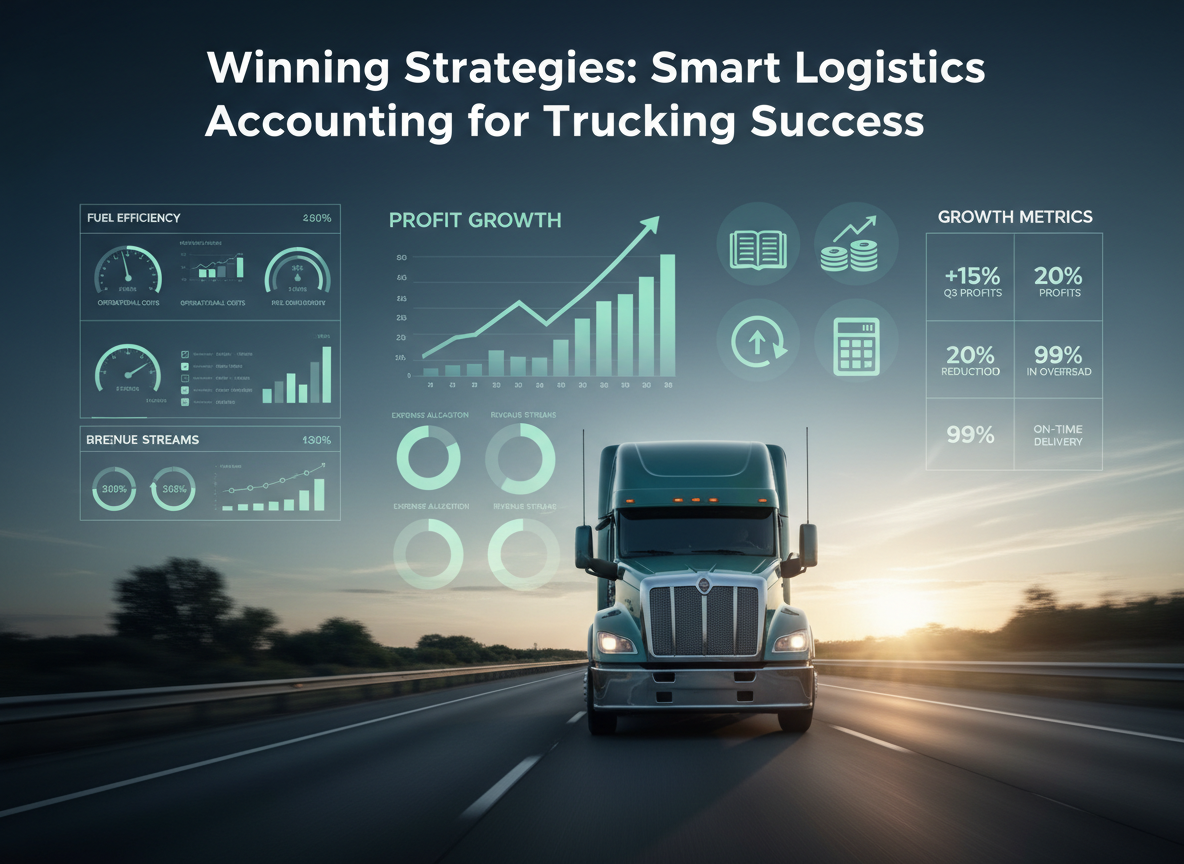

How Smart Trucking Companies Win with Proven Logistic Accounting
In today’s competitive freight market, smart trucking companies know that success is not driven by miles alone—it’s driven by numbers. Behind every profitable fleet is proven logistic accounting that tracks costs accurately, manages cash flow, and keeps the business compliant with US tax laws.
Rising fuel prices, multi-state operations, driver shortages, and strict IRS requirements have made financial management more complex than ever. General bookkeeping is no longer enough. Logistic accounting for trucking companies has become a critical business tool that separates struggling fleets from consistently profitable ones.
This guide explains how proven logistic accounting helps trucking businesses control costs, reduce tax risk, and build long-term financial stability.
What Is Logistic Accounting for Trucking Companies?
Logistic accounting is a specialized form of accounting focused on the financial activities involved in transporting goods. For trucking companies, it goes far beyond recording income and expenses. It tracks how money moves across every mile, load, and route.
Unlike standard accounting, logistic accounting for trucking companies focuses on:
- Cost per mile and cost per load
- Fuel, tolls, and maintenance tracking
- Driver payroll and compliance
- Fleet asset depreciation
- Freight billing and collections
- Multi-state tax exposure
When applied correctly, proven logistic accounting gives trucking owners real visibility into profitability instead of relying on assumptions.
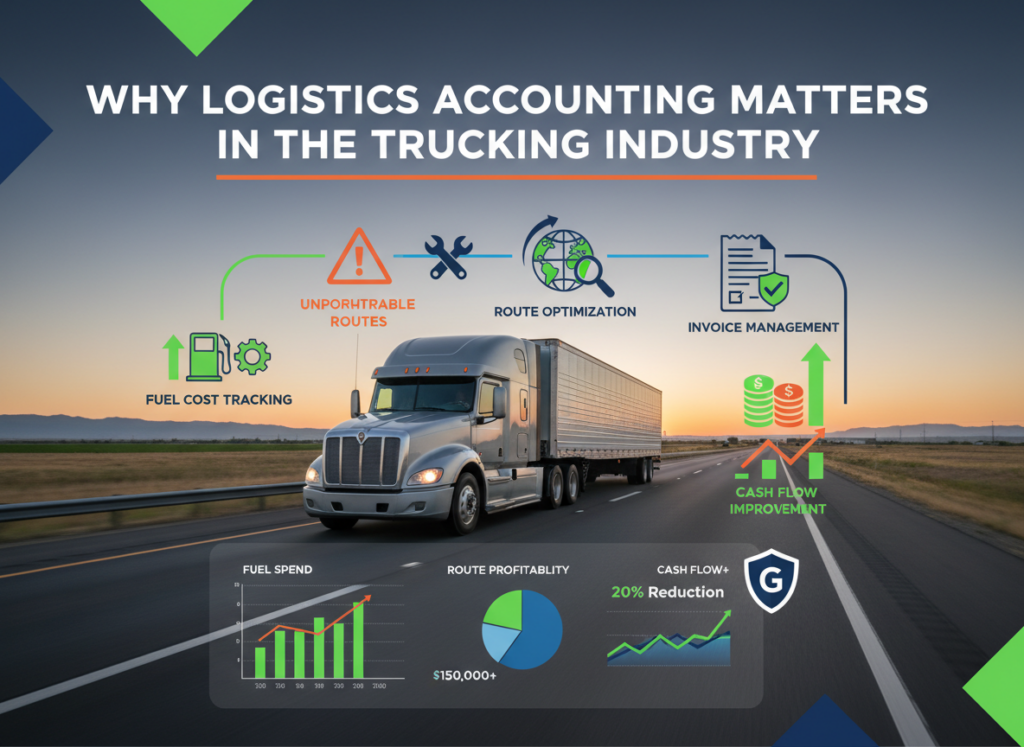
Trucking operates on thin margins. A small error in fuel tracking, depreciation, or billing can quietly erase profits.
Smart trucking companies use proven logistic accounting to:
- Identify unprofitable routes
- Control fuel and maintenance costs
- Prevent freight invoice overpayments
- Improve cash flow timing
- Reduce audit and penalty risk
Without structured logistic accounting, many trucking businesses underprice services, miss deductions, or discover losses too late to fix them.
The Role of Proven Logistic Accounting in Cost Control
Tracking Cost per Mile Accurately
Cost per mile is one of the most important metrics in trucking. Proven logistic accounting ensures that all variable and fixed costs—fuel, insurance, repairs, permits, driver wages—are allocated correctly.
This allows trucking companies to:
- Price loads correctly
- Negotiate better contracts
- Decide when routes should be dropped
Fuel Cost Management
Fuel is often the largest expense. Logistic accounting reconciles:
- Fuel card transactions
- Mileage logs
- Fuel surcharges
Accurate fuel tracking also supports IFTA fuel tax reporting, reducing errors and penalties.
Maintenance and Repair Analysis
Fleet maintenance costs can spike unexpectedly. Proven logistic accounting helps identify:
- High-cost vehicles
- Repair patterns
- Replacement timing
This turns maintenance from a reactive expense into a planned financial decision.
Logistic Accounting and Trucking Tax Compliance
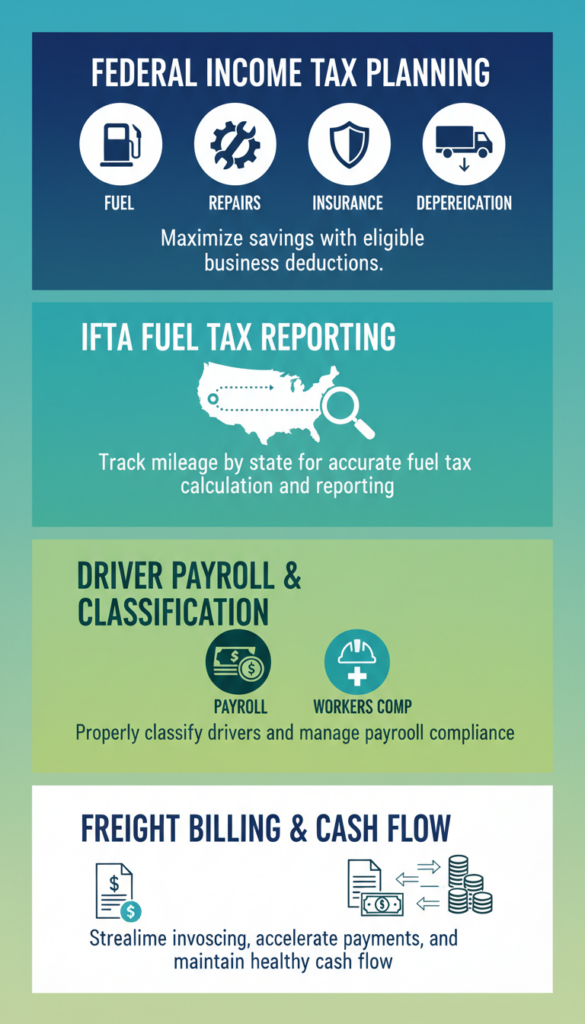
Federal Income Tax Planning
With proper logistic accounting for trucking companies, deductible expenses are fully captured:
- Fuel
- Repairs
- Insurance
- Licensing and permits
- Driver wages
- Depreciation
Missing even small deductions can significantly increase taxable income.
IFTA Fuel Tax Reporting
Multi-state trucking requires precise mileage and fuel records. Proven logistic accounting ensures:
- Accurate state allocation
- Timely filings
- Audit-ready documentation
Errors in IFTA filings are a common source of penalties for trucking companies.
Driver Payroll and Classification
Misclassifying drivers as contractors instead of employees is a major IRS risk. Logistic accounting supports:
- Correct payroll tax reporting
- Workers’ compensation tracking
- State compliance
Smart trucking companies use accounting data to support defensible classifications.
Freight Billing, AR, and Cash Flow Management
Delayed invoicing is one of the biggest cash-flow killers in trucking.
Proven logistic accounting improves:
- Faster invoice generation
- Accurate freight billing
- Fewer disputes
- Shorter collection cycles
When accounts receivable is managed properly, trucking companies can fund fuel, payroll, and growth without relying on debt.
Technology’s Role in Proven Logistic Accounting
Modern trucking accounting relies heavily on automation and integration.
System Integration
Accounting systems connected to:
- Transportation Management Systems (TMS)
- Fuel cards
- Payroll platforms
create a single source of truth.
Automation Benefits
Automation in logistic accounting for trucking companies helps:
- Audit freight bills automatically
- Reconcile fuel expenses
- Match payments to invoices
- Generate real-time reports
This reduces human error and frees teams from manual spreadsheets.
Key Financial Reports Smart Trucking Companies Use
Proven logistic accounting produces actionable reports, including:
- Cost per mile by truck
- Gross profit per load
- Revenue per driver
- Maintenance cost trends
- Cash flow forecasts
These reports help trucking owners make faster, smarter decisions.
In-House vs Outsourced Logistic Accounting for Trucking
Managing logistic accounting internally requires:
- Specialized staff
- Ongoing training
- Expensive software
Many smart trucking companies choose to outsource proven logistic accounting to reduce costs and gain expertise.
Benefits of Outsourcing
- Lower fixed overhead
- Industry-specific expertise
- Scalable support
- Stronger compliance controls
Outsourcing turns accounting from a burden into a strategic advantage.
Common Mistakes Trucking Companies Make Without Logistic Accounting
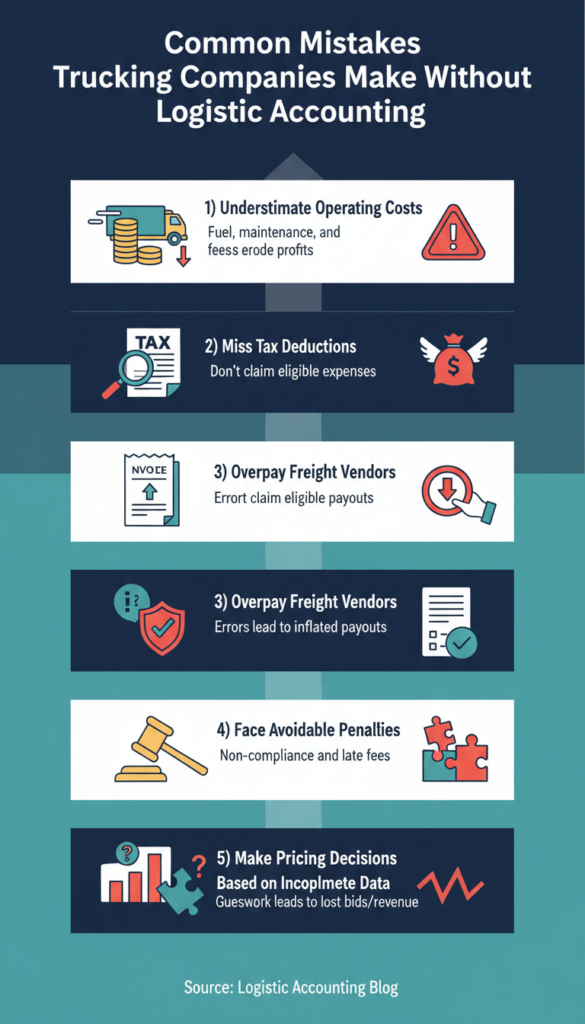
Without proven logistic accounting, trucking businesses often:
- Underestimate operating costs
- Miss tax deductions
- Overpay freight vendors
- Face avoidable penalties
- Make pricing decisions based on incomplete data
These mistakes compound over time and limit growth.
Future Trends in Trucking Logistic Accounting
The future of trucking finance is data-driven.
Emerging trends include:
- AI-based cost forecasting
- Real-time profitability dashboards
- ESG and emissions tracking
- Advanced tax planning for multi-state fleets
Smart trucking companies that adopt proven logistic accounting early will gain a competitive edge.
Truck-Specific Tax Checklist for Smart Trucking Companies
Use this checklist to stay compliant and audit-ready:
✔ Track cost per mile accurately
✔ Reconcile fuel cards monthly
✔ File IFTA reports correctly
✔ Review depreciation schedules annually
✔ Verify driver classification (W-2 vs 1099)
✔ Deduct fuel, repairs, tolls, insurance
✔ Track state-by-state income exposure
✔ Reconcile freight invoices
✔ Maintain DOT and compliance records
✔ Review quarterly estimated tax payments
Final Thoughts
Proven logistic accounting is no longer optional for trucking businesses that want to grow profitably and stay compliant. It provides the financial clarity needed to control costs, reduce tax risk, and make confident decisions.
Smart trucking companies don’t guess—they win with data, discipline, and proven logistic accounting.
If you want to turn your trucking operation into a financially strong, tax-compliant business, the right accounting strategy makes all the difference.
GET IN TOUCH
Schedule a FREE Call









Connect on our Socials!
